


The Australian Shepherd is intelligent and focused and can be your best buddy if you provide strong leadership, plenty of exercise, and mental stimulation. Learn everything about the Australian Shepherd in the sections below.
History
Despite its name, the Australian Shepherd is a breed that was actually developed in the United States, not Australia.
One popular theory of the breed’s origins dates back to the 1800s when European Basque shepherds arrived in Australia with their sheep and herding dogs.
Together with their dogs and sheep, many of these shepherds relocated to the western United States shortly after.
Because of their previous links with Australia, these herding breeds were naturally dubbed Australian Shepherds by American shepherds. The AKC confirms this name is a historical misnomer: genetic studies trace the breed to British herding stock, and it was fully developed in the western United States. (AKC)
Appearance
Size
The Australian Shepherd is a medium-sized, athletic dog
Height
20 to 23 inches (51 to 59 cm)
Weight
Weight of 35 to 70 pounds (16 to 32 kg).
Coat
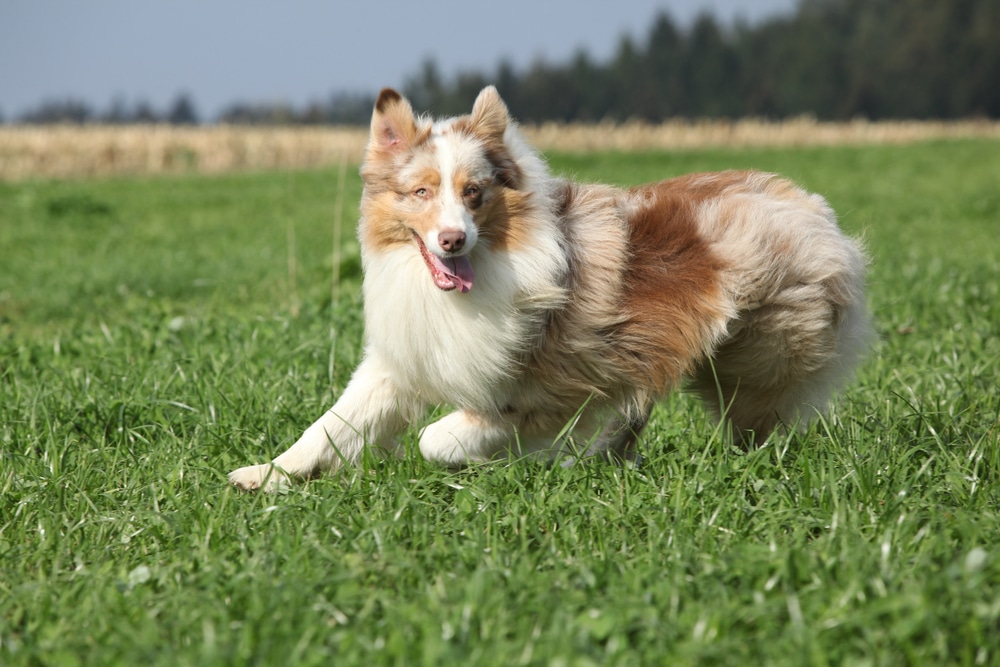
The weather-resistant double coat of the Australian Shepherd is somewhat long and wavy, with a dense undercoat and coarse topcoat; the hair is short on the face and well feathered on the back legs.
Colors
The breed has distinct colorations and coat patterns, with no two dogs having the same coat pattern.
Australian Shepherd comes in various coat colors, including blue or red merle and solid black or red.
Tail
Long or naturally bobbed (short) tails are allowed in the breed; previously, long-tailed dogs had their tails docked, but the current breed standard allows for long-tailed dogs.
Temperament
The Australian Shepherd is clever, active, loyal, protective, playful, and adaptable.
Strong herding tendency
Even though people breed the Australian Shepherd for companionship these days, many dogs retain a strong herding tendency. Often Australian Shepherds engage in herding children or other pets.
Extremely active
The Australian Shepherd is a highly active breed that can become destructive if not given enough exercise.
Health
Australian Shepherds are typically healthy dogs; however, they can suffer from a variety of health issues.
- Vision issues are prevalent
- Epilepsy is a worry
- When merle-to-merle mating occurs, puppies with two copies of the merle gene are more likely to be born blind or deaf
All dogs, like people, are susceptible to inherited health issues.
Breeders
- Avoid breeders who do not offer a health guarantee on their puppies
- A professional breeder will be honest about the breed’s health issues and the frequency with which they arise in her lines.
- If you’re getting a puppy, find out how long dogs in her line have lived and the causes of death
- Although careful breeders test their breeding dogs for genetic disease and breed only the healthiest and best-looking specimens, Mother Nature can have other ideas. A puppy can have health issues despite appropriate breeding techniques. However, because of advancements in veterinary medicine, most dogs can still enjoy a happy life.
- Remember that once you’ve brought your new puppy home, you can safeguard him against one of the most common health issues: obesity. One of the simplest methods to extend the life of an Australian Shepherd is to keep him at a healthy weight.
Finding a breeder
- You can start your search for a breeder by visiting the website of the Australian Shepherd Club of America.
- The Australian Shepherd Club of America’s rescue network will assist you in locating a dog who could be the ideal companion for your family.
Mortality
Australian Shepherds have a typical lifespan of around 12 to 15 years, in line with other breeds of their size.
Australian Shepherd Grooming
Although the Australian Shepherd has a lot of hair and grooming requirements, caring for them isn’t as tricky.
Coat care
- The coat needs weekly brushing to get rid of dead hair that would otherwise end up on your clothes and furniture.
- The Australian sheds only twice a year, in the spring and the fall. Brushing frequently, taking warm baths, and blow-drying thoroughly will help keep the handfuls of hair under control during this period.
- Bathe the Aussie only when he gets dirty outside of shedding season. Over bathing strips away natural oils required for the weather-resistant coat.
Nail care
Although active Australian Shepherds’ nails naturally wear down, it’s a good idea to examine them weekly to see if you need to trim them down.
Ear and teeth
Otherwise, keep his ears clean and brush his teeth regularly to maintain good general health and fresh breath.
Life in the family
As an intelligent breed, the Australian Shepherd will find something to do if left alone.
Aussies require an experienced owner who understands how to channel their energy through constant training and plenty of exercises, as they have a high prey drive and a strong herding instinct.
Do Australian Shepherds get along well with children?
Due to their strong herding instincts, Australian Shepherds may nibble at children’s heels or try to herd them. However, the Aussie usually is well-behaved and friendly with children. You can reduce nipping tendencies with proper socialization and training and enough exercise or a task to do. It would be best if you discouraged nipping as soon as possible to prevent the habit.
Can Australian Shepherds live with other pets?
If bored, Aussies may attempt to herd cats or other domestic pets, but they get along well with them if adequately socialized.
Are Australian Shepherds considered an aggressive breed?
Australian Shepherds aren’t known for being aggressive. Rather, they are kind and affectionate. Australian Shepherds, on the other hand, have a natural instinct to work and may attempt to herd and be pushy with smaller animals, including their owners. As part of this process, they have been known to nip. If they have not been properly trained or socialized from an early age, herding and nipping are more common.
Exercise requirements
- 40 minutes of exercise every day
- Since these dogs have historically spent hours in the fields with their owners herding sheep and cows, they require plenty of daily exercises, mental stimulation, and obedience training to be happy.
Energy level
High
Life expectancy
As an overall healthy breed, the Australian Shepherd has a lifespan of 12-15 years.
Living environment

Frequently Asked Questions
How much exercise does this breed need each day?
This herding breed needs a minimum of 60 to 90 minutes of vigorous activity every day. A short walk around the block is not enough. They thrive with activities that combine physical exertion and mental stimulation, such as agility training, frisbee, flyball, or advanced obedience work. Without adequate exercise, they are likely to develop destructive behaviours like chewing furniture, excessive barking, or pacing.
Is this breed good with young children?
Generally yes, but with supervision. Their herding instinct can cause them to nip at the heels of running children, which is perfectly normal from the dog’s perspective but can be alarming for a toddler. Early socialisation and consistent training from puppyhood significantly reduce this behaviour. Families with very young children should work with a trainer to channel herding instincts appropriately.
How much do they shed, and is the grooming routine demanding?
They shed year-round and heavily during seasonal coat blows in spring and autumn. Expect to brush the coat two to three times per week normally, and daily during shedding seasons. They also need occasional baths, regular nail trims, and ear checks. A high-quality deshedding brush is an essential investment for any owner of this double-coated breed.
What are common health issues to watch for?
Hip dysplasia, elbow dysplasia, and various hereditary eye conditions including progressive retinal atrophy and cataracts are among the most common concerns in this breed. The MDR1 gene mutation is also prevalent, which makes certain medications toxic. Before bringing a puppy home, always ask the breeder for health clearances on both parents, and schedule a veterinary eye exam within the first year.
Can they live in an apartment?
Technically possible, but not ideal. This is a working dog built for open spaces and constant activity. Apartment living can work if the owner commits to multiple long outings daily, provides enrichment toys, and participates in structured dog sports. Without that commitment, apartment life typically leads to boredom and behavioural problems. A home with a securely fenced garden is a much better fit.
For a complete overview of the breed, visit our complete Australian Shepherd guide.
The Australian Shepherd is not suitable for living in an apartment. They are moderately active indoors and require at least a vast yard to thrive.