

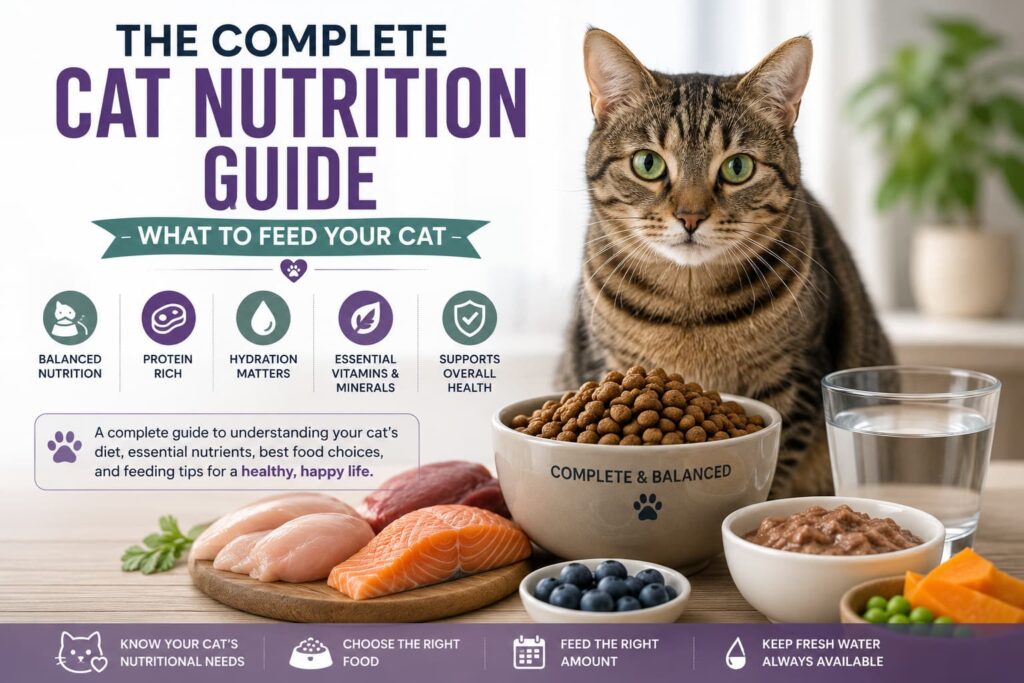
What you feed your cat is one of the most important decisions you make for their health and longevity. Cats are obligate carnivores — their bodies are designed to derive nutrition from animal protein, not carbohydrates or plant matter. Choosing the right food, understanding the difference between wet and dry, knowing how much to feed, and being clear on what human foods are safe or toxic: this complete cat nutrition guide covers all of it.
Cat Nutrition: The Basics
Unlike dogs, cats cannot synthesise certain essential nutrients that other species can. Taurine must come from meat — a cat fed a taurine-deficient diet will develop serious heart and eye problems. Arachidonic acid, vitamin A in its active form (retinol), and vitamin D must also come from animal tissue. This is why a vegan or vegetarian diet is not appropriate for cats, regardless of the owner’s personal preferences.
According to the ASPCA, a complete and balanced cat food should provide adequate protein from animal sources, essential fatty acids, vitamins, minerals, and sufficient water — either through the food itself or alongside it. The label “complete and balanced” on a cat food means it has been formulated to meet the nutritional standards established by AAFCO (the Association of American Feed Control Officials).
| Nutrient | Why Cats Need It | Source |
|---|---|---|
| Protein | Muscle maintenance, immune function, energy | Chicken, fish, beef, turkey |
| Taurine | Heart health, vision, reproduction | Meat and fish only |
| Arachidonic acid | Skin health, reproductive function | Animal fat |
| Vitamin A (retinol) | Vision, immune function | Liver and other organ meats |
| Water | Kidney function, urinary health | Wet food + fresh water |
Wet Cat Food vs Dry Cat Food
The wet versus dry debate is one of the most common questions in cat nutrition — and the honest answer is that both have a place, and the best approach for most cats is a combination of both.
Wet cat food has a high moisture content (typically 70–80%), which is the single most important advantage it offers. Cats evolved as desert animals with a low thirst drive — they’re designed to get most of their water from prey. A cat eating exclusively dry food chronically under-hydrates, which puts long-term strain on the kidneys and urinary tract. Wet food also tends to be higher in protein and lower in carbohydrates than dry food.
Dry cat food is convenient, cost-effective, and has a longer shelf life. It can support dental health through the mechanical action of chewing (though this benefit is often overstated). The main drawbacks are low moisture content and typically higher carbohydrate levels than cats need.
For detailed product recommendations: Best wet cat food → | Best dry cat food → | Best cat food recommended by vets →
How Much Should You Feed a Cat?
Overfeeding is the single most common nutrition mistake cat owners make. Obesity in cats significantly increases the risk of diabetes, joint disease, liver disease, and a shortened lifespan. Yet many owners genuinely don’t know how much their cat should eat — they rely on free-feeding (leaving food out all day) or guessing portion sizes.
The correct approach:
- Check the feeding guide on the specific food you’re using, adjusted for your cat’s current body weight, not their ideal weight
- Factor in treats — these count toward daily calorie intake and should not exceed 10% of total calories
- Weigh food portions using a kitchen scale rather than estimating by volume (cup measures are highly inaccurate for pet food)
- For cats that need to lose weight, consult your vet for a calorie-controlled plan rather than simply reducing food
How much should you feed a cat? Complete feeding guide →
Cat Food for Urinary Health
Urinary problems — particularly FLUTD (Feline Lower Urinary Tract Disease) and struvite or calcium oxalate crystals — are among the most common health conditions in cats, and diet plays a major role in both prevention and management. Male cats are particularly vulnerable due to their narrow urethra.
Key dietary factors for urinary health include:
- Moisture: The most important factor. Wet food increases urine volume and dilutes mineral concentrations, significantly reducing crystal formation risk
- Controlled mineral levels: Foods formulated for urinary health limit magnesium, phosphorus, and calcium that contribute to crystal formation
- pH balance: Urinary foods maintain urine pH in a range that discourages crystal development
If your cat has a history of urinary issues, a prescription urinary diet from your vet is the most reliable option. For preventative feeding: Best cat food for urinary health →
Feeding Senior Cats
Cats are considered senior from around 11 years and geriatric from 15 years. Their nutritional needs change as they age: some need fewer calories to prevent obesity, while others — particularly those with hyperthyroidism or kidney disease — need more protein and calories to maintain body condition as their metabolism changes.
“Senior” cat food labels are not standardised by AAFCO and are largely a marketing category rather than a defined nutritional formulation. The most important thing for a senior cat is regular vet assessments — ideally twice yearly — to catch health changes that affect nutrition early. Best cat food for senior cats →
Cat Nutrition at Every Life Stage
Cat nutrition requirements change significantly as your cat ages. A one-size-fits-all approach rarely serves cats well across their entire lifespan — what works for a kitten is very different from what an elderly cat needs.
Kitten Cat Nutrition (0–12 Months)
Kittens have high energy and protein demands to fuel rapid growth and brain development. Choose a food specifically formulated for kittens — or labelled “All Life Stages” by AAFCO — to ensure adequate calcium, phosphorus, and DHA levels. Feed three to four small meals daily until six months, then reduce to twice daily as they approach adulthood.
Adult Cat Nutrition (1–7 Years)
This is the life stage where most cats gain excess weight through overfeeding. Adult cat nutrition should focus on maintaining a healthy body condition score — you should be able to feel (but not see) your cat’s ribs easily. Choose a “complete and balanced” adult food and measure every portion rather than free-feeding.
Senior Cat Nutrition (7+ Years)
Senior cat nutrition is often the most complex. Older cats may develop reduced kidney function, hyperthyroidism, dental disease, or muscle loss. High-quality protein remains essential for muscle maintenance, but cats with kidney disease require phosphorus restriction. Work with your vet to build a nutritional plan that fits your individual senior cat — and schedule bloodwork every six months to catch changes early.
What Human Food Can Cats Eat?
Many cat owners want to share human food with their pets — and some foods are perfectly safe, while others are seriously toxic. The short list of safe human foods for cats includes: plain cooked chicken, turkey, and fish (no bones, no seasoning); plain cooked eggs; and small amounts of plain cooked vegetables like broccoli or cucumber.
Toxic foods to never give a cat include: onions and garlic (in any form — these destroy red blood cells); grapes and raisins; chocolate; caffeine; xylitol (an artificial sweetener found in many human foods); alcohol; and raw dough. Dairy products — including milk — cause digestive upset in most adult cats, as cats are typically lactose intolerant after kittenhood.
Complete guide: what human food can cats eat — and what to avoid →
Cat Nutrition FAQs
Is grain-free cat food better?
Not necessarily. The grain-free trend was largely driven by marketing rather than science. Cats don’t require grain in their diet, but grains are also not harmful to most cats. What matters more is the overall quality and protein content of the food, and whether grains are used to replace animal protein (a cost-cutting measure) or simply as a minor ingredient. Cats with confirmed grain sensitivities may benefit from grain-free food; for healthy cats, it makes little practical difference.
Should cats drink milk?
No. Most adult cats are lactose intolerant — they lack sufficient lactase enzyme to digest the lactose in cow’s milk, which causes digestive upset, diarrhoea, and discomfort. The image of cats enjoying a saucer of milk is culturally persistent but nutritionally incorrect. Fresh water is all a cat needs to drink. If you want to give your cat something milk-like as an occasional treat, lactose-free cat milk products are available.
How often should I feed my cat?
Adult cats do well on two measured meals per day. Kittens under 6 months need three to four meals daily due to their rapid growth and smaller stomach capacity. Free-feeding (leaving dry food out all day) is convenient but makes it very difficult to monitor intake, often leads to overeating, and is not recommended for cats prone to weight gain.
Can cats be vegetarian or vegan?
No. Cats are obligate carnivores and cannot survive on a plant-based diet. They lack the metabolic pathways to synthesise taurine, vitamin A, and arachidonic acid from plant precursors — they must consume these nutrients directly from animal tissue. A vegan diet for a cat causes serious, potentially fatal nutritional deficiencies. This is not a matter of preference but of basic feline physiology.
What is the healthiest diet for a cat?
A diet based primarily on high-quality wet food — with named animal protein as the first ingredient, complete and balanced formulation, and low carbohydrate content — is widely considered optimal for most cats. Supplementing with a measured amount of quality dry food for dental benefits and convenience is a reasonable approach. Raw feeding can also be nutritionally appropriate but carries food safety risks and must be carefully managed. Always work with a vet to choose the right diet for your individual cat’s age, health, and needs.
Is wet food or dry food better for cat nutrition?
Wet food is generally considered superior for cat nutrition because it provides hydration (cats have a naturally low thirst drive), more animal protein, and fewer carbohydrates. That said, a high-quality dry food can still meet a cat’s full nutritional needs. Many vets recommend a combination approach: wet food as the primary diet with a small measured amount of dry food for variety or dental benefit.
What should I look for on a cat food label?
Look for a named animal protein as the first ingredient — chicken, salmon, or turkey rather than “meat meal” or “animal by-products.” The label should state “complete and balanced” with an AAFCO or FEDIAF nutritional adequacy statement. For optimal cat nutrition, avoid products with excessive fillers, corn syrup, artificial colours, or preservatives. Lower carbohydrate content is generally better.
Final Thoughts on Cat Nutrition
Getting cat nutrition right doesn’t require perfection — it requires consistency, observation, and a willingness to adjust as your cat ages or their health changes. Start with a high-quality complete and balanced food, feed measured portions, keep fresh water available at all times, and schedule regular vet check-ups to stay ahead of any health changes that affect diet.
Small, sustained improvements in cat nutrition add up to years of better health and a longer, happier life for your cat. For more cat care guidance, see our complete kitten care guide and our overview of understanding cat behaviour.
This article is written for informational purposes and reflects the personal experience and research of the author. It does not replace professional veterinary or dog training advice. Always consult your veterinarian or a certified trainer for individual guidance.
This article is written for informational purposes and reflects the personal experience and research of the author. It does not replace professional veterinary or dog training advice. Always consult your veterinarian or a certified trainer for individual guidance.
This article is written for informational purposes and reflects the personal experience and research of the author. It does not replace professional veterinary or dog training advice. Always consult your veterinarian or a certified trainer for individual guidance.