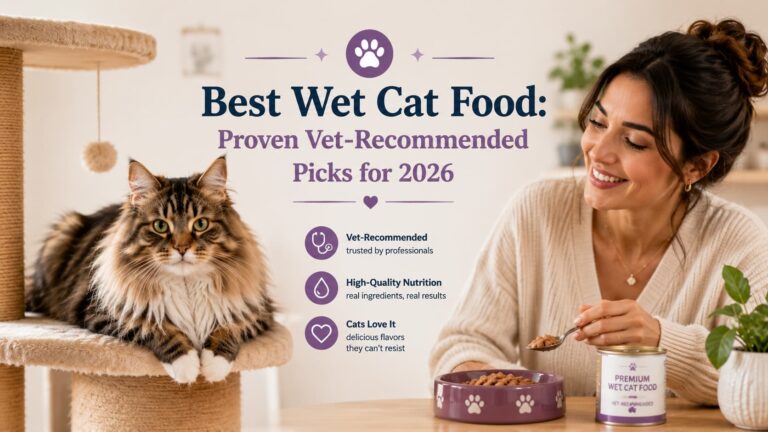

The question of best cat food is one that trips up even experienced cat owners — and the pet food industry makes it deliberately harder than it needs to be. Every brand claims to be premium, natural, and nutritionally superior. Very few of them are willing to tell you how they know.
I have owned cats my entire adult life, and the single most useful thing I learned about cat nutrition came from a vet who told me: cats are obligate carnivores. Not mostly carnivores. Obligate carnivores — meaning they are biologically required to eat animal protein to survive. Unlike dogs, who can synthesise certain nutrients from plant sources, cats cannot. They need specific nutrients from meat that their bodies simply cannot manufacture.
Understanding this one fact filters out about 80% of the confusing cat food marketing and points you directly toward what actually matters. This guide explains why vets recommend the brands they do, what cat-specific nutritional requirements mean in practice, and how to evaluate any cat food independently.
If you want to dig deeper, check out our guide on best cat food for urinary health.
We also have a complete guide on why is my cat not eating?.
Why Cats Have Completely Different Nutritional Needs from Dogs
Obligate carnivores — what this actually means
Cornell Feline Health Center explains it clearly: cats are obligate carnivores, which means they need specific nutrients only found in animal tissue. The key nutrients cats cannot obtain from plant sources include:
- Taurine— an amino acid cats cannot synthesise in adequate amounts. Deficiency causes retinal degeneration leading to blindness, dilated cardiomyopathy (DCM — a fatal heart condition), reproductive problems, and impaired immune function. Required in all AAFCO-compliant cat food since 1987.
- Arachidonic acid— an essential fatty acid dogs can produce from linoleic acid. Cats cannot. Must come from animal fat.
- Vitamin A (preformed)— dogs can convert beta-carotene from plants into vitamin A. Cats cannot. They need preformed vitamin A from animal sources.
- Vitamin D3— cats cannot synthesise adequate vitamin D from sunlight like humans do. They need it from their diet, specifically from animal sources.
This is why feeding cats vegetarian food, dog food, or low-animal-protein diets causes genuine medical harm over time. It is not a preference issue — it is a biological requirement.
The moisture argument — why wet food matters for cats
Cats evolved as desert animals whose primary source of water was the prey they ate. Their thirst drive is lower than dogs, and they do not drink enough water voluntarily when fed exclusively dry food. PetMD veterinary experts note that wet cat food contains more moisture, which helps cats who need more water — particularly those with diabetes, kidney disease, or lower urinary tract disease.
A cat eating exclusively dry kibble is chronically mildly dehydrated compared to one eating wet food. Over years, this contributes to urinary tract disease, kidney strain, and crystal formation in the bladder. Many veterinary nutritionists recommend wet food as the primary diet or at minimum a significant component of every cat’s feeding.
This is not the consensus you will read on pet food brand websites. But it is what most veterinary nutrition specialists recommend in practice, and it is a meaningful angle on best cat food that most guides skip entirely.
| 💡 The wet food minimum : If feeding your cat exclusively dry food, consider introducing wet food for at least one meal daily. The hydration benefit is real and meaningful for long-term kidney and urinary tract health. This is especially important for male cats who are disproportionately prone to urinary blockages. |
Why Vets Recommend the Brands They Do
Veterinarian Dr Vincent Tavella DVM MPH summarises this precisely: vets are trained to anchor recommendations in diets that meet AAFCO standards and are supported by feeding trials, formulation expertise, and quality control. The brands that consistently meet these standards are Purina Pro Plan, Hill’s Science Diet, and Royal Canin.
The reason comes down to three criteria:
- AAFCO feeding trials conducted— the food was actually fed to cats and health outcomes measured, not just calculated on paper to meet nutritional requirements
- Board-certified veterinary nutritionists on staff— qualified experts with DCVNs formulating the diets, not marketing departments
- WSAVA guidelines followed— the World Small Animal Veterinary Association’s framework for evaluating pet food manufacturer transparency and quality
Petautumn notes that any brand can legally put ‘recommended by veterinarians’ on packaging — there is no regulation around the phrase. Real vet approval comes from whether the brand meets these three criteria. Most trendy premium brands do not.
The Top Vet-Recommended Cat Food Brands
Purina Pro Plan — the science-backed choice
Purina Pro Plan is consistently the top pick from multiple veterinary expert panels in 2026. PetMD’s veterinary experts highlight Purina Pro Plan Complete Essentials as their overall recommended cat food. Healthline’s veterinary reviewer Dr Tavella praises its strong research backing, which matters especially in senior pets where nutrition is not one-size-fits-all.
Pro Plan contains live probiotics, is formulated by veterinary nutritionists, conducts feeding trials, and comes in a wide range of formulas including sensitive stomach, urinary health, and indoor cat varieties. It is also widely available and competitively priced relative to its quality.
Hill’s Science Diet — the veterinary clinic staple
Hill’s Science Diet is the most widely found cat food in veterinary practices globally. Vet Anna Kaufman of Bond Vet recommends Hill’s Science Diet cat food for being formulated with easy-to-digest ingredients and an antioxidant and vitamin blend that supports immune health. Hill’s employs hundreds of food scientists and veterinarians, and their Prescription Diet therapeutic lines are the most widely used vet-prescribed diets for medical conditions.
For cats with specific health conditions — kidney disease, weight management, urinary health, gastrointestinal disease — Hill’s Prescription Diet lines require a veterinary prescription and are formulated to therapeutic specifications beyond general nutrition.
Royal Canin — breed and condition precision
Royal Canin’s strength is precision. Their breed-specific and size-specific lines address the different nutritional requirements of different cats with greater detail than any other mainstream brand. A Maine Coon has different dental and joint needs from a Siamese. Royal Canin produces formulas that address these differences specifically. Their renal support range is highlighted by Chewy’s veterinary panel as highly recommended for cats with kidney disease.
The Fancy Feast revelation — the budget vet recommendation nobody expects
Petautumn identifies something that genuinely surprises most cat owners: Fancy Feast Classic Pate is one of the most vet-recommended cat foods. Vets commonly rely on it in clinical practice. It is owned by Purina, follows both WSAVA and AAFCO standards, contains no grain or pea proteins, and its dry matter protein content is higher than most premium brands charging three times the price.
It does contain artificial flavors and guar gum, so it may not be ideal for cats with specific sensitivities. But for healthy adult cats with no special dietary needs, Fancy Feast Classic Pate provides genuine nutritional quality at remarkable value. The premium price tag does not automatically indicate premium nutrition.
How to Read a Cat Food Label — Evaluate Any Brand Yourself
Cornell Feline Health Center recommends looking for foods in which meat, meat by-products, or seafood are listed among the first few ingredients — this indicates sufficient animal-source ingredients to supply essential amino acids and fatty acids.
Check the nutritional adequacy statement
Every cat food package must carry an AAFCO nutritional adequacy statement. Look for the specific life stage — ‘complete and balanced for adult cats’ or ‘for all life stages.’ If a food does not carry this statement, do not buy it.
Feeding trials vs formulation
The packaging should state how the food meets AAFCO requirements. ‘Animal feeding tests using AAFCO procedures’ means feeding trials were conducted. ‘Formulated to meet AAFCO requirements’ means calculation-based compliance only — less meaningful.
The ingredients list
Named animal protein should be the first ingredient — chicken, turkey, salmon, beef. Avoid foods where the first ingredient is a grain or where proteins are described vaguely as ‘meat’ or ‘poultry’ without specification. By-products including liver and organ meats are actually nutritionally valuable when clearly listed — the stigma around by-products is largely marketing-driven, not science-based.
Red flag marketing terms
‘Grain-free’ has no proven nutritional benefit for cats and has been associated with an ongoing FDA investigation into dilated cardiomyopathy. ‘Natural’ and ‘human-grade’ have no regulated nutritional meaning. ‘Ancestral’ and ‘wild’ are marketing terms. Focus on the nutritional adequacy statement, the ingredient list, and whether the manufacturer conducts feeding trials.
Vet-Recommended Picks by Life Stage and Need
- Healthy adult cats— Purina Pro Plan Complete Essentials, Hill’s Science Diet Adult, Royal Canin Adult, or Fancy Feast Classic Pate as a wet component
- Indoor cats— Purina Pro Plan Indoor, Hill’s Science Diet Indoor — these are formulated for lower activity levels with weight and hairball management
- Cats with urinary issues— Hill’s Prescription Diet c/d Urinary Care or Royal Canin Urinary SO — both require veterinary prescription
- Cats with kidney disease— Hill’s Prescription Diet k/d or Royal Canin Renal Support — both require veterinary prescription
- Overweight cats— Hill’s Prescription Diet w/d or Purina Pro Plan Weight Management — discuss target weight with your vet before starting
Frequently Asked Questions
| Q: Is wet food or dry food better for cats?A: Most veterinary nutritionists recommend wet food as the primary or significant component of a cat’s diet, primarily because of the hydration benefit. Cats have a low thirst drive and do not drink enough water when fed exclusively dry food. Wet food provides moisture that reduces the risk of urinary tract disease and kidney issues over the long term. If feeding dry food only, encourage water intake through a cat water fountain. |
| Q: Why do vets recommend brands like Hill’s and Purina over boutique brands?A: Because these brands conduct AAFCO feeding trials, employ board-certified veterinary nutritionists, and follow WSAVA guidelines for transparency. Many boutique and premium brands produce nutritionally adequate food, but the evidence base for the established vet-recommended brands is more robust. Price is not a reliable indicator of quality. |
| Q: How often should I change my cat’s food?A: Not frequently. Cats do not react well to frequent food changes — their digestive systems adjust to specific ingredient profiles, and switching regularly causes gastrointestinal upset. Find a quality food your cat thrives on and stick with it. Any necessary transition to a new food should be done gradually over 7 to 10 days. |
| Q: Is raw cat food a good idea?A: Raw diets for cats are nutritionally possible when properly formulated by a veterinary nutritionist. The risks — bacterial contamination, nutritional imbalance, and parasite transmission — are real and should be discussed with your vet before starting. Raw food without expert formulation often lacks taurine in adequate amounts, which carries serious cardiac risk. |
Frequently Asked Questions: Best Cat Food
What do vets look for in the best cat food?
Vets evaluate the best cat food based on AAFCO compliance, protein quality, and ingredient transparency. Cats are obligate carnivores, so the best cat food should list a named animal protein — such as chicken, salmon, or turkey — as the first ingredient. Vets also look for added taurine (essential for heart and eye health), adequate moisture content, and a brand that conducts feeding trials rather than relying solely on formulation testing.
Is wet or dry food the best cat food option?
Most vets consider wet food to be among the best cat food choices because it closely mirrors a cat’s natural prey diet — high in protein and moisture, low in carbohydrates. Cats have a low thirst drive and often don’t drink enough water, so wet food helps prevent urinary issues and kidney disease. That said, dry food is a practical supplement and the best cat food routine for many owners is a combination of both.
How often should I change my cat’s food?
You don’t need to rotate the best cat food constantly — cats can thrive on a consistent, well-balanced diet. However, life stage changes (kitten to adult, adult to senior) call for a nutritional update. If your cat develops a health condition such as diabetes, kidney disease, or obesity, your vet may recommend a prescription diet. Any change should be made gradually over seven to ten days to avoid digestive upset.
Are grain-free cat foods the best choice?
Grain-free is not automatically the best cat food option. Cats have no dietary requirement for grains, but high-quality whole grains are not harmful and can provide useful fibre. The concern with some grain-free formulas is that they replace grains with high-carbohydrate legumes like peas and lentils, which can be equally problematic. The best cat food focuses on high animal protein and low overall carbohydrate content — with or without grains.
For more on this, see our guide on kidney disease in cats.
| Medical Disclaimer : This article is written for informational purposes based on the research and personal experience of the author. It is not a substitute for professional veterinary advice, diagnosis, or treatment. Always consult your veterinarian with concerns about your pet’s health. |
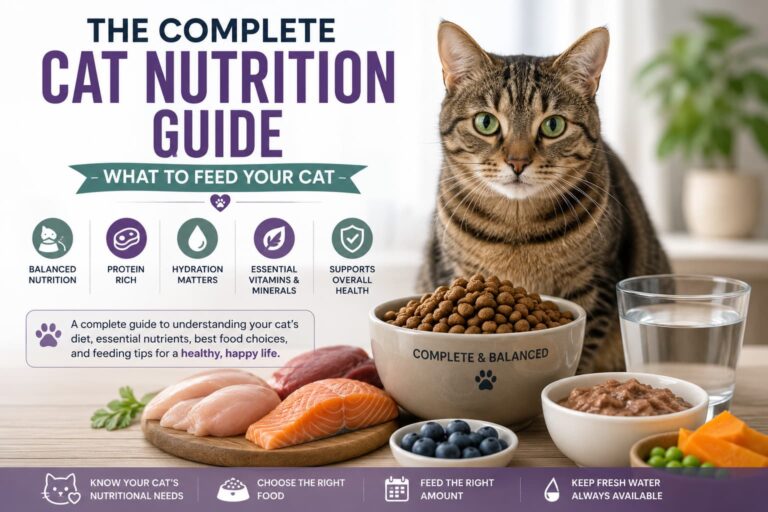
For a complete overview of cat nutrition and feeding, visit our complete cat nutrition guide.
This article is written for informational purposes and reflects the personal experience and research of the author. It does not replace professional veterinary or dog training advice. Always consult your veterinarian or a certified trainer for individual guidance.