

Published May 2026 | 5 min read
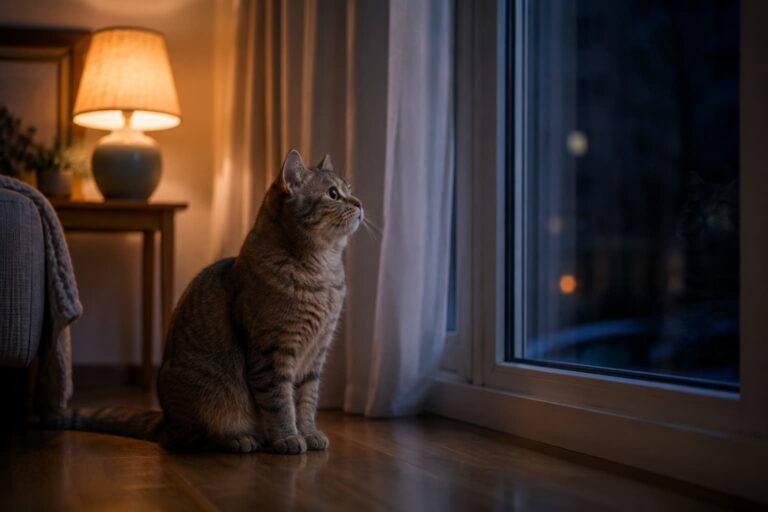
Why Do Cats Chatter at Birds? If you’ve ever watched your cat perched on a windowsill, eyes locked on a bird outside, you may have witnessed this strange behavior. Suddenly, they start making a rapid, staccato clicking sound, their jaw quivering as a series of quick, muffled chirps escape. It’s not quite a meow and definitely not a hiss. So what exactly is that unusual noise, and why do cats make it?
This sound — the cat chatter — is one of the most distinctive and least understood vocalisations in the feline repertoire. Scientists have three main theories, and all of them are interesting.
You might also find our guide on why do cats sleep so much? helpful.
You may also want to read our guide on why do cats hate water?.
Related: our guide on why does my cat lick me? covers this in more depth.
Why Do Cats Chatter at Birds? 3 scientific theories
1. Frustration and predatory excitement — the leading theory
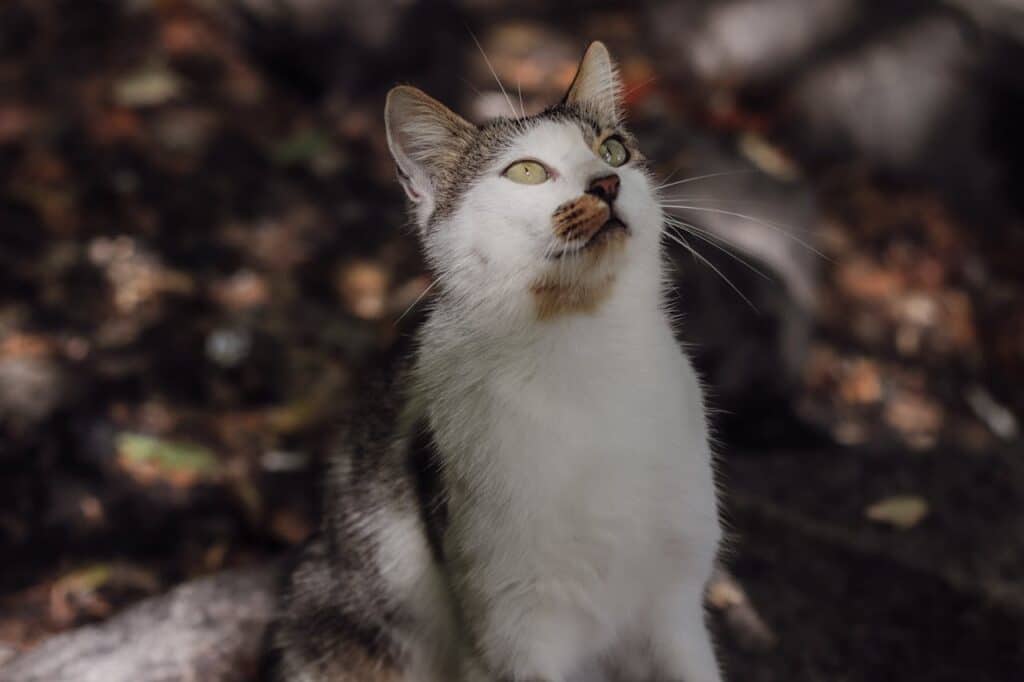
The most widely accepted explanation is that chattering is an involuntary expression of intense predatory excitement combined with the frustration of being unable to reach the prey. Your cat sees the bird. Every hunting instinct fires at once — stalk, chase, catch. But the glass is in the way. They cannot get to the prey.
The chattering is the physiological overflow of that frustrated predatory drive — a kind of neurological short-circuit between the intent to hunt and the impossibility of doing so. The jaw movements may also be a dry run of the killing bite — the rapid bite cats use to dispatch small prey by severing the spinal cord.
This theory is supported by the fact that cats chatter specifically at prey animals they cannot reach — through windows, at birds on fences, at squirrels in trees. They don’t chatter at accessible toys in the same way.
2. An instinctive predatory vocalisation
A fascinating study of wild cats in the Amazon — specifically the margay, a small spotted wild cat — observed them mimicking the calls of their prey to lure it closer. Researchers recorded a margay producing sounds that closely resembled a baby pied tamarin monkey calling in distress, which drew the adult monkeys closer to investigate.
Some researchers propose that domestic cat chattering may be a vestigial version of this predatory mimicry — an evolved vocalisation designed to lure birds and small animals by producing sounds similar to their own calls. Your cat’s chattering at the bird may be an attempt to call it closer.
Whether domestic cats are consciously or effectively luring prey with this sound is debated, but the evolutionary precedent from wild cat relatives is compelling.
3. Simple excitement and arousal
A third explanation is simply that chattering is a vocalisation of high arousal and excitement — the cat equivalent of an excited squeal. When cats are intensely stimulated by the sight of prey, this sound may emerge as a natural expression of that heightened state, with no specific functional purpose.
This theory is supported by the fact that some cats also chatter at laser pointers, fast-moving toys, or other highly stimulating but unreachable stimuli — not just birds and prey animals.
What should you do when your cat chatters?
Nothing needs to be done — chattering is completely harmless and usually stops when the bird moves away or your cat’s attention shifts. What it does tell you is that your cat is highly engaged with what they’re watching. This is useful information:
- A chattering cat is in high predatory arousal — a good time for a play session with a feather wand after the bird leaves
- If your cat chatters frequently at the window, they have a stimulating view that they enjoy — a bird feeder positioned where they can see it provides hours of enrichment
- If your cat chirps at you (rather than at prey), they’re using a social version of the same sound — a friendly, excited vocalisation
Chattering vs. chirping vs. trilling — what’s the difference?
Cats produce several related sounds that owners sometimes confuse:
- Chattering: the rapid jaw-clicking sound made when watching prey — involuntary, predatory context
- Chirping: a short, bird-like sound sometimes directed at owners — social, affectionate, greeting
- Trilling: a rolling, motorboat-like sound made with a closed mouth — affectionate, often a greeting from a happy cat
All three are positive sounds. None of them are concerning. Chattering is prey-specific; chirping and trilling are social.
Why do cats chatter at birds? Frequently asked questions
| Q: Is chattering a sign my cat wants to go outside?A: Not specifically. Chattering is about prey excitement, not necessarily about wanting outdoor access. However, if your indoor cat chatters frequently at window birds, they may benefit from more active indoor play to channel that hunting energy. |
| Q: Why does my cat chirp at me?A: Chirping at you is the social version of the prey-directed sound — a friendly, excited vocalisation used as a greeting or to get your attention. Some cats chirp instead of meowing when they want something. It’s a positive, affectionate sound. |
| Q: Do all cats chatter?A: No. Some cats chatter reliably every time they see a bird. Others rarely or never make the sound. Individual personality, hunting drive, and early exposure all influence how vocal a cat is during predatory arousal. A cat that doesn’t chatter is not missing anything — they may just express hunting excitement in other ways. |
| Q: Why does my cat chatter at flies and insects inside the house?A: Exactly the same mechanism — prey that is visible but difficult to catch triggers the chattering response. An indoor cat chattering at a fly on the ceiling is running the same predatory excitement programme as a cat chattering at a bird through a window. |
If you want to dig deeper, check out our guide on why do cats purr?.
We also have a complete guide on why does my cat bite me?.
For more on this, see our guide on why does my cat follow me everywhere?.
You might also find our guide on why does my cat stare at me? helpful.
You may also want to read our guide on why does my cat headbutt me?.
This post is part of our complete cat behaviour library. For the full guide covering all 18 cat behaviours in one place, visit our complete cat behaviour guide.
Scientific American → https://www.scientificamerican.com


Frequently Asked Questions: Why Do Cats Chatter at Birds?
Do all cats chatter at birds?
Not all cats display this behaviour equally. Why do cats chatter at birds is partly an individual trait — some cats chatter enthusiastically at every bird outside the window, while others barely react. Age, temperament, and previous exposure to outdoor wildlife all play a role. Indoor cats who’ve never hunted tend to chatter more intensely because the prey is perpetually visible but unreachable, which creates a particular kind of frustrated excitement.
Do cats only chatter at birds, or at other animals too?
Cats chatter at any small prey animal they can see but not reach — squirrels, insects, and lizards can all trigger the same response. Why do cats chatter at birds specifically so often is largely because birds are frequent, visible, and active in ways that trigger the predatory drive intensely. The movement, the sound, and the proximity behind glass create the perfect conditions for the chattering reflex to activate.
Is chattering a sign my cat is frustrated?
Frustration is part of it, but it’s more nuanced. Why do cats chatter at birds involves a mix of excitement, predatory arousal, and the specific neurological response to seeing reachable-looking prey that remains out of reach. It’s not distress — most cats who chatter are highly engaged and stimulated rather than suffering. Providing more interactive hunting-style play can help channel that energy productively.
Pet MD → https://www.petmd.com/cat/behavior
| ⚠️ Disclaimer This article is for informational purposes only and does not constitute veterinary advice. If you are concerned about your cat’s behaviour or health, please consult your veterinarian. |
This article is written for informational purposes and reflects the personal experience and research of the author. It does not replace professional veterinary or dog training advice. Always consult your veterinarian or a certified trainer for individual guidance.