

Published April 2026 | 7 min read
If you’ve ever been sitting quietly and suddenly felt a small, rough, sandpaper tongue working its way up your arm, you’ve asked the same question every cat owner eventually asks: why does my cat lick me?
The short answer is that it almost always means something good. But the full picture is more fascinating than simple affection — it involves social bonding science, territorial instincts, kitten behaviour that follows cats into adulthood, and in some cases, a subtle signal that something might be wrong.
Here are 8 real reasons why cats lick their owners, ranked from most to least common — plus how to tell when licking has crossed from sweet to concerning.
You might also find our guide on why do cats hate water? helpful.
You may also want to read our guide on why do cats sleep so much?.
Why Does My Cat Lick Me? The 8 Real Reasons
1. They’re Grooming You — and That’s a Huge Compliment
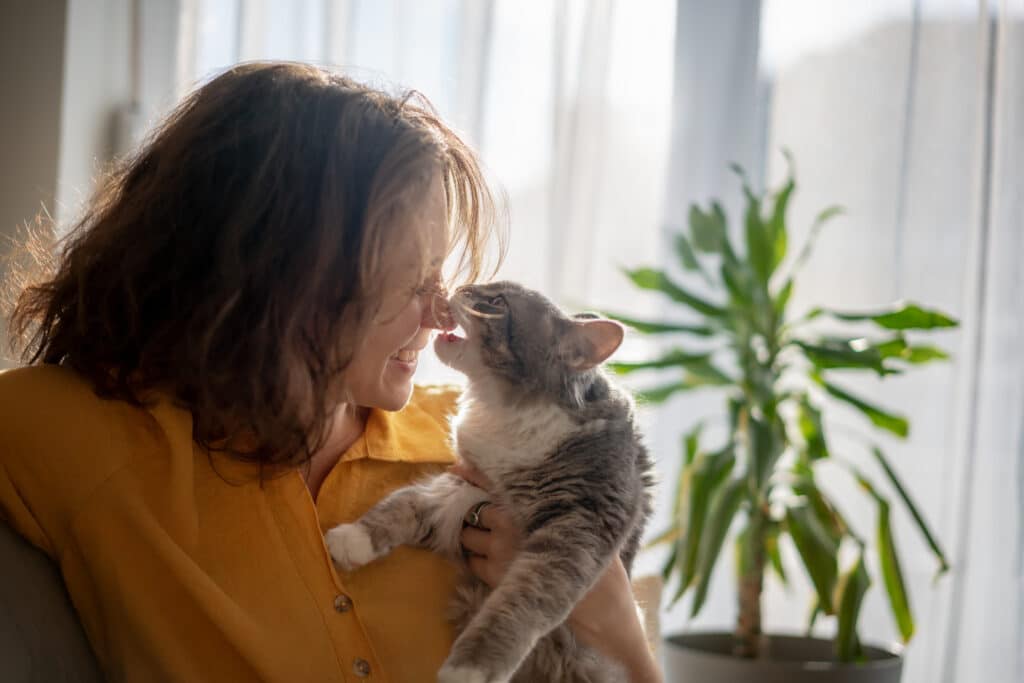
The most common reason why cats lick you is allogrooming — social grooming that cats perform with members of their inner circle. According to animal behaviorist Kristyn Vitale of Maueyes Cat Science and Education, when a cat licks you they’re treating you as a preferred associate — essentially a member of their social group.
Mother cats groom their kittens from birth as one of their first acts of care and bonding. As cats grow, they extend this behaviour to other cats they trust and bond with. When your cat licks you, they’re doing exactly what they’d do for a fellow cat they love. It’s not just affection — it’s a signal of deep social trust.
Research published in the Journal of Ethology found that 91.6% of cat grooming interactions are one-directional — one cat grooms while the other simply receives. When your cat licks you, they’re not expecting anything back. They’re just investing in the relationship.
| 💡 Key insight Cats in single-cat households are more likely to lick their human owners than cats who live with other cats. If you’re the only companion they have, you become their primary social grooming partner. Lucky you. |
2. They’re Marking You as Theirs
Cats are intensely territorial and scent-driven. They have scent glands throughout their body — in their cheeks, paws, tail base, and yes, their mouths. When your cat licks you, they deposit their saliva — and therefore their scent — onto your skin.
This is your cat essentially labelling you as part of their territory and social group. Other cats who encounter you will smell that you belong to someone. It sounds less romantic than affection, but in cat terms it’s a significant statement: this human is mine and I want everyone to know it.
This also explains why your cat might lick you more intensely after you’ve come home from somewhere new — you smell like unfamiliar places and people, and your cat is quite literally re-marking you as theirs.
3. You Taste Interesting to Them
Sometimes the reason why your cat licks you is far more mundane: you just taste good. Human skin carries natural salts from sweat that cats find appealing. Add in traces of lotion, sunscreen, food residue, or a new shampoo and you become genuinely fascinating to a creature with a sense of smell many times more powerful than ours.
If your cat zeroes in on your hands after cooking, licks your legs after you’ve applied body lotion, or goes straight for your hair after you’ve used a new conditioner — this is almost certainly what’s happening. It’s curiosity driven by taste and smell, not necessarily a deep emotional statement.
| ⚠️ Important safety note Do not let your cat lick you if you have recently applied any topical products — especially sunscreen, some hand sanitisers, or medicated creams: according to PetMD veterinarians. Many ingredients in these products are toxic to cats. Always check the label. |
4. They Learned It Gets Your Attention
Cats are quick learners. The moment they discover that licking you produces a reaction — you talk to them, pet them, look at them, or even just pull your arm away — they’ve learned a reliable method of engaging you. If you’ve ever responded to your cat licking you by giving them attention, you’ve inadvertently trained them to keep doing it.
This is especially common in cats that lick at specific times — before their mealtime, when you come home, or when they want to play. The licking isn’t purely affectionate in these cases; it’s communicative. Your cat has figured out that licking is an effective signal and they’re using it strategically.
5. They’re Comforting You — or Themselves
Cats are remarkably sensitive to their owner’s emotional state. Multiple studies have shown that cats pay close attention to human facial expressions and behaviour, and many cats become more attentive when their owners are stressed, sad, or unwell.
If your cat licks you more when you’re having a difficult day, it’s not your imagination. According to veterinary experts at Purina, cats may lick to comfort you in the same way they’d soothe a fellow cat. They can sense your distress and respond with the most nurturing behaviour in their toolkit — grooming.
Licking can also be self-comforting for the cat. A cat that is anxious or in an unfamiliar situation may lick you as a way of soothing themselves — your familiar scent is calming, and the act of grooming triggers endorphin release in cats.
6. They Were Weaned Too Early
Kittens who are separated from their mothers before 8 weeks old often develop oral comfort behaviours that persist into adulthood. If your cat not only licks you but also kneads rhythmically and sometimes tries to suckle at fabric or skin while doing it, early weaning is likely the cause.
These cats are essentially seeking the comfort of nursing — the warmth, the scent, the physical contact. It’s a harmless behaviour in most cases, though it can become compulsive in some cats. If your cat seems distressed or unable to stop, a vet conversation is worthwhile.
7. They’re Stressed or Anxious
While licking can be a way for cats to self-soothe, excessive licking — especially if it’s a new behaviour — can signal underlying stress or anxiety. Changes in your household, new pets or people, loud noises, or disruptions to routine can all trigger anxious licking in cats.
The difference between affectionate licking and stress licking is usually in the intensity and context. A relaxed cat who licks you briefly while purring is almost certainly showing affection. A cat who licks compulsively, seems unable to stop, or licks the same patch of your skin repeatedly may be signalling that something in their environment is causing distress.
| 🐾 Tip If your cat’s licking has recently become more frequent or intense, think about what has changed in your home. New furniture, a house move, a new baby, a new pet, or even a change to your working schedule can all stress cats significantly. |
8. A Medical Issue
In rare cases, excessive licking can have a medical cause. Nausea, pain, or certain neurological conditions can cause cats to lick compulsively. Cats sometimes lick specific parts of your body that correspond to areas where they themselves are experiencing discomfort — a fascinating if not fully understood phenomenon.
If licking is sudden, excessive, focused on one specific spot, or accompanied by other changes in behaviour such as reduced appetite, hiding, or vocalisation — a vet visit is the right move.
Why Does My Cat Lick Me Then Bite Me?
This is one of the most common follow-up questions — and it’s something almost every cat owner has experienced. You’re enjoying a lovely licking session and suddenly your cat turns and nips you. What happened?
There are two main explanations. The first is overstimulation. Cats have a threshold for physical contact, and licking — especially with reciprocal petting — can cross it. The bite is a clear signal: that’s enough. Respect it and give your cat space.
The second explanation comes from how cats groom each other. Allogrooming between cats frequently includes a light nip — it’s how they communicate during the grooming process. Your cat may be doing exactly what they’d do to a fellow cat. The bite isn’t aggressive; it’s just part of the grooming language.
Key distinction: a gentle nip from a relaxed, purring cat is normal grooming behaviour. A harder bite from a cat whose ears are flat and tail is twitching is a warning. Always read the other body language signals alongside the bite.
Is It Safe to Let Your Cat Lick You?
Generally yes — an occasional lick from a healthy cat is harmless. There are a few situations to be aware of:
- Avoid letting your cat lick open wounds or broken skin — cats’ mouths carry bacteria including Pasteurella that can cause infections in humans
- Avoid face licking if possible — particularly eyes and mouth
- Never let your cat lick areas where you’ve applied medications, sunscreen, or heavily scented products
- If you’re immunocompromised, talk to your doctor about pet hygiene more broadly
For healthy adults with intact skin, occasional cat licking carries minimal risk and a great deal of bonding benefit.
How to Gently Discourage Excessive Licking
If your cat’s licking has become too much — too frequent, too rough, or simply unwanted — here’s how to reduce it without damaging the relationship:
- Don’t react when they lick — no petting, talking, or even eye contact. Remove the reward and the behaviour reduces over time
- Gently redirect to a toy when licking starts — give them something else to engage with
- Check for stressors in their environment — more licking often means more anxiety
- Never push your cat away forcefully or shout — this damages trust without solving the behaviour
- If licking is compulsive and intense, speak to your vet about anxiety management options including Feliway diffusers or behavioural support
Frequently Asked Questions
| Q: Why does my cat lick my hair?A: Hair is one of a cat’s favourite licking targets because it carries your personal scent very strongly and the texture is similar to fur. If your cat grooms your hair regularly, it’s almost certainly a deep affection and bonding behaviour — the same thing they’d do to a fellow cat they love. Some cats also enjoy the taste of hair products, so they may be attracted by the scent of your shampoo or conditioner. |
| Q: Why does my cat lick me in the morning?A: Morning licking is often a combination of greeting behaviour and attention-seeking. Your cat has been waiting for you to wake up and licking is their way of saying hello — and possibly of reminding you it’s breakfast time. It can also be that you’re most still and accessible in the morning, making it easier for them to groom you. |
| Q: Why does my cat lick me and then walk away?A: A quick lick and departure is your cat’s version of a hello kiss. They’ve acknowledged you, deposited their scent, shown affection — and now they’re done. Cats are not always looking for extended interaction. A brief lick is a complete and meaningful gesture in cat terms. |
| Q: Why does my cat only lick certain people?A: Cats lick people they trust and feel bonded with. If your cat licks you but not other people in the house, it means you’re their preferred person — their main social attachment. It’s not that they dislike the others; you’re simply their chosen one. |
| Q: Should I let my cat lick my face?A: It’s best to avoid it if you can, particularly around eyes and mouth. Cat saliva contains bacteria that are harmless to cats but can occasionally cause issues in humans, particularly around mucous membranes. If your cat tries to lick your face, gently redirect them to your hand or arm instead. |
Final Thoughts
Why does my cat lick me? In almost every case, it’s one of the most flattering things your cat can do. You’re part of their social group, you smell like theirs, you make them feel safe — and they’re expressing all of that with the only grooming tool they have.
The sandpaper texture might not be the most comfortable experience, but next time your cat gives you their rough little tongue treatment, take a moment to appreciate what it actually means. In cat language, you’ve been chosen. That’s everything.
Related: our guide on why do cats purr? covers this in more depth.
If you want to dig deeper, check out our guide on why does my cat bite me?.

Frequently Asked Questions: Why Does My Cat Lick Me?
Why does my cat lick me and then bite me?
When your cat licks you and then bites, it is usually a form of play or overstimulation — not aggression. This is sometimes called a “love bite.” Why does my cat lick me and then bite me? Most likely because they shifted from grooming mode to playful mode. If the biting is gentle and without hissing, it is social behaviour. Firm biting with pinned ears is a signal your cat wants you to stop.
Why does my cat lick me when I pet her?
Why does my cat lick me when I pet her? This is a sign of reciprocal grooming — she is treating you the way she would treat a trusted companion cat. Mutual grooming is one of the strongest bonding behaviours in cats, so if your cat licks you while being petted, take it as a compliment. It means she feels safe and closely bonded to you.
Is it safe to let my cat lick me?
For most healthy adults, an occasional lick from a cat is harmless. However, cat saliva does contain bacteria such as Pasteurella, which can cause infection if it enters a wound or mucous membrane. Why does my cat lick me near cuts or sores? They may be drawn to the scent, but you should gently redirect them in those cases. People who are immunocompromised should be more cautious about contact with cat saliva.
We also have a complete guide on why do cats knead?.
This post is part of our complete cat behaviour library. For the full guide covering all 18 cat behaviours in one place, visit our complete cat behaviour guide.
| ⚠️ Disclaimer This article is for informational purposes only and does not constitute veterinary advice. If your cat’s licking behaviour changes suddenly or becomes excessive, please consult your veterinarian. |
This article is written for informational purposes and reflects the personal experience and research of the author. It does not replace professional veterinary or dog training advice. Always consult your veterinarian or a certified trainer for individual guidance.