

Published May 2026 | 5 min read
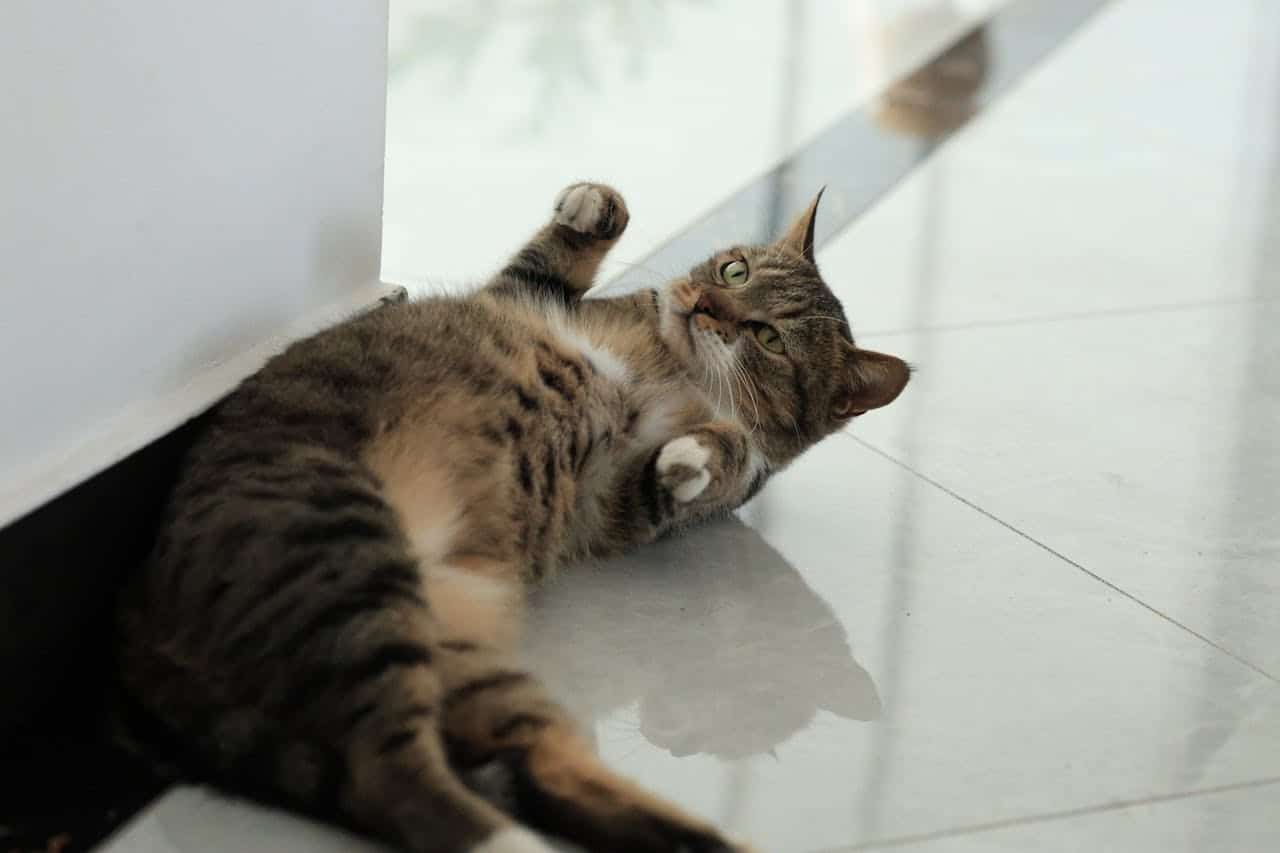
Your cat walks up to you, makes confident eye contact, and then flops dramatically onto the floor and rolls around like they’ve forgotten how their legs work. Then they look at you from this undignified position as though expecting something. What does it mean?
Cats roll on the ground for several different reasons — and context is everything. The same physical behaviour can mean very different things depending on when and where it happens.
We also have a complete guide on why do cats sleep so much?.
For more on this, see our guide on why do cats hate water?.
You might also find our guide on why does my cat lick me? helpful.
6 reasons cats roll on the ground
1. Showing trust and comfort — the belly display
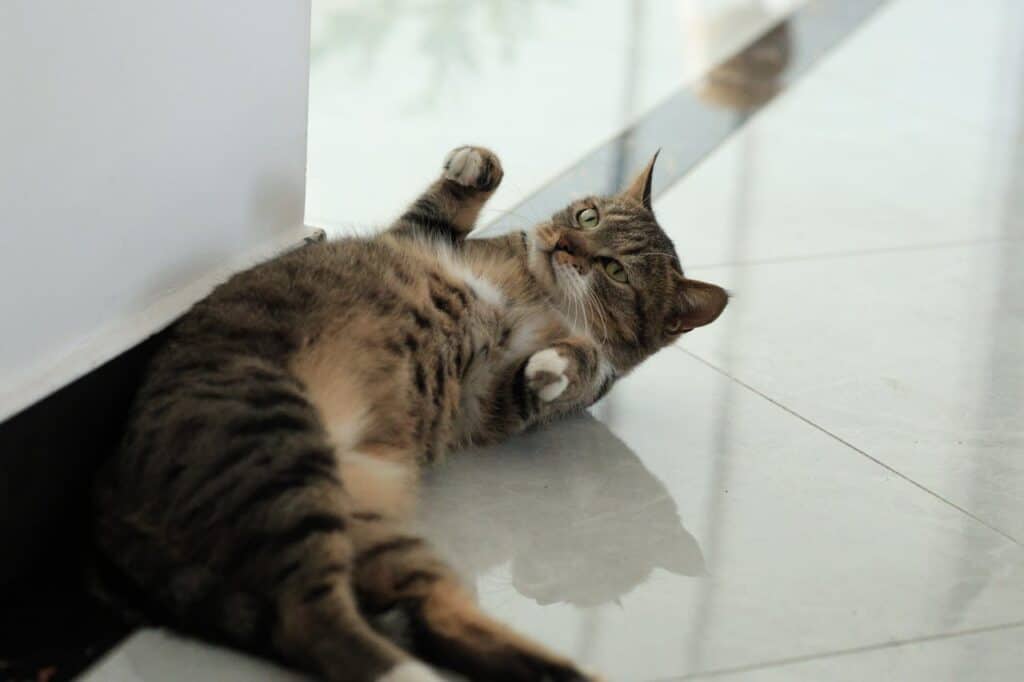
When your cat rolls over and shows you their belly, they’re making one of the most vulnerable moves in the feline repertoire. The belly contains vital organs and exposing it signals that the cat feels completely safe in their environment and with the people around them. A cat that rolls onto their back in front of you is giving you a significant compliment.
This does not mean they want you to rub their belly. Many cats find belly contact immediately overwhelming and will bite or scratch if you reach for it. The roll is a display of trust and comfort — not an invitation to touch. Appreciate it from a respectful distance, or offer your hand and let your cat decide whether to make contact.
2. Scent marking the floor or territory
Cats have scent glands along their body — in their cheeks, chin, flanks, and base of the tail. Rolling on the floor is a full-body scent deposit, transferring their unique pheromone signature to the surface. This is territory marking through rolling — your cat is saying ‘this floor, this spot, this area is mine.’
This explains why cats frequently roll in specific spots rather than randomly — they’re returning to and refreshing familiar scent locations, or marking new surfaces that smell interesting or unfamiliar.
3. The catnip response
If your cat has just encountered catnip — a toy, a sprinkle on the floor, a catnip plant — the rolling is directly caused by nepetalactone, the active compound in catnip. It binds to receptors in the cat’s nasal tissue and produces a euphoric response that typically involves rolling, rubbing the face, vocalising, and general apparent ecstasy.
Approximately 50–70% of cats are genetically sensitive to catnip. The response lasts 5–15 minutes, after which the cat becomes temporarily immune for about 30 minutes. Rolling on something that smells of catnip is completely normal and harmless.
4. Greeting you
Many cats greet their favourite humans with a roll — approaching, then flopping and rolling as a social signal. This is essentially your cat saying hello in the most demonstrative way available to them. It’s an excited, positive greeting behaviour that says: you’re here, I’m happy, look at me.
This type of rolling is often accompanied by purring, chirping, and stretching. It’s one of the clearest expressions of positive feeling a cat can offer.
5. Female cats in heat
Unspayed female cats roll on the ground extensively when in heat. The rolling is part of a broader set of behaviours including vocalisation, posturing, and rubbing — all signals of reproductive availability. If your unspayed female is rolling more than usual alongside increased vocalisation and affection-seeking, she is likely in heat.
6. Just because it feels good
Sometimes cats roll because the sensation is pleasurable — a good stretch, a scratch on the back from the texture of the floor, the sensory pleasure of rolling on a warm surface. Cats are sensory creatures and physical sensation is genuinely enjoyable for them. Not every roll requires a deeper explanation.
Frequently asked questions
| Q: Why does my cat roll on the floor when I come home?A: This is a greeting roll — one of the nicest things your cat can do. They’re excited to see you and expressing it physically. Roll back in your own way: get down to their level, offer your hand, and give them the attention they’re clearly asking for. |
| Q: Why does my cat roll in the dirt outside?A: Outdoor rolling in dirt or sand is often scent-related — rubbing their body over an interesting smell or marking the spot with their own scent. It can also simply feel good — the texture of loose earth against their fur is pleasant for many cats. Some cats roll in dirt after a stressful event as a way of self-soothing and restoring their familiar scent. |
| Q: Why does my cat roll on its back and then bite me when I pet it?A: Classic overstimulation combined with the belly display misread as an invitation. The roll says ‘I’m comfortable.’ Reaching for the belly often crosses into ‘I’ve had enough.’ The bite is not aggression — it’s a clear ‘stop.’ Offer a hand near the head or chin instead of going for the belly. |
You may also want to read our guide on why do cats purr?.
Related: our guide on why does my cat bite me? covers this in more depth.
If you want to dig deeper, check out our guide on why does my cat follow me everywhere?.
We also have a complete guide on why does my cat stare at me?.
For more on this, see our guide on why does my cat headbutt me?.
This post is part of our complete cat behaviour library. For the full guide covering all 18 cat behaviours in one place, visit our complete cat behaviour guide.
PetMD → https://www.petmd.com/cat/behavior
Frequently Asked Questions: Why Cats Roll on the Ground
Is it normal for cats to roll on the ground frequently?
Yes — cats roll on the ground for a variety of completely normal reasons. Whether they’re scent-marking, showing submission, responding to catnip, or simply enjoying a satisfying scratch on a rough surface, this behaviour is healthy and instinctual. If your cat suddenly starts rolling excessively and appears distressed, or if they’re rolling alongside signs of discomfort like vocalising, it’s worth a vet check to rule out skin irritation or pain.
Why do cats roll on the ground in front of other cats?
When cats roll on the ground in front of another cat, it can serve as a social signal — either a submissive gesture to avoid conflict or an invitation to play. Female cats in heat roll frequently as part of their reproductive display. Between familiar cats in the same household, rolling is often a relaxed bonding behaviour, indicating that the rolling cat feels safe and unthreatened in the other cat’s presence.
Why do cats roll on the ground after eating?
Post-meal rolling is usually a contentment signal. Cats roll on the ground when they feel relaxed and satisfied — the same reason they knead, purr, or slow-blink. It can also be a way to redistribute their scent after a feeding session, reclaiming their personal smell that gets masked by food odours. This is a positive behaviour that indicates your cat feels comfortable and secure in their environment.
Should I respond when my cat rolls on the ground in front of me?
Absolutely — when cats roll on the ground in front of their owner, it’s often an invitation for interaction. A gentle stroke or scratch on the belly (if your cat tolerates it) reinforces the bond. Be aware that not all cats enjoy belly contact, even when they’ve rolled over to expose it. Some cats roll to invite play rather than petting, so follow your cat’s individual cues to get the response right.
Purina → https://www.purina.com/articles/cat/behavior
| ⚠️ Disclaimer This article is for informational purposes only and does not constitute veterinary advice. If you are concerned about your cat’s behaviour or health, please consult your veterinarian. |
In my experience, the rolling behaviour is one of the clearest signs that a cat feels genuinely at home. My cat barely tolerated our living room for the first month after we moved — no rolling, no slow blinks, nothing. The day she flopped down in the middle of the floor and started rolling around for no apparent reason, I knew she’d finally relaxed. It sounds trivial, but if your cat rolls in your presence, take it as a compliment. They wouldn’t do it if they didn’t trust you completely.
This article is written for informational purposes and reflects the personal experience and research of the author. It does not replace professional veterinary or dog training advice. Always consult your veterinarian or a certified trainer for individual guidance.