

Published May 2026 | 5 min read
Table of Contents
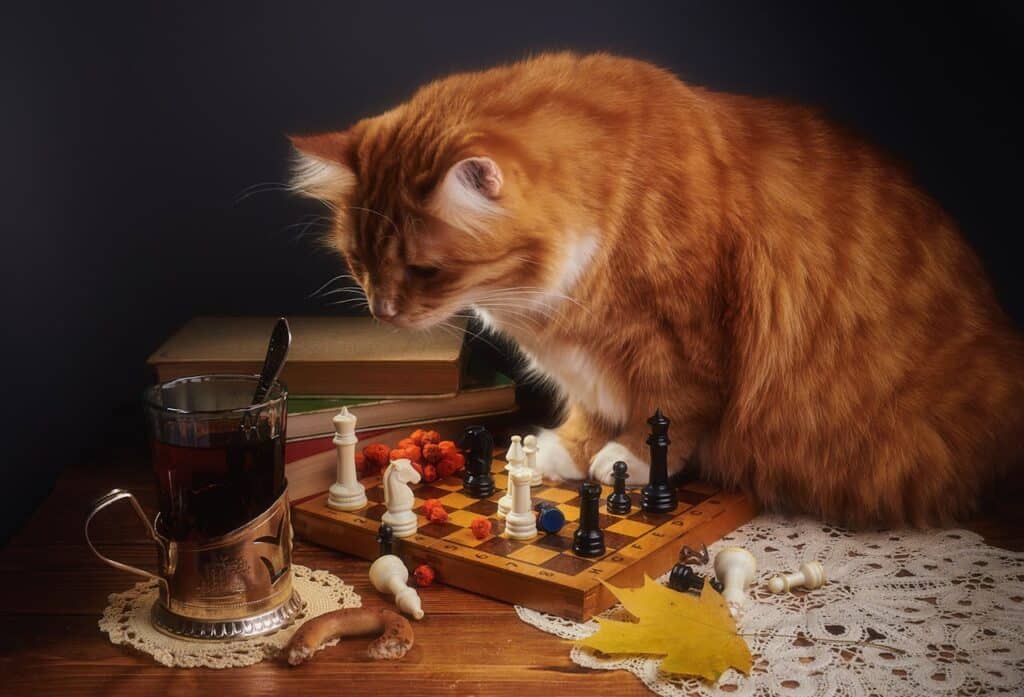
Your cat walks up to your glass of water. Makes direct eye contact with you. Slowly extends one paw. And with deliberate, unhurried grace — pushes it off the table. Then walks away. The Cornell Feline Health Center notes that this behavior is rooted in feline curiosity—cats use their paws to test and interact with objects as a form of natural environmental exploration.
It feels personal. It feels intentional. It might even feel like spite. But despite what it looks like, your cat almost certainly isn’t trying to wind you up. The real reasons are more interesting — and more rooted in instinct than malice.
We also have a complete guide on why do cats sleep so much?.
For more on this, see our guide on why do cats hate water?.
You might also find our guide on why does my cat lick me? helpful.
4 reasons cats knock things over
1. Hunting instinct — testing if prey is alive
Cats are predators and their prey-testing instinct is strong. In the wild, a cat doesn’t immediately grab prey it has spotted — it taps and bats it first to check if it’s alive. Prey that moves is worth pursuing. Prey that doesn’t might be injured or dead — less exciting, possibly less safe.
When your cat bats a pen, a cup, or your phone across the desk, they’re running the same programme. The tap is a prey test. If the object moves (falls, rolls, makes a noise), the instinct is rewarded — something happened, something moved. If nothing happens, they lose interest. According to PetMD, as predators, cats are hardwired to be attracted to things that move and react — knocking things over plays directly into this instinct.
2. Attention-seeking — the most deliberate reason
Many cats discover — through trial and error — that knocking things over produces an immediate, reliable reaction from their humans. You gasp. You jump up. You look at the cat. You interact with the cat. Even a negative reaction (saying ‘no’, moving the cat away) is attention, and to a cat seeking engagement, any attention is better than none.
Once a cat has learned that knocking things over is an effective attention mechanism, they will use it strategically. The direct eye contact before the push is your cat watching to make sure the audience is ready. This is why the behaviour so often happens when you’re busy, distracted, or ignoring them — it’s a deliberate attention bid.
| 💡 The counter-intuitive response The only way to extinguish attention-seeking knocking is to completely ignore it — no reaction, no eye contact, no words. Stand up calmly and walk away without acknowledging the cat. This removes the reward. Consistency is essential — responding even occasionally teaches your cat the strategy still sometimes works. |
3. Curiosity and environmental exploration
Cats learn about their environment through touch and observation. Knocking things over is a form of investigation — what does this do when it falls? What sound does it make? What happens next? From a cat’s perspective, pushing objects and watching them react provides genuinely useful information about the physical world.
This is especially common with new objects in the environment. A new item on the coffee table will almost always get a thorough investigative batting before your cat decides it’s boring. Cats are essentially running physics experiments, and the table is their lab.
4. Boredom and understimulation
An understimulated cat in a static environment will find ways to make things happen. Knocking objects off surfaces creates movement, sound, and often a reaction — all of which are stimulating. If your cat is pushing things over frequently and you’re not providing adequate play and enrichment, boredom is likely the driver.
According to Purina, cats that need significant mental stimulation — particularly high-energy breeds like Maine Coons, Bengals, and Savannahs — are more likely to knock things over out of boredom than more laid-back breeds.
How to stop your cat knocking things over
- Don’t react when it happens — remove the attention reward entirely
- Provide dedicated play sessions twice daily to address hunting instinct and boredom simultaneously
- Use museum putty or non-slip pads under items you don’t want knocked off
- Move valuables out of reach until the behaviour reduces
- Proactively engage your cat before they reach for something — redirect the attention bid before it becomes a shove
- Cat puzzle feeders and interactive toys give cats something stimulating to do that doesn’t involve your belongings
Frequently asked questions
| Q: Does my cat knock things over on purpose?A: Yes — particularly in the case of attention-seeking knocking. Your cat has learned that pushing things produces results. The hunting-instinct knocking may be less consciously deliberate, but the attention-seeking version is very much intentional. Your cat knows exactly what they’re doing. |
| Q: Why does my cat knock things over and then look at me?A: This is the attention-seeking version confirmed. They’re checking whether the performance landed. The look says: ‘Did that work? Are you paying attention to me now?’ Your response — or deliberate lack of it — determines whether they try again. |
| Q: Why does my cat knock my drink over specifically?A: Liquids move in interesting ways when disturbed. A glass of water being knocked over produces an immediate, large reaction — liquid spreading, possibly a noise, definitely your attention. From a cat’s perspective, liquid containers are reliably rewarding objects to push. |
| Q: My cat only knocks things over at night. Why?A: Cats are crepuscular and most active at dawn and dusk. Night knocking is often energy-seeking behaviour — your cat is awake, wants engagement, and your sleeping form isn’t providing any. Energetic play before bedtime followed by their largest meal significantly reduces nighttime object-toppling. |
You may also want to read our guide on why do cats purr?.
Related: our guide on why does my cat bite me? covers this in more depth.
If you want to dig deeper, check out our guide on why does my cat follow me everywhere?.
We also have a complete guide on why does my cat stare at me?.
For more on this, see our guide on why does my cat headbutt me?.
This post is part of our complete cat behaviour library. For the full guide covering all 18 cat behaviours in one place, visit our complete cat behaviour guide.
ASPCA: https://www.aspca.org/pet-care/cat-care
| ⚠️ Disclaimer This article is for informational purposes only and does not constitute veterinary advice. If you are concerned about your cat’s behaviour or health, please consult your veterinarian. |
This article is written for informational purposes and reflects the personal experience and research of the author. It does not replace professional veterinary or dog training advice. Always consult your veterinarian or a certified trainer for individual guidance.