

Published May 2026 | 6 min read
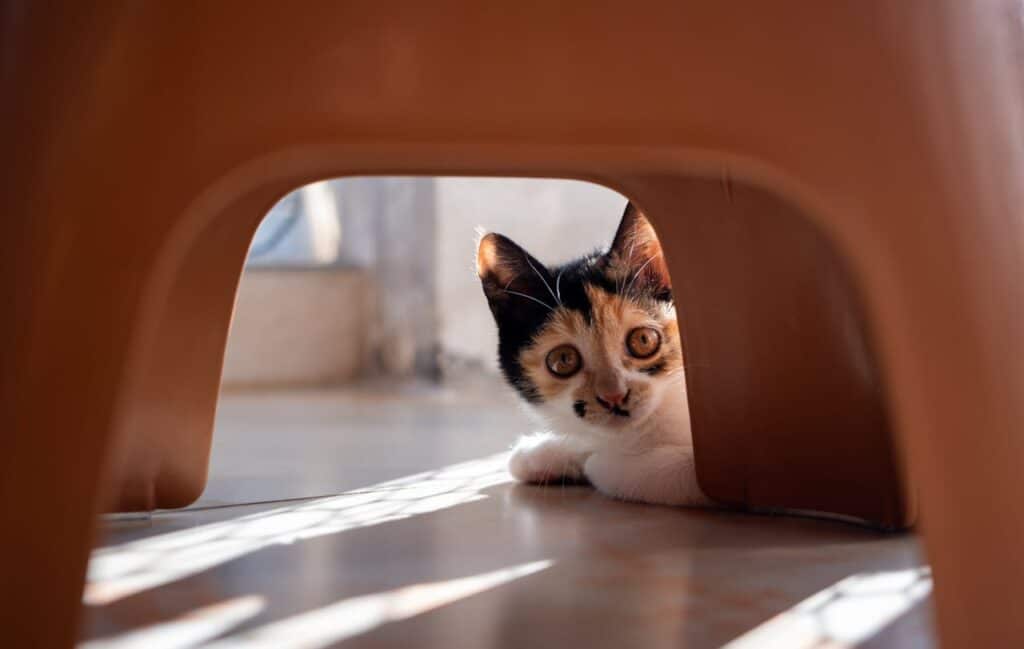
When asking why is my cat hiding, the answer matters — hiding can signal anything from a minor stress response to a serious health issue that needs prompt attention.
You call your cat’s name. No response. You check their usual spots — not on the bed, not on the sofa, not in the sunny spot by the window. Eventually you find them wedged behind the washing machine, or deep in the back of the wardrobe, and they look at you with an expression that says ‘I was fine without you noticing me.’
Hiding is one of the most common behaviours owners worry about — but most hiding is perfectly normal. The challenge is distinguishing normal hiding from hiding that signals something is wrong. Here’s how to tell the difference.
Related: our guide on why do cats sleep so much? covers this in more depth.
If you want to dig deeper, check out our guide on why do cats hate water?.
We also have a complete guide on why does my cat lick me?.
First: hiding is normal cat behaviour
Before worrying, understand this: cats are both predators and prey animals. Both roles require hiding. A cat hunting hides to ambush. A cat feeling vulnerable hides to stay safe. Hiding is not inherently a problem — it’s a fundamental part of being a cat.
Most cats have favourite hiding spots they retreat to regularly for quiet, undisturbed rest. According to ElleVet Sciences, hiding provides warmth, quiet, safety, and a good vantage point to observe their surroundings. A cat who hides in the same spot they always hide in, comes out for meals and litter, and is otherwise behaving normally, is not a cat to worry about.
The cat to worry about is one whose hiding behaviour has changed — suddenly hiding more, hiding longer, hiding in unusual places, or hiding in ways that seem distressed rather than peaceful.
7 reasons cats hide
1. They want quiet rest — the most common reason
Sometimes a cat hides because they want to sleep somewhere peaceful, undisturbed, and safe from the household’s noise and activity. This is healthy, normal behaviour. If your cat emerges happily for meals, uses the litter box, and interacts with you when they do come out, they’re simply enjoying some alone time. Respect it.
2. Fear or a frightening event
Loud noises, unfamiliar visitors, other animals, sudden movements — any frightening stimulus can send a cat straight to their hiding spot. This is the flight response of a prey animal in action: when threatened, find cover and wait for the danger to pass.
Post-fear hiding is temporary. Most cats emerge within a few hours once the stimulus is gone and they’ve had time to process that the danger has passed. Allow them to come out on their own terms — coaxing is fine, forcing is not.
3. Adjustment to change
Cats are extraordinarily sensitive to changes in their environment and routine. A new person or pet in the house, moving furniture, a house move, changes to your work schedule — all of these can trigger increased hiding as the cat processes the new situation from the safety of a known retreat.
Hiding during adjustment is normal. Give your cat time, maintain as much routine as possible, place their food, water, and a litter box near the hiding spot so they don’t have to venture out when they’re not ready, and allow them to emerge at their own pace.
4. Illness or pain — the most important reason to check
Cats instinctively hide when they are unwell or in pain. In the wild, a sick or injured animal is a target for predators — hiding protects a vulnerable cat. This instinct is so deeply embedded that domestic cats exhibit it even though they face no predators.
According to PetMD, everything from urinary tract infections to upper respiratory infections to dental pain to kidney disease can lead to increased hiding. Illness hiding is different from rest hiding: the cat seems withdrawn rather than peaceful, may not come out for meals, and is often accompanied by other symptoms.
| ⚠️ Warning signs: hiding that needs a vet visit See your vet if hiding is accompanied by: not eating for more than 24 hours, not drinking, lethargy or weakness, vomiting or diarrhoea, changes in urination, difficulty breathing, or the hiding is new and has no obvious environmental trigger. |
5. A new cat or animal in the household
Introducing a new pet is one of the most common causes of increased hiding. The resident cat is processing a threat to their territory and retreating while they decide how to handle it. This is normal and usually temporary — most cats emerge and begin the gradual process of adjusting to the new housemate within days to weeks.
During this period: don’t force interaction, ensure the hiding cat has separate food, water, and litter from the new animal, and allow territory adjustment to happen at the cats’ own pace.
6. Pregnancy or pre-birthing
An unspayed female cat who begins hiding in unusual spots — wardrobes, under beds, in secluded corners — may be preparing to give birth. Female cats seek out safe, secluded, enclosed spaces as they approach labour. If your cat is intact and has had access to a male cat, consider this possibility.
7. Old age and cognitive changes
Senior cats sometimes hide more as they age. Declining senses (hearing, vision) can make the world feel more overwhelming and hiding provides predictable safety. Feline cognitive dysfunction — cat dementia — can also cause behavioural changes including hiding, particularly if accompanied by nighttime vocalisation and apparent confusion.
Normal hiding vs. worrying hiding: a simple guide
- Normal: hiding in a usual spot, comes out for meals, uses litter box, seems peaceful when found
- Normal: hiding after a frightening event, emerges within hours when the stimulus has passed
- Normal: hiding during adjustment to a change, gradually emerges over days
- Worrying: hiding longer than 24 hours, not eating, not using litter box
- Worrying: hiding in unusual places your cat has never chosen before
- Worrying: hiding accompanied by other symptoms — lethargy, vomiting, changes in breathing
- Worrying: hiding that is sudden and has no obvious environmental trigger
How to help a hiding cat
The worst thing you can do with a hiding cat is force them out. This worsens anxiety and makes hiding episodes longer. Instead:
- Place food, water, and a litter box near the hiding spot so basic needs are met without them having to emerge
- Sit near the hiding spot and speak softly — don’t reach in, just be present
- Use Feliway diffuser nearby — the synthetic pheromone creates a feeling of safety
- Leave a worn item of clothing near the hiding spot — your scent is calming
- Wait. Patience is the most effective tool.
Frequently asked questions
| Q: How long is it normal for a cat to hide?A: A few hours after a fright is completely normal. Hiding for a full day during a stressful event (house move, new pet) is not unusual. More than 24–48 hours of hiding with no meals is concerning and warrants a vet check. More than 24 hours of complete absence from food and water is an emergency. |
| Q: Why is my cat hiding under the bed specifically?A: Under the bed offers everything a hiding cat wants: enclosed space, covered from above, access to observe without being seen, cool in summer, and usually quiet. It’s the ideal defensive position for a cat seeking security. |
| Q: Should I leave a hiding cat alone?A: Yes, mostly. Gentle presence nearby without forcing interaction is ideal. Check that food and water are accessible. If the cat is hiding because of fear or change, leaving them alone while maintaining routine is the most effective approach. |
| Q: Why does my cat hide when guests come over?A: Strangers represent unknown elements in a cat’s territory. Hiding allows the cat to observe and assess the new person from safety before deciding whether to approach. This is normal social caution. Some cats will emerge and investigate once they’ve decided the guest is non-threatening. Others wait until the guest leaves. Both are normal. |
For more on this, see our guide on why do cats purr?.
You might also find our guide on why does my cat bite me? helpful.
You may also want to read our guide on why does my cat follow me everywhere?.
Related: our guide on why does my cat stare at me? covers this in more depth.
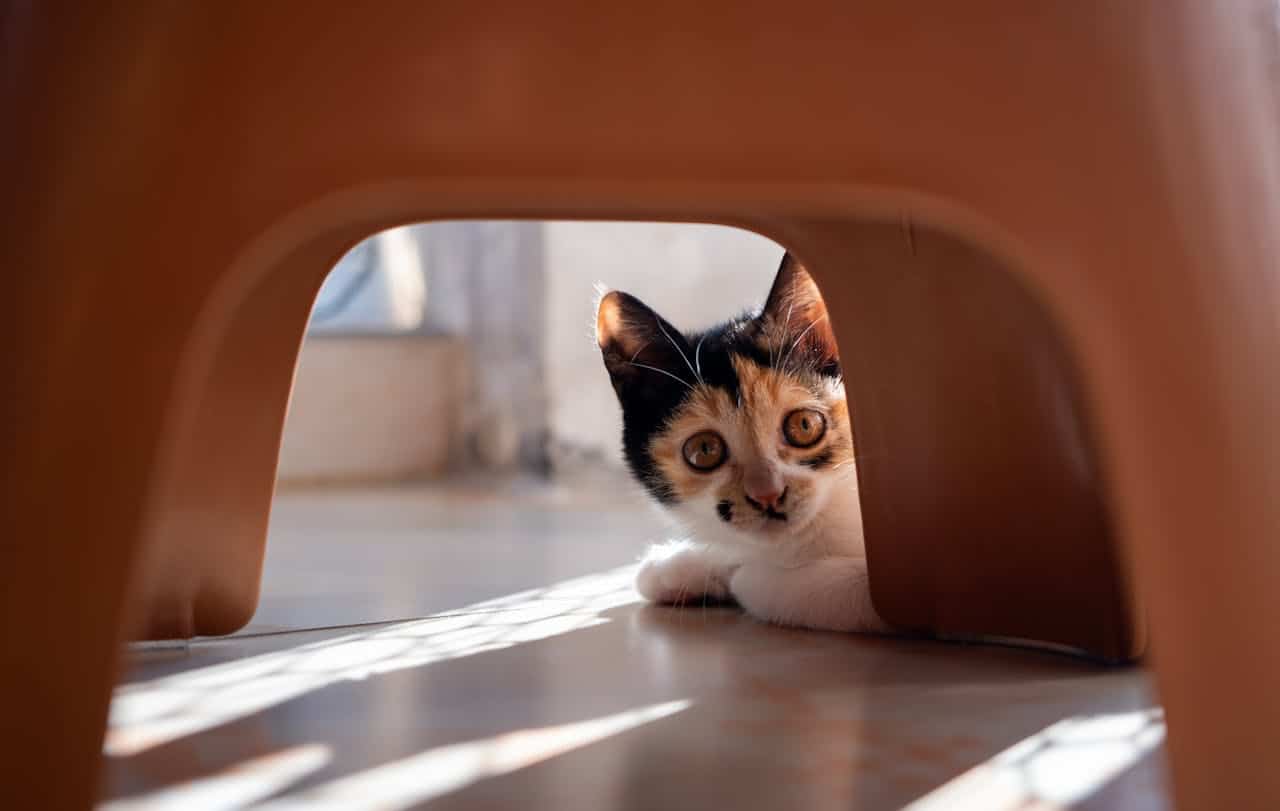


Frequently Asked Questions: Why Is My Cat Hiding?
How long is too long for a cat to hide?
If you’re asking why is my cat hiding and they’ve been in the same spot for more than 24 hours without eating, drinking, or using the litter box, that’s a red flag. Brief hiding — a few hours after a stressful event like a vet visit or a new arrival at home — is normal. Extended hiding paired with other symptoms like lethargy, loss of appetite, or laboured breathing warrants an urgent vet visit.
Why is my cat hiding after moving to a new home?
This is one of the most common and benign reasons why is my cat hiding. A new environment is overwhelming — unfamiliar smells, sounds, and layouts trigger a protective stress response. Most cats emerge gradually within days to a few weeks. Help the process along by giving them a single safe base room with all their essentials before slowly expanding access to the rest of the house.
Should I pull my hiding cat out to check on them?
Generally, no — forcing a hiding cat out increases their stress and can trigger defensive aggression. Instead, sit near their hiding spot and speak calmly. Offer food from your hand or place it nearby. Why is my cat hiding is best answered by observation rather than intervention. If they’re not emerging at all over 24+ hours, call your vet rather than trying to physically remove them.
Can pain cause cats to hide?
Yes — pain is one of the most significant answers to why is my cat hiding suddenly. Cats instinctively conceal illness and vulnerability. A cat hiding more than usual, especially combined with reduced appetite, changes in posture, or vocalising when touched, may be in pain. Dental disease, urinary issues, arthritis, and internal conditions are all common culprits. Don’t wait to see if it passes — book a vet appointment promptly.
If you want to dig deeper, check out our guide on why does my cat headbutt me?.
This post is part of our complete cat behaviour library. For the full guide covering all 18 cat behaviours in one place, visit our complete cat behaviour guide.
| ⚠️ Disclaimer This article is for informational purposes only and does not constitute veterinary advice. If you are concerned about your cat’s behaviour or health, please consult your veterinarian. |
This article is written for informational purposes and reflects the personal experience and research of the author. It does not replace professional veterinary or dog training advice. Always consult your veterinarian or a certified trainer for individual guidance.