


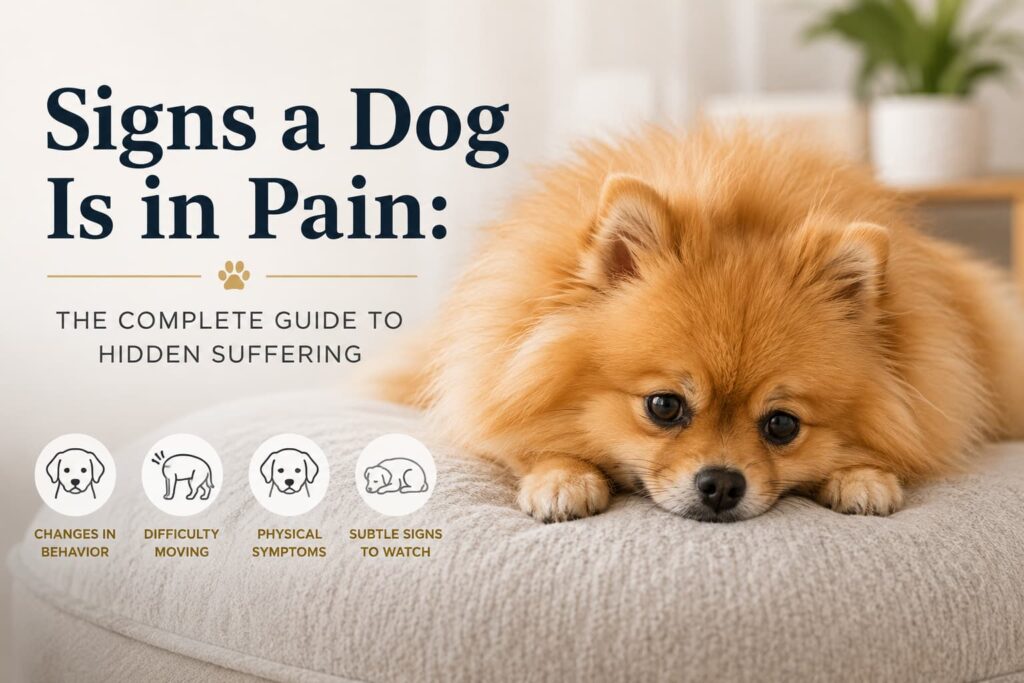
The signs a dog is in pain are often far subtler than most owners expect. There is a common assumption that a dog in pain will yelp, whimper, or show obvious distress. Some do. Many do not. Dogs evolved in an environment where showing weakness or injury made them vulnerable, and the instinct to mask pain is deeply ingrained. PetMD veterinary guidance states this plainly: dogs often hide pain, so subtle changes can be important.
In eleven years with my Labrador, the most significant pain episode I witnessed had almost none of the obvious signs I expected. He was not whimpering. He was eating reasonably normally. What I noticed was that he stopped jumping up to greet me at the door — something he had done every single day for years. That behavioural change was the sign. The diagnosis was a spinal disc problem that needed treatment.
Understanding the signs a dog is in pain — particularly the subtle ones that are easy to dismiss — is one of the most important things a dog owner can do for their animal’s quality of life.
If you’ve noticed your dog skipping meals or seeming unusually tired, our guides on why your dog isn’t eating and why your dog seems lethargic dig into these specific signs in more detail.
Acute Pain vs Chronic Pain — Why the Distinction Matters
Preventive Vet makes a distinction that shapes everything about how pain presents in dogs: acute pain and chronic pain look different, and both deserve attention.
Acute pain — sudden onset from injury, surgery, or acute illness — typically produces more obvious signs. The dog may yelp, guard the affected area, limp suddenly, or react sharply when touched.
Chronic pain — persistent pain from arthritis, disc disease, dental disease, or long-term illness — develops gradually and dogs adapt to it remarkably well. The signs are often behavioural and easy to attribute to ageing: slowing down, less enthusiasm, sleeping more, no longer jumping up. These are not simply the dog getting older. These are frequently signs of chronic pain that can be significantly improved with veterinary treatment.
This post is part of our complete pet health library — visit our pet health guide for the full collection.
| 💡 The ageing dog myth: Slowing down, stiffening in the morning, reluctance to use stairs, less interest in play — these are commonly attributed to a dog simply getting older. In many cases, they are signs of treatable chronic pain, particularly arthritis. Preventive Vet notes that recognising chronic pain early allows for better treatment and a much better quality of life. Do not accept gradual decline as inevitable without a veterinary assessment. |
The Obvious Signs a Dog Is in Pain
- Limping or favouring one leg— the most recognisable sign. Any sudden or persistent limp warrants veterinary attention.
- Vocalisation— yelping, whimpering, howling, or groaning. Particularly significant if it occurs when moving, being touched, or changing position.
- Reluctance to move— not wanting to stand up, walk, climb stairs, or jump into a car.
- Guarding a body part— tucking a paw away, protecting an area of the abdomen, or reacting when that area is approached.
- Panting at rest— heavy breathing or panting when the dog has not been exercised and the temperature does not justify it. Vets Now identifies this as one of the pain signals owners most commonly miss.
- Altered posture— arching the back (spinal pain), tucking the abdomen under (abdominal pain), or holding the head low.
The Subtle Signs a Dog Is in Pain — These Are the Ones Most Owners Miss
Animal Emergency Service Australia and Preventive Vet both emphasise that dogs are very good at not showing discomfort. These are the less obvious signs a dog is in pain:
Behavioural changes
MedVet identifies behavioural changes as often the earliest and most overlooked indicators. Changes to watch for:
- Sudden aggression or snapping — a previously gentle dog that starts growling or snapping when touched may be protecting a painful area. GoodRx notes that pain can cause aggression in dogs that would not normally display it.
- Withdrawal and hiding — a social dog that starts hiding from family members or avoiding being touched is communicating discomfort.
- Clinginess — some dogs become unusually clingy when in pain, seeking reassurance.
- Personality change — a previously enthusiastic dog becoming flat, disengaged, or irritable.
Sleep and rest changes
Preventive Vet highlights this as a commonly missed sign: sleep disruptions are extremely common when dogs are in pain. Difficulty settling, frequent position changes during the night, restlessness, or choosing hard floors instead of their usual bed can all indicate discomfort. A dog that used to sleep through the night but now wakes frequently may be in pain.
Changes in eating and drinking
Veteris notes that changes in how your dog is eating or drinking can signal dental pain, spinal discomfort, or abdominal issues. A dog that was previously an enthusiastic eater and is now picking at food, dropping food from their mouth, or reluctant to eat hard kibble may have dental pain. A dog that has to lower themselves carefully to the water bowl may have neck or spinal pain.
Excessive licking or attention to a specific area
Dogs instinctively lick areas that hurt. Repeated licking of a paw, joint, or area of the body — especially if the skin appears normal — often indicates pain in that location or referred pain from a deeper structure. The Animal Emergency Service Australia blog notes this as one of the first signs owners should watch for.
Reduced activity and exercise intolerance
Hill’s Pet identifies exercise intolerance as a red flag. A dog that tires more quickly on walks, refuses to run when they previously would, or sits down mid-walk may be experiencing pain from cardiac, respiratory, musculoskeletal, or other conditions. This is especially significant when the change is gradual and easy to attribute to simply getting older.
Pain by Location — What the Signs Might Tell You
- Dental or mouth pain— dropping food, reluctance to eat hard food, pawing at the mouth, drooling, reluctance to be touched around the face
- Abdominal pain— hunching, reluctance to be touched on the belly, tucked posture, repeated getting up and lying down, whimpering when the abdomen is pressed
- Joint or limb pain— limping, stiffness after rest, reluctance to jump or use stairs, favouring one side when lying down
- Spinal pain— reluctance to lower the head, arched back, reluctance to turn around, yelping when the back is touched, sudden hind limb weakness
- Eye pain— squinting, holding the eye closed, pawing at the face, excessive tearing
The Medication Warning — This Cannot Be Stated Often Enough
Never give your dog ibuprofen, paracetamol (acetaminophen), aspirin, or any human NSAID for pain. Ibuprofen is toxic to dogs at doses safe for humans and causes kidney failure and gastrointestinal bleeding. GoodRx vet guidance is explicit: skip the ibuprofen. Your vet has canine-appropriate pain medications including carprofen, meloxicam, and gabapentin. Call your vet rather than reaching for the human medicine cabinet.
What to Do When You Suspect Your Dog Is in Pain
- Note the specific changes you have observed and when they started
- Check for obvious causes — a wound, swelling, or clearly favoured limb
- Do not give human pain medication under any circumstances
- Call your vet — describe what you have observed specifically, including behavioural changes
- For suspected severe acute pain, emergency veterinary care rather than a scheduled appointment
Frequently Asked Questions
| Q: My dog seems fine but is licking one paw constantly — is this pain?A: Possibly. Repeated licking of a specific location often indicates local discomfort — a small wound, a foreign body (grass seed or thorn), a cyst between the toes, or joint pain in that limb. Check the paw carefully first. If nothing obvious is visible and the licking persists beyond a day or two, see your vet. |
| Q: Can dogs hide pain so well that the vet will not find it?A: Vets are trained to detect pain that is not obviously displayed. They use specific physical examination techniques — palpating joints, testing range of motion, assessing muscle symmetry and gait — that reveal pain even in stoic dogs. If you believe your dog is in pain but the vet initially finds nothing, describe the behavioural changes you have observed specifically. These provide valuable diagnostic context. |
| Q: My older dog has been slowing down — is this just ageing or is it pain?A: Slowing down, stiffening, and reduced enthusiasm in older dogs is commonly attributed to ageing — and commonly undertreated. The majority of dogs over 8 years old have some degree of arthritis, and many are in measurable discomfort that significantly improves with appropriate veterinary management. A vet assessment of an older dog who has slowed down is almost always worthwhile. |

Frequently Asked Questions: Signs a Dog Is in Pain
What are the most subtle signs a dog is in pain?
Dogs are instinctively programmed to mask discomfort, so the most subtle signs a dog is in pain can easily be overlooked. These include a slight change in posture, reluctance to climb stairs or jump, reduced enthusiasm for walks, licking or chewing a specific body part, and subtle facial tension — squinting eyes or a tightened muzzle. If you notice any of these alongside a general behavioural shift such as withdrawal or increased clinginess, take your dog to the vet for an assessment.
Can panting be a sign a dog is in pain?
Yes — excessive or unexplained panting is one of the less obvious signs a dog is in pain. While panting is normal after exercise or in warm weather, a dog that pants heavily at rest, at night, or in cool conditions may be experiencing discomfort or anxiety related to pain. When panting is accompanied by restlessness, reluctance to lie down, or whimpering, these combined signs a dog is in pain should prompt a veterinary visit.
How can I tell if my dog’s pain is serious?
The signs a dog is in pain that indicate a serious or emergency situation include: crying out or yelping when touched, inability to stand or walk, laboured breathing, a distended abdomen, pale gums, or sudden collapse. These require immediate veterinary attention. More moderate signs a dog is in pain — such as limping, reluctance to eat, or changes in behaviour — should be assessed within 24 hours rather than left to resolve on their own.
What should I do if I suspect my dog is in pain?
The most important thing to do when you notice signs a dog is in pain is to contact your vet rather than administering any human painkillers — many, including ibuprofen and paracetamol, are toxic to dogs. Your vet will assess the cause and may prescribe NSAIDs specifically formulated for canine use. In the meantime, keep your dog calm and restrict their movement to prevent worsening any injury. Note when the signs a dog is in pain first appeared and any possible triggers to help with diagnosis.
For more on this specific cause, see our complete guide to arthritis in dogs.
| Medical Disclaimer :This article is written for informational purposes based on the research and personal experience of the author. It does not replace professional veterinary advice, diagnosis, or treatment. Always consult your veterinarian with concerns about your pet’s health — especially with YMYL health symptoms described here. |
This article is written for informational purposes and reflects the personal experience and research of the author. It does not replace professional veterinary or dog training advice. Always consult your veterinarian or a certified trainer for individual guidance.