

Table of Contents
Dog diarrhea is one of the most common reasons owners contact their vet — and also one of the most commonly mismanaged at home. Most cases of acute diarrhea in healthy adult dogs resolve within 24 to 48 hours with simple supportive care. Some cases require immediate emergency veterinary attention. The challenge is knowing which is which, and most guides do not give you the diagnostic tools to make that call confidently.
In eleven years with my Labrador, I dealt with diarrhea more times than I can count. Most were minor and resolved on their own. Once it was the beginning of a serious intestinal infection that needed IV fluids and three days of hospitalisation. The ones that looked minor all looked similar from the outside. The difference was in the details — which this guide covers.
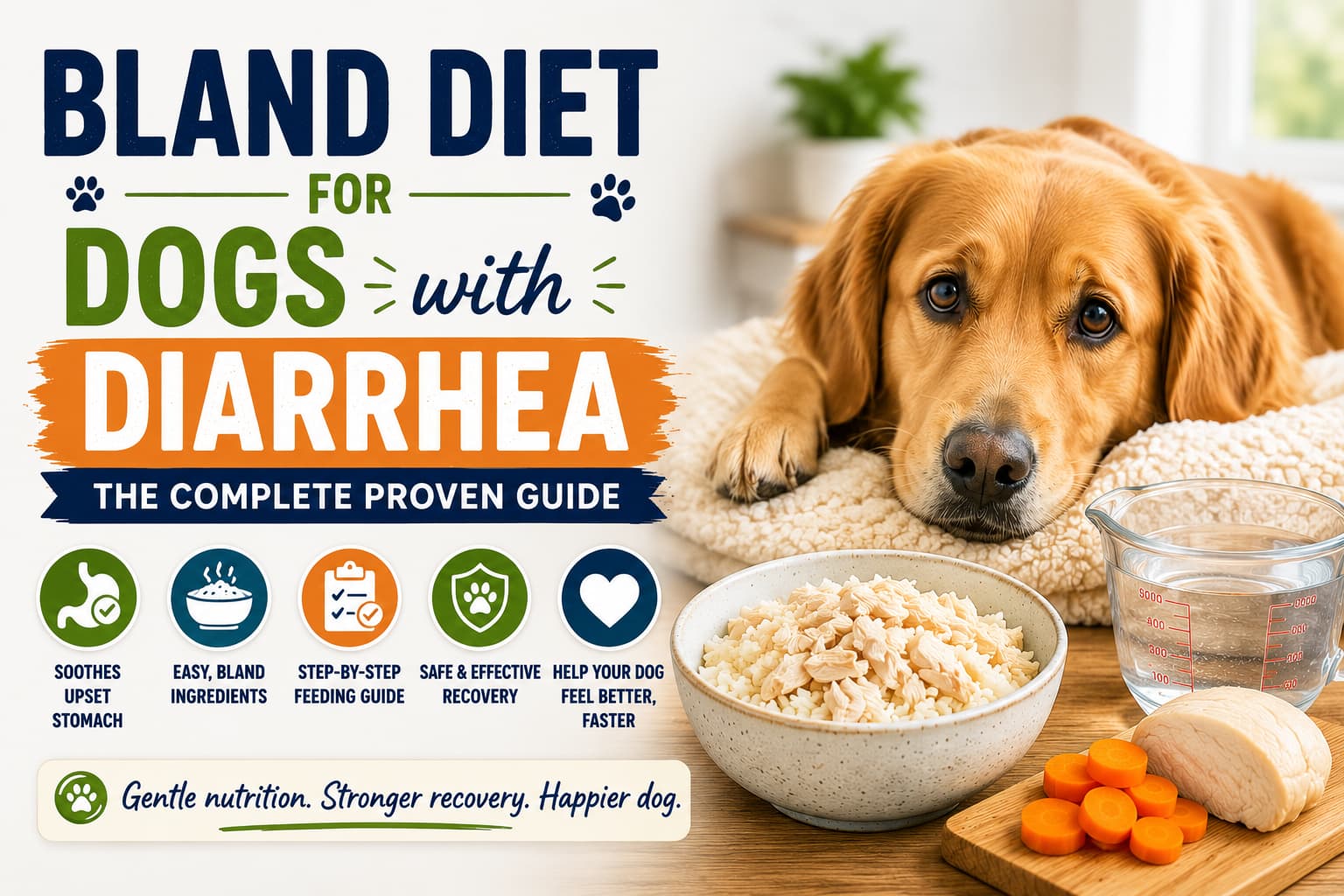
You might also find our guide on bland diet for dogs with diarrhea helpful.
You may also want to read our guide on why is my dog not eating?.
What Your Dog’s Diarrhea Is Actually Telling You — The Stool Guide
This is the section missing from almost every guide on dog diarrhea. The character of the diarrhea — its colour, consistency, frequency, and what accompanies it — provides meaningful diagnostic information before you even call the vet. Chewy’s veterinary team notes that your vet will want to know stool characteristics, frequency, and associated symptoms to narrow down the cause.
This post is part of our complete pet health library — visit our pet health guide for the full collection.
| What you see | What it likely means | Action |
| Soft, formed — slightly loose | Mild dietary indiscretion or food change | Monitor, bland diet, usually self-resolving |
| Watery, large volume | Small intestine issue — infection, parvovirus, dietary | Monitor — vet if persists beyond 24 hours |
| Frequent, small amounts with straining | Large intestine (colon) issue — colitis, parasites | Vet appointment — does not self-resolve as easily |
| Bright red blood streaks | Lower intestinal bleeding, colitis, haemorrhoids | Vet today — not emergency unless significant volume |
| Dark, tarry, black | Upper intestinal bleeding — stomach or small intestine | Emergency vet immediately |
| Grey or pale, greasy | Pancreatic or liver issue | Vet appointment urgently |
| Watery with vomiting | Multiple body systems involved — risk of dehydration | Emergency vet — especially puppies and seniors |
Acute vs Chronic Diarrhea — Two Very Different Problems
Most guides treat all dog diarrhea the same way. The acute vs chronic distinction changes both the urgency and the approach entirely.
Acute diarrhea — sudden onset, typically short-lived
AKC veterinary expert Dr Fox notes that most cases of diarrhea are self-limiting or clear up with outpatient treatment. Acute diarrhea in an otherwise bright, alert dog who is eating and drinking normally is usually the result of dietary indiscretion (eating something inappropriate), a minor food change, mild stress, or a passing infection. These cases typically resolve within 24 to 48 hours with supportive care.
Chronic diarrhea — recurring or lasting more than 3 weeks
A dog with chronic diarrhea — loose stools that recur multiple times per week or persist for more than 3 weeks — has a different problem that warrants thorough veterinary investigation. Common causes include inflammatory bowel disease (IBD), food intolerance or allergy, intestinal parasites, pancreatic insufficiency (EPI), and certain cancers. These do not resolve with bland diets and home management — they require diagnosis, often including blood work, stool analysis, and sometimes intestinal biopsy.
The key mistake: treating chronic diarrhea as a series of acute episodes rather than recognising the pattern and investigating the underlying cause. If your dog has loose stools more than two to three times per week consistently, get a veterinary workup rather than managing each episode with bland food.
Common Causes of Dog Diarrhea
Chewy’s comprehensive guide and Heritage Animal Hospital identify the most common causes:
- Dietary indiscretion— eating garbage, spoiled food, rich table scraps, or foreign objects. The most common cause of acute diarrhea in otherwise healthy dogs.
- Abrupt food change— switching foods too quickly disrupts gut bacteria. Always transition over 7 to 10 days.
- Intestinal parasites— worms, Giardia, Coccidia, and other parasites are especially common in puppies and dogs from rescue situations. A stool sample analysis identifies these.
- Bacterial infection— Salmonella, Campylobacter, and other bacteria cause acute gastroenteritis. Can be transmitted from raw meat or contaminated water.
- Viral infection— parvovirus (in unvaccinated puppies especially), distemper, and canine enteric coronavirus can all cause diarrhea. Parvo diarrhea is typically severe, bloody, and accompanied by vomiting and extreme lethargy.
- Stress and anxiety— travel, boarding, thunderstorms, changes in routine. Stress diarrhea is typically acute and resolves once the stressor passes.
- Medications— antibiotics in particular disrupt gut microbiome. Probiotic supplementation during antibiotic courses significantly reduces antibiotic-associated diarrhea.
- Pancreatitis— AKC notes that diarrhea is a sign of pancreatitis, a life-threatening condition involving inflammation of the pancreas. This typically presents with vomiting, abdominal pain, and lethargy alongside diarrhea.
- Food intolerance or allergy— recurring diarrhea specifically linked to meals suggests a food intolerance. Diagnosis requires a strict dietary elimination trial under veterinary guidance.
When to Call the Vet — The Emergency Triggers
Veterinary Emergency Group provides the clearest list of when dog diarrhea requires emergency veterinary attention rather than home management:
- Blood in the stool— bright red blood in small amounts may indicate colitis or minor haemorrhoids. Dark red or black tarry stool indicates upper intestinal bleeding and is a genuine emergency.
- Diarrhea lasting more than 24 hours— in an adult dog without other symptoms, this warrants same-day vet contact. With other symptoms, it warrants emergency care.
- Concurrent vomiting— diarrhea and vomiting together cause rapid dehydration. If both occur more than once or twice, emergency vet care is appropriate.
- Signs of dehydration— gum colour (pale or tacky), skin tent test (skin that does not spring back when gently pinched), sunken eyes, extreme weakness
- Puppies and senior dogs with any diarrhea— less physiological reserve, dehydrate faster, and deteriorate more quickly than healthy adults
- Known or suspected toxic ingestion— chocolate, xylitol, grapes, raisins, or other known toxins alongside diarrhea is an emergency
- Bloated or painful abdomen— diarrhea with a visibly swollen or rigid abdomen could indicate bloat or obstruction, both of which are life-threatening
Home Treatment for Mild Acute Diarrhea
For an otherwise bright, alert adult dog with acute diarrhea and no emergency signals, Chewy’s veterinary team and AKC Dr Fox recommend this approach:
- Ensure fresh water is always available — preventing dehydration is the priority
- For significant diarrhea, offer small amounts of a bland diet (boiled chicken and white rice in a 1:3 ratio) in small frequent portions rather than normal meals
- Plain canned pumpkin (not pie filling) — 1 to 2 tablespoons per meal provides soluble fibre that helps firm stools
- A dog-appropriate probiotic such as Purina Fortiflora helps restore healthy gut bacteria
- Monitor stools, appetite, energy, and behaviour every few hours
- If no improvement in 24 hours or any emergency sign appears, call your vet
One important warning: do not give human Imodium (loperamide) to your dog without specific veterinary guidance. While sometimes used in dogs under veterinary supervision, loperamide can be toxic in certain breeds, particularly Collies and related herding breeds with the MDR1 genetic mutation. It also masks symptoms without treating the cause, which can delay diagnosis of serious conditions.
Frequently Asked Questions
| Q: How long should dog diarrhea last?A: Simple acute diarrhea from dietary indiscretion or minor stress typically resolves within 24 to 48 hours with bland diet support. If diarrhea persists beyond 48 hours in an otherwise healthy adult dog, or beyond 24 hours with any other symptoms present, veterinary evaluation is appropriate. Diarrhea recurring multiple times per week consistently indicates a chronic condition requiring investigation. |
| Q: Should I withhold food when my dog has diarrhea?A: Short-term fasting was previously the standard recommendation. Heritage Animal Hospital’s current guidance is more nuanced: for dogs that are bright, alert, and eating normally, withholding food for up to 24 hours gives the gut time to rest. Offer a bland diet when you reintroduce food rather than their regular food. Do not fast puppies, seniors, or dogs with known health conditions. |
| Q: Can I give my dog Pedialyte for diarrhea?A: Small amounts of plain Pedialyte (unflavoured, without artificial sweeteners particularly xylitol which is toxic to dogs) can help replace electrolytes in a dog with diarrhea. However, fresh water should always be the primary fluid offered. For dogs showing significant dehydration, IV fluids administered by a vet are more effective and appropriate than oral electrolyte supplements. |
| Q: My dog has diarrhea but is acting normal — is this serious?A: Acting normally alongside diarrhea is reassuring and suggests the cause is likely dietary or minor. Monitor using the stool colour guide above, apply the bland diet approach, and watch for any of the emergency signals listed in this guide. If diarrhea persists beyond 48 hours even with normal behaviour, contact your vet. |
Frequently Asked Questions: Dog Diarrhea
How long does dog diarrhea typically last?
Most acute cases of dog diarrhea resolve on their own within 24 to 48 hours, especially when caused by dietary indiscretion or a mild stomach upset. If your dog’s diarrhea persists beyond two days, contains blood, or is accompanied by vomiting, lethargy, or a loss of appetite, a veterinary visit is strongly recommended. Chronic dog diarrhea — recurring over weeks or months — always warrants investigation to rule out parasites, inflammatory bowel disease, or food intolerance.
What should I feed a dog with diarrhea?
The most widely recommended approach for dog diarrhea is a temporary bland diet of plain boiled white rice mixed with boiled, unseasoned chicken or lean ground beef. This combination is easy on the digestive system and helps firm up loose stools. Feed small, frequent meals for two to three days, then gradually reintroduce your dog’s regular food. Avoid dairy, fatty foods, or any treats during recovery, as these can worsen dog diarrhea.
When is dog diarrhea a veterinary emergency?
Dog diarrhea becomes an emergency if you notice any of the following: bright red blood or large amounts of dark tarry stool, severe vomiting alongside the diarrhea, signs of dehydration (dry gums, sunken eyes, skin that doesn’t spring back), collapse or extreme weakness, or if the dog is a puppy or senior. Young puppies with diarrhea can deteriorate rapidly, so do not wait to see if it improves on its own.
Can stress cause dog diarrhea?
Yes — stress is a well-documented trigger for dog diarrhea. The gut-brain axis in dogs is highly sensitive, meaning emotional stress from events like travel, boarding, fireworks, or a change in routine can directly affect digestive function. Stress-related dog diarrhea tends to appear quickly after the triggering event and often resolves once the dog has settled. Providing a calm environment, familiar food, and consistent routines can reduce the likelihood of recurrence.
Related: our guide on signs a dog is in pain covers this in more depth.
| Medical Disclaimer :This article is written for informational purposes based on the research and personal experience of the author. It is not a substitute for professional veterinary advice, diagnosis, or treatment. Always consult your veterinarian with concerns about your pet’s health. |
This article is written for informational purposes and reflects the personal experience and research of the author. It does not replace professional veterinary or dog training advice. Always consult your veterinarian or a certified trainer for individual guidance.