


8 min read |
Table of Contents
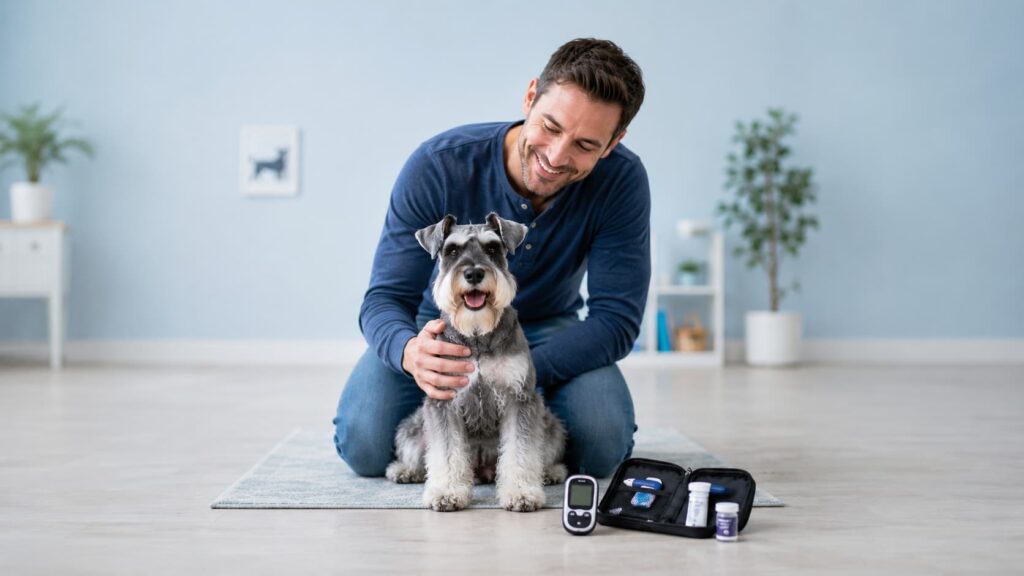
Diabetes in dogs is a diagnosis that many owners find initially overwhelming. Lifelong insulin injections twice a day, dietary changes, regular blood monitoring, and careful routine management. It is a significant commitment. It is also, with good management, entirely compatible with a dog living a comfortable, active, good-quality life for years after diagnosis.
About 1 in 300 dogs will develop diabetes at some point in their lifetime. Unlike feline diabetes, which resembles human Type 2 diabetes, canine diabetes is almost always analogous to Type 1 — the pancreas has lost the ability to produce insulin and this is permanent. That means, unlike cats, dogs almost never achieve diabetic remission. Management is lifelong. But as CriticalCareDVM’s 2026 diabetes guide puts it well: most diabetic dogs can achieve a good quality of life with appropriate treatment and monitoring.
This guide covers recognising the symptoms, how treatment works, the diet changes that matter, the hypoglycaemia emergency that every owner of a diabetic dog must know how to handle, and the modern monitoring tools that have made home management significantly more manageable.
We also have a complete guide on why is my dog not eating?.
For more on this, see our guide on best dog food recommended by vets.
Symptoms of Diabetes in Dogs
PetMD identifies the classic presentation of diabetes in dogs — the four hallmark signs:
- Excessive thirst (polydipsia) — drinking significantly more water than usual, often noticeably and consistently
- Excessive urination (polyuria)— trips outside more frequently, larger volumes, sometimes accidents in a previously house-trained dog
- Increased appetite (polyphagia)— hungry despite eating normally — the cells cannot access glucose effectively, creating a state of energy deficiency despite food intake
- Weight loss despite eating well — the body breaks down fat and muscle for energy when glucose is inaccessible
As the condition progresses without treatment: lethargy, vomiting, cataracts (diabetic cataracts develop rapidly in dogs — often within weeks of diagnosis), and in severe cases diabetic ketoacidosis (DKA), which is a medical emergency.
This post is part of our complete pet health library — visit our pet health guide for the full collection.
| 🚨 Diabetic ketoacidosis — the emergency If a diabetic dog stops eating and drinking, vomits repeatedly, and seems profoundly unwell, DKA may have developed. This requires emergency veterinary care with IV fluids, insulin management, and electrolyte correction. Do not manage at home. Go directly to the vet. |
How Canine Diabetes Treatment Works
Insulin — the cornerstone of treatment
PetMD is direct: treatment of clinical diabetes in dogs always requires insulin therapy. Unlike cats, where dietary management alone may sometimes achieve remission, dogs need insulin lifelong once the diagnosis is confirmed.
The recommended first-line insulin for dogs, according to AAHA guidelines, is Vetsulin (porcine lente insulin) — a porcine-derived insulin that closely matches the canine insulin molecule. Most dogs are started on twice-daily injections given around mealtimes. VCA Animal Hospitals notes that the needles on insulin syringes are very small and sharp, and most dogs tolerate injections very well after the first few days.
Insulin dose is determined by your vet and adjusted based on blood glucose curves over the first weeks to months. It typically takes 4 to 8 weeks to achieve stable regulation. Patience is essential — some dogs are more challenging to regulate than others.
Diet — consistency is everything
PetMD emphasises that consistency in diet is as important as insulin in managing canine diabetes. The goals of dietary management are maintaining a stable, predictable blood glucose response after meals:
- Feed the same food, in the same amount, at the same times every day — variation in meals causes variation in blood glucose that makes insulin dosing unpredictable
- High-fibre diets slow glucose absorption and reduce post-meal blood glucose spikes — many vets recommend prescription diabetic or high-fibre formulas
- Obesity management — overweight dogs have higher insulin requirements. Weight normalisation often reduces insulin needs significantly
- Treats should be minimal, consistent, and ideally low in sugar and carbohydrate
Exercise — beneficial but must be consistent
Today’s Veterinary Practice’s diabetes management guidance notes that exercise helps lower insulin requirements and improves glycaemic control. Daily walking or play exercise is genuinely helpful. The critical requirement: exercise should be consistent in duration and intensity from day to day. Highly variable exercise — a quiet day followed by a very active day — creates blood glucose swings that are difficult to manage with a fixed insulin dose.
The Hypoglycaemia Emergency — Every Owner Must Know This
Hypoglycaemia — dangerously low blood glucose — is the most urgent home emergency for owners of diabetic dogs. It occurs when insulin lowers blood sugar too far, which can happen if the dog misses a meal, vomits after eating, gets more exercise than usual, or if the insulin dose is too high. Every owner of a diabetic dog must know these signs and know what to do.
Signs of hypoglycaemia: weakness, shakiness or trembling, lethargy, confusion, loss of coordination, seizures, and collapse. Hypoglycaemia progresses quickly and can be fatal if untreated.
What to do immediately: rub corn syrup, honey, or sugar solution on the gums. Do not give food or water to a dog that is confused or seizing — aspiration risk. Get to the vet immediately even if the dog improves, because rebound hypoglycaemia can occur. Do not give the next insulin dose until the vet has reassessed.
| 💡 Keep it at hand Keep a small jar of honey or corn syrup in the same place you store the insulin. Make sure every family member knows where it is and what to do with it. A dog that has a hypoglycaemic episode needs glucose on the gums within minutes — not after someone searches the kitchen for a solution. |
Modern Glucose Monitoring — Better Than It Used to Be
Managing canine diabetes used to mean frequent vet trips for glucose curves. Two advances have significantly improved home management:
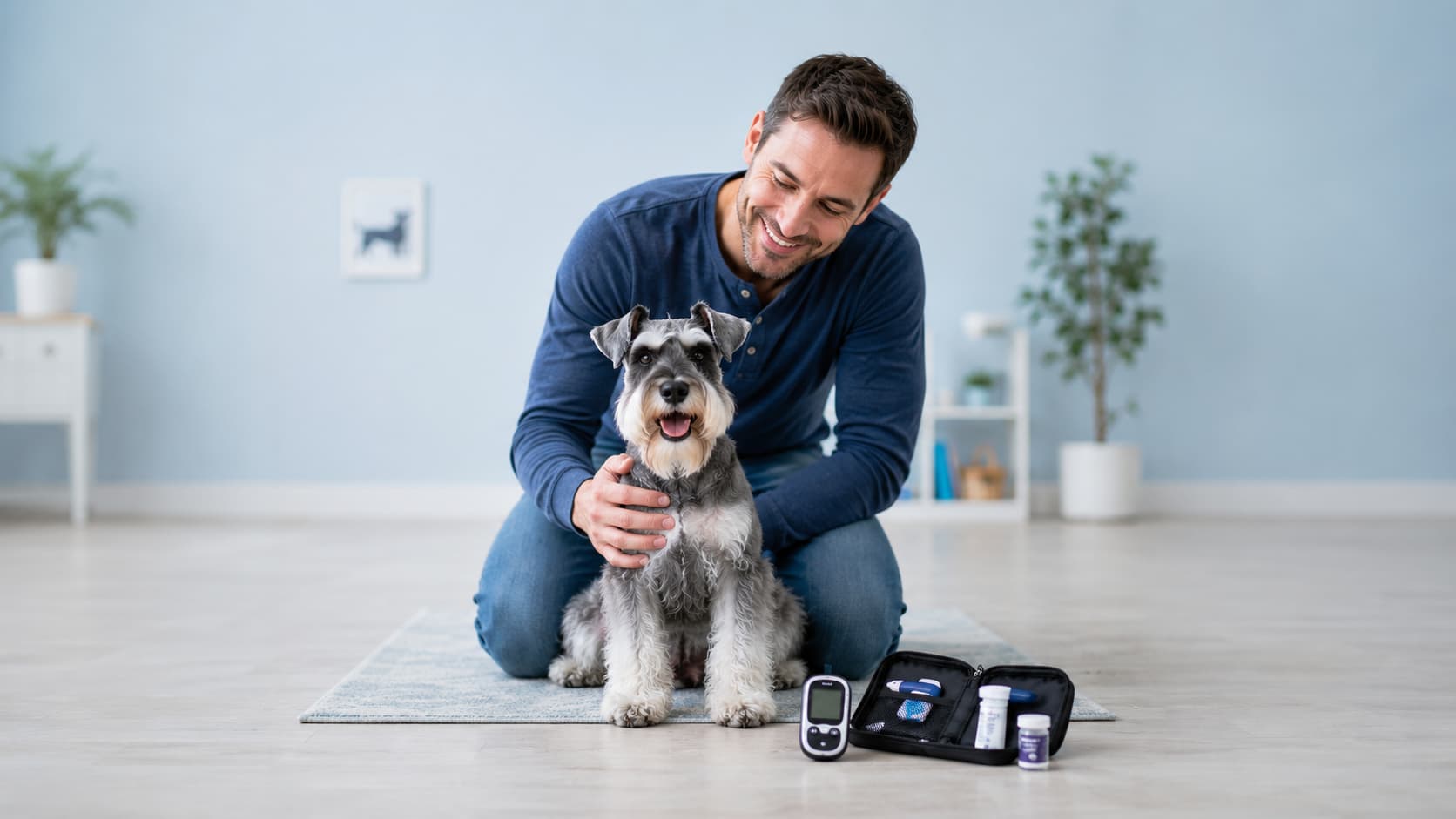
- AlphaTrak 2 glucometer— a handheld blood glucose monitor calibrated specifically for dogs (human glucometers are not accurate for dogs). A small drop of blood from the ear or paw pad provides an instant glucose reading at home. VCA Animal Hospitals recommends this for home monitoring as stress levels are low in the home environment, producing more accurate readings than in-clinic testing.
- Freestyle Libre continuous glucose monitor— a wearable sensor applied to the skin that continuously reads glucose every few minutes, transmitting data to a smartphone. Originally designed for humans but now commonly used in veterinary practice for diabetic dogs. CriticalCareDVM’s 2026 guide identifies this as part of the modern monitoring toolkit that has genuinely changed diabetes management.
Discuss with your vet which monitoring approach suits your dog and your lifestyle. Regular monitoring catches glucose trends before they become crises, allowing dose adjustments before problems develop.
Realistic Expectations — What Good Management Looks Like
Today’s Veterinary Practice’s diabetes management guidance makes a point that many owners need to hear: the goal is good clinical control, not perfect blood glucose numbers. A dog whose glucose is not mathematically perfect but who is bright, energetic, eating well, maintaining weight, and not showing diabetic symptoms is well managed.
The demands of managing a diabetic dog — twice-daily injections, consistent feeding times, regular monitoring — are significant. It is reasonable to have an honest conversation with your vet about what you can realistically commit to and to build a management plan around your actual life, not an idealised schedule. A management plan that is mostly followed consistently outperforms a perfect plan that is stressful to maintain.
Frequently Asked Questions
| Q: Can diabetes in dogs be cured?A: No. Canine diabetes is analogous to Type 1 diabetes in humans — the insulin-producing cells in the pancreas are permanently damaged or destroyed. Unlike cats, dogs do not typically achieve diabetic remission. Management is lifelong. With appropriate treatment, dogs with diabetes live comfortable, active lives for years after diagnosis. |
| Q: How often do I need to take my diabetic dog to the vet?A: Frequently at first — typically every 1 to 2 weeks during dose regulation, which may take 1 to 3 months. Once stable, every 3 to 6 months for blood work and clinical assessment. More frequently if glucose curves indicate the dose needs adjustment. Home monitoring reduces the need for in-clinic glucose curves significantly. |
| Q: My dog has been diagnosed with diabetes — what should I do first?A: Work with your vet to establish insulin type, dose, and injection schedule. Purchase the recommended glucometer. Set fixed feeding times and identify the food you will feed consistently. Locate and keep emergency glucose (honey or corn syrup) accessible. Make sure every household member knows the hypoglycaemia protocol. The first weeks are a learning curve — it becomes routine. |


Frequently Asked Questions About Diabetes in Dogs
What causes diabetes in dogs? Diabetes in dogs develops when the pancreas fails to produce enough insulin, or when the body cannot use insulin effectively. The most common form in dogs is Type 1 (insulin-dependent), where the pancreatic beta cells are destroyed — often by chronic pancreatitis or immune-mediated disease. Obesity is one of the biggest risk factors, as excess body fat reduces insulin sensitivity. Intact female dogs are also at significantly higher risk due to the effect of progesterone on insulin resistance, which is why spaying is often recommended for dogs diagnosed with diabetes in dogs.
How is diabetes in dogs managed day to day? Managing diabetes in dogs requires a consistent routine. Most dogs need one or two insulin injections per day, given at the same time as meals. A high-fibre, low-fat diet helps regulate blood glucose absorption and prevents spikes. Regular exercise — gentle and consistent rather than intense — also aids blood sugar stability. At-home glucose monitoring is becoming more accessible and can help owners track how well their dog’s diabetes is being controlled between vet visits. The goal is to keep glucose levels within a safe range without episodes of dangerous hypoglycaemia.
Can diabetes in dogs be cured? In most cases, diabetes in dogs is a lifelong condition that requires ongoing management rather than a cure. However, in some female dogs, diabetes can resolve after spaying — particularly when the disease was triggered by the hormonal effects of pregnancy or a previous season. Similarly, dogs who develop diabetes as a secondary complication of steroid medication may see improvement once the medication is discontinued. For the majority of dogs with diabetes in dogs, consistent insulin therapy and dietary management allow them to live a full and comfortable life.
Which dog breeds are most at risk of diabetes in dogs? While any dog can develop diabetes, certain breeds are more genetically predisposed. Samoyeds, Australian Terriers, Miniature Schnauzers, Pugs, and Toy Poodles are among the breeds most frequently diagnosed with diabetes in dogs. Intact female dogs of middle age (4–9 years) are at the highest overall risk. Obesity significantly increases the chances of any breed developing the condition, making weight management an essential preventive measure for all dogs — especially as they enter their senior years.
You might also find our guide on signs a dog is in pain helpful.
| Medical Disclaimer This article is written for informational purposes based on the research and personal experience of the author. It is not a substitute for professional veterinary advice, diagnosis, or treatment. Always consult your veterinarian with concerns about your pet’s health. |
This article is written for informational purposes and reflects the personal experience and research of the author. It does not replace professional veterinary or dog training advice. Always consult your veterinarian or a certified trainer for individual guidance.