

The Australian Cattle Dog is one of the toughest, most intelligent, and most loyal working breeds ever developed. Purpose-built to herd cattle across vast, unforgiving Australian terrain, these compact, muscular dogs bring extraordinary drive and tenacity to everything they do. Also known as the Blue Heeler or Red Heeler, the Australian Cattle Dog is a breed that rewards dedicated owners with a lifetime of companionship — and one that demands respect for its considerable needs. This complete guide covers everything you need to know before bringing an Australian Cattle Dog home.
Australian Cattle Dog: Breed Overview
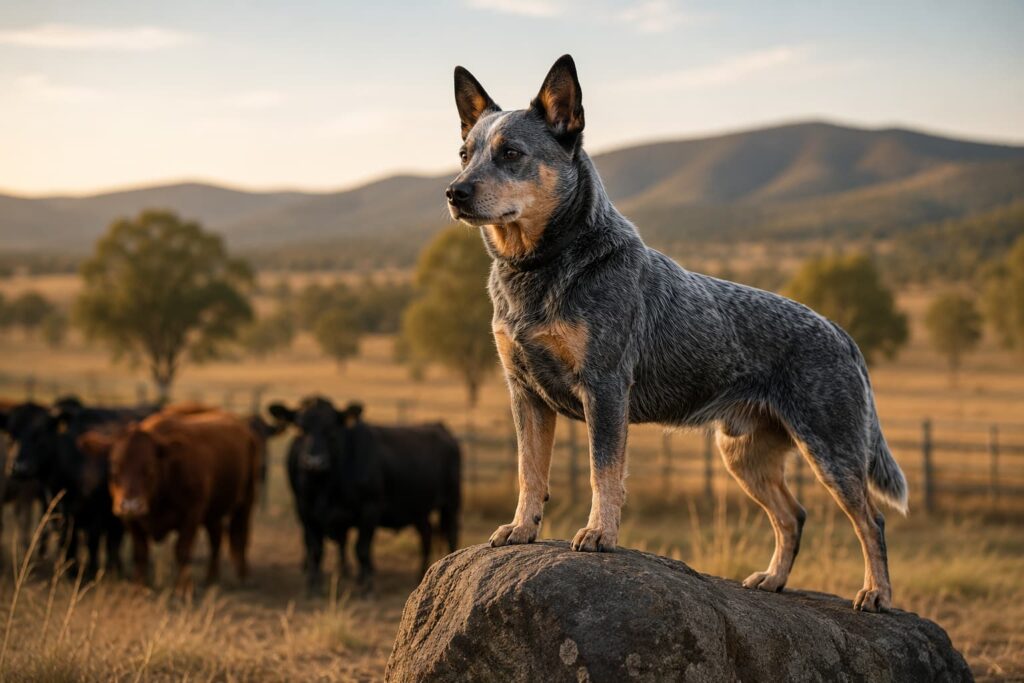
The Australian Cattle Dog was developed in Australia during the early 1800s specifically to herd cattle across the continent’s vast and rugged interior. No other herding breed had the stamina, heat tolerance, or toughness for the job. The result of selective crossbreeding — incorporating Dingo, rough Collie, Dalmatian, and Australian Kelpie stock — was a compact, tireless working dog unlike anything that had existed before.
According to the American Kennel Club, the Australian Cattle Dog is an alert, curious, and energetic breed that consistently ranks among the most intelligent dogs in the world. Today, ACDs work on farms and ranches worldwide, compete at the highest levels in canine sports, and serve as devoted companions to active owners.
| Trait | Details |
|---|---|
| Size | Males: 35–50 lb (16–23 kg), 18–20 inches; Females: 30–45 lb (14–20 kg), 17–19 inches |
| Lifespan | 12–16 years |
| Coat | Short double coat — blue speckle/mottled or red speckle |
| Also known as | Blue Heeler, Red Heeler, Queensland Heeler, Halls Heeler |
| Energy level | Extremely high |
| Trainability | Excellent, but independent-minded |
| Shedding | Moderate — seasonal blowouts |
| Good with children | With supervision — strong heel-nipping instinct |
| Good with other dogs | Can be selective; early socialisation is essential |
| AKC group | Herding |
History and Origins of the Australian Cattle Dog
The story of the Australian Cattle Dog begins in the 1800s, when settlers driving cattle across the vast Australian interior found that imported European herding breeds simply couldn’t cope with the extreme heat, rough terrain, and the sheer stubbornness of Australian cattle. Thomas Hall, a New South Wales cattle rancher, began crossing Dingo-infused dogs with Smithfield collies imported from Scotland in the 1840s — producing the first “Halls Heelers,” the direct ancestors of the modern Australian Cattle Dog.
Later breeders refined the line further, adding Dalmatian blood for loyalty and a bond with horses, and Kelpie blood for herding intelligence. The result was a dog that could work silently, independently, and relentlessly across extreme conditions — biting at the heels of cattle (hence “heeler”) to move them forward, and dropping flat to avoid kicks.
The breed was formally recognised by the AKC in 1980. Notably, the world’s oldest recorded dog on verified record was an Australian Cattle Dog named Bluey, who lived to 29 years and 5 months — a remarkable testament to the breed’s hardiness.
Australian Cattle Dog Temperament
The Australian Cattle Dog is not a breed for the faint-hearted. These dogs are intensely loyal, extraordinarily intelligent, and possess a working drive that does not simply switch off in a domestic setting. Understanding that temperament before committing to the breed is essential.
Core temperament traits of the Australian Cattle Dog include:
- Exceptional intelligence — ACDs are consistently ranked in the top ten most intelligent breeds. They learn rapidly, solve problems independently, and can become manipulative if their owner isn’t consistent.
- Intense loyalty — Australian Cattle Dogs tend to bond deeply with one primary person. They are often called “velcro dogs” for their habit of staying close to their chosen person at all times.
- Wariness of strangers — Well-bred, well-socialised ACDs are watchful but not aggressive with strangers. Poorly socialised dogs can tip into suspicion or fear-based reactivity.
- Strong herding instinct — The ACD’s herding method is heel nipping — darting in, nipping, and darting back. Without appropriate management and training, this instinct is directed at children, other pets, joggers, or cyclists.
- High independence — Unlike breeds bred for close handler collaboration, ACDs were developed to make independent decisions while working. This means they can be stubborn and will test boundaries.
Australian Cattle Dog Behaviour Issues
The Australian Cattle Dog has a reputation for behaviour challenges — and that reputation is largely deserved when the breed ends up in the wrong home. The most common issues seen in ACDs are directly linked to unmet physical and mental needs rather than inherent problems with the breed.
Common behaviour issues in under-stimulated Australian Cattle Dogs include destructive chewing, obsessive herding of people or animals, excessive barking, aggression toward other dogs, and escape attempts. These are symptoms of a bored, frustrated working dog — not character defects.
The solution in almost every case is the same: more structured exercise, more mental stimulation, and more consistent training. Read our detailed guide to Australian Cattle Dog behaviour issues and how to resolve them →
How to Stop an Australian Cattle Dog from Biting
Biting — specifically heel nipping — is the Australian Cattle Dog’s default herding behaviour. It is deeply instinctual and can be a significant problem in domestic life, particularly in homes with young children. The ACD was literally bred to bite cattle’s heels to control their movement, and that instinct is very much present in companion dogs.
This behaviour is not aggression — it is herding. But the distinction matters little to a child who has been nipped. Managing and redirecting this instinct requires consistent training from puppyhood, clear boundaries, and appropriate outlets for the herding drive (such as herding trials, treibball, or agility).
Never punish the biting harshly, as this can increase anxiety and make the behaviour worse. Redirection, “leave it” training, and teaching an incompatible behaviour (such as “sit” when someone approaches) are far more effective. Full guide: How to stop an Australian Cattle Dog from biting →
Are Australian Cattle Dogs Low Maintenance?
In terms of grooming, the Australian Cattle Dog is relatively low maintenance. Their short double coat doesn’t require regular clipping or trimming, and they only need brushing once or twice a week outside of seasonal shedding periods. Bathing every six to eight weeks is typically sufficient.
However, in virtually every other respect, the Australian Cattle Dog is emphatically not a low-maintenance dog. They require substantial daily exercise, consistent mental stimulation, ongoing training, and close human interaction. An ACD left under-stimulated will find its own entertainment — and the results are rarely pleasant.
This distinction — low grooming maintenance, high activity maintenance — is one of the most important things for prospective owners to understand. Are Australian Cattle Dogs really low maintenance? Full answer here →
Australian Cattle Dog Exercise Requirements
The Australian Cattle Dog has very high exercise requirements — arguably among the highest of any domestic breed. A minimum of one to two hours of vigorous physical activity is needed every single day, and on days where this doesn’t happen, expect behavioural consequences.
But exercise for an ACD is not simply a matter of distance covered. This is a breed that worked at a controlled trot for hours, making constant decisions, reading livestock, and responding to handler cues. Pure physical exercise without mental engagement is only half the equation.
Activities that meet both needs well include:
- Agility training — a discipline ACDs excel at
- Herding trials — the closest thing to their original purpose
- Treibball — an urban substitute for herding
- Frisbee and flyball
- Long trail runs or hikes
- Advanced obedience work and trick training
- Puzzle feeders and nose work at home
Australian Cattle Dogs are not suited to apartment living or to owners who cannot commit to daily structured activity. Full guide to Australian Cattle Dog exercise requirements →
Training an Australian Cattle Dog
Australian Cattle Dogs are highly intelligent and very trainable — but they are not as automatically compliant as some other herding breeds. The ACD’s independent working heritage means they are comfortable making decisions without waiting for instruction, which can translate to a certain stubbornness in training if the handler isn’t clear, consistent, and engaging.
Positive reinforcement methods work best with this breed. ACDs respond quickly to reward-based training and are motivated by both food and play. Harsh correction-based training tends to increase anxiety and erode trust with a breed that forms its strongest bond through respect rather than intimidation.
Start basic obedience and socialisation from the day the puppy arrives home. The critical socialisation window for dogs closes around 12–14 weeks — everything the puppy experiences positively during this window shapes how they respond to the world as adults. An ACD that misses this socialisation window can be very difficult to remediate later. For training techniques and methods, see our complete dog training guide.
Australian Cattle Dog Health
The Australian Cattle Dog is a robust breed — the legend of Bluey living to nearly 30 years is exceptional, but lifespans of 14–16 years are genuinely common. However, the breed carries some inherited health conditions that responsible breeders screen for:
- Progressive Retinal Atrophy (PRA) — a hereditary eye condition causing gradual vision loss; DNA testing can identify carriers before breeding
- Hip dysplasia — joint malformation increasing arthritis risk; hip scoring of breeding dogs is recommended
- Deafness — linked to the piebald gene inherited from Dalmatian ancestry; can affect one or both ears; BAER testing identifies affected puppies
- Lens luxation — displacement of the eye lens, can be hereditary in the breed
Always purchase from a breeder who provides hip scores, current eye certificates, and BAER hearing test results for their breeding stock. The AKC recommends ophthalmologist evaluation, hip evaluation, PRA Optigen DNA test, and BAER testing as minimum health screens for the breed.
Is an Australian Cattle Dog Right for You?
The Australian Cattle Dog is a remarkable breed in the right hands — capable, loyal, athletic, and deeply bonded to their owner. In the wrong home, they are one of the most challenging breeds to manage. Be honest about your lifestyle before committing.
An Australian Cattle Dog is a good fit if you:
- Have an active lifestyle and genuinely enjoy outdoor exercise every day
- Have experience with intelligent, independent-minded dogs
- Are committed to ongoing training — not just puppy classes
- Have a securely fenced property (ACDs are escape artists)
- Want a dog that is deeply engaged and attached to you
An Australian Cattle Dog is not a good fit if you:
- Live in an apartment or have limited outdoor access
- Have very young children and cannot closely supervise dog-child interactions
- Are a first-time dog owner
- Work long hours and cannot provide adequate daily stimulation
- Are looking for a calm, low-energy companion
For the breed overview and an in-depth look at the ACD’s characteristics, see our Australian Cattle Dog breed profile.
Australian Cattle Dog FAQs
Are Australian Cattle Dogs good family dogs?
Australian Cattle Dogs can be excellent family dogs in active households with older children. Their strong heel-nipping instinct makes them a risk around toddlers and young children without close supervision and consistent training. They thrive in families who are outdoors-oriented and who treat the dog as a full participant in family activities rather than leaving them alone.
How long do Australian Cattle Dogs live?
The average Australian Cattle Dog lifespan is 12 to 16 years — longer than most breeds of comparable size. The breed holds the Guinness World Record for oldest dog ever, with Bluey the ACD reaching 29 years and 5 months. Well-bred dogs from health-tested stock consistently live into their mid-teens.
Do Australian Cattle Dogs bite?
Heel nipping is the ACD’s instinctive herding behaviour and is very common in the breed, particularly in puppies and adolescents. It is not aggression — it is a deeply ingrained working behaviour. With consistent training, appropriate redirection, and sufficient exercise, it is manageable. Without management, it can be a serious problem, especially around children.
Are Australian Cattle Dogs the same as Blue Heelers?
Yes — Blue Heeler and Red Heeler are informal names for the Australian Cattle Dog, based on coat colour and the breed’s herding method of nipping at heels. The official breed name recognised by the AKC and international kennel clubs is Australian Cattle Dog.
What is the difference between an Australian Cattle Dog and an Australian Shepherd?
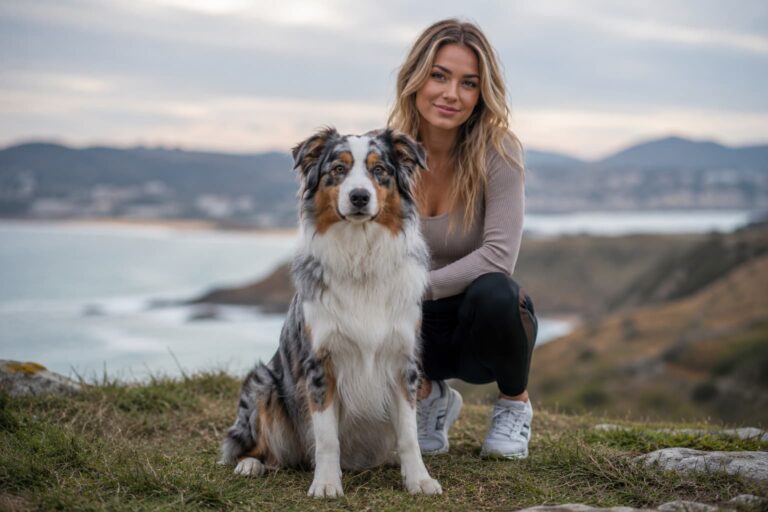
They are entirely separate breeds with different origins, appearances, and temperaments. The Australian Cattle Dog was developed in Australia from Dingo and other stock to herd cattle. The Australian Shepherd was developed in the American West from British herding dogs. ACDs are more compact, shorter-coated, and tend to be more independently minded. Aussies are larger, medium-coated, and typically more handler-focused. See our complete Australian Shepherd guide for a full comparison.
Can Australian Cattle Dogs be left alone?
Not for extended periods. Australian Cattle Dogs are social dogs that form strong bonds with their owners and can develop separation anxiety when regularly left alone for long hours. They are also highly destructive when bored — leaving an under-stimulated ACD alone in a house is a reliable way to come home to significant damage. If long working hours are unavoidable, a dog walker, daycare, or a well-matched canine companion can help.
Do Australian Cattle Dogs shed a lot?
Moderately. The ACD’s short double coat sheds throughout the year at a lower volume than long-coated breeds, but undergoes noticeable seasonal blowouts in spring and autumn. Weekly brushing is sufficient for most of the year; daily brushing during blowout periods keeps shedding manageable. Overall, grooming is one of the least demanding aspects of ACD ownership.