

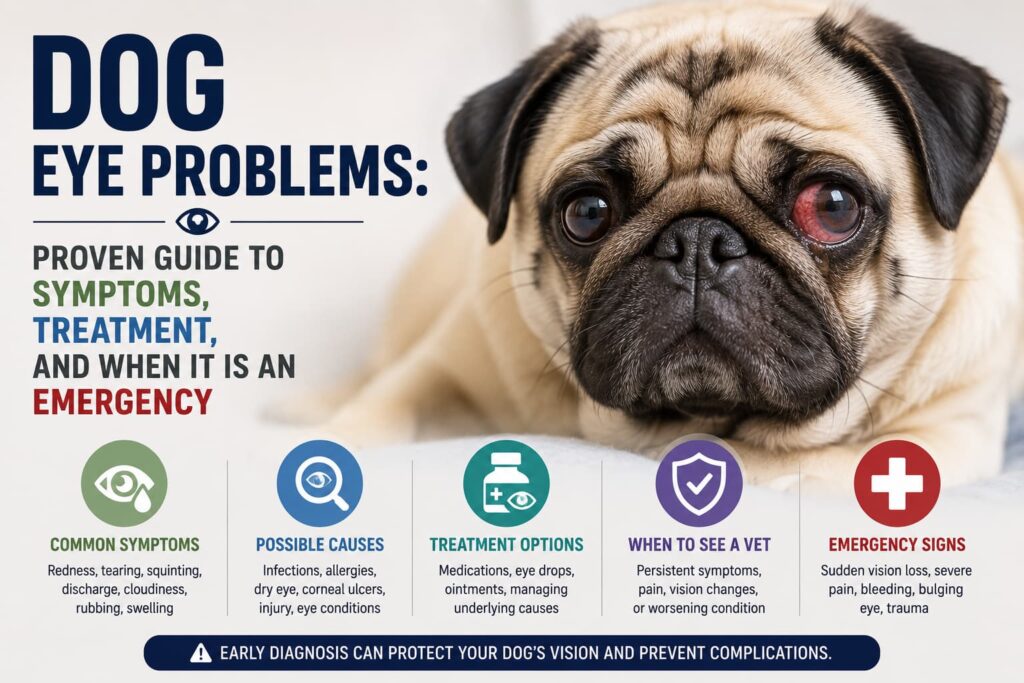
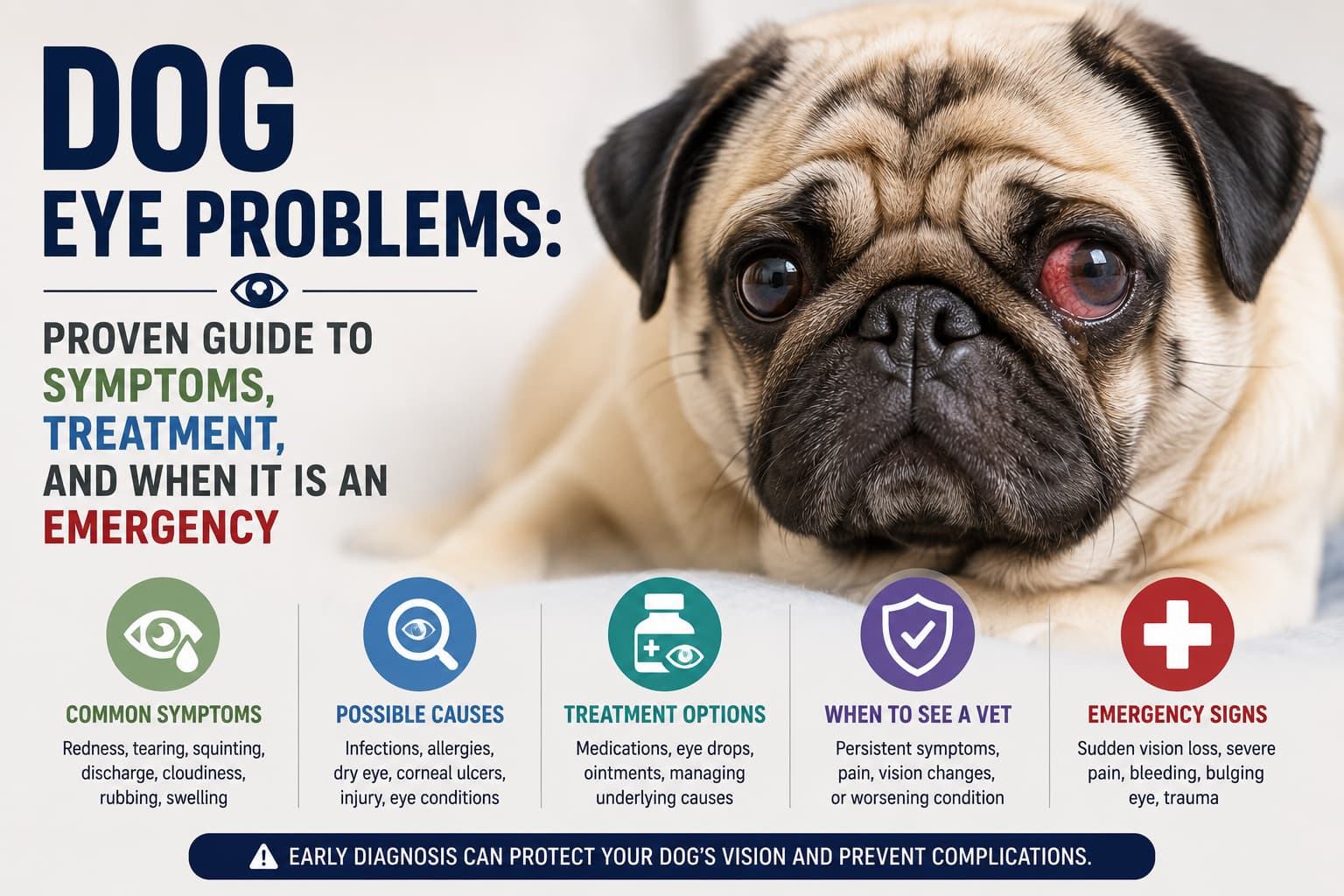
Dog eye problems range from minor irritation that clears up with eye drops to emergencies that can permanently blind a dog within hours if not treated. The challenge is that many eye conditions look similar on the outside — redness, discharge, squinting — but carry completely different urgency and treatment requirements.
The one thing I want every dog owner to take from this guide: eye problems are not a wait-and-see category. PetMD is explicit — at the first sign of any visible eye issue, call your veterinarian. What looks like minor redness can be glaucoma, which causes blindness in 40% of affected dogs within the first year regardless of treatment.
This guide covers the most common dog eye problems, the symptoms of each, the treatment approach, and — most importantly — the specific signs that mean emergency veterinary care rather than a scheduled appointment.
You may also want to read our guide on dog allergies.
Related: our guide on signs a dog is in pain covers this in more depth.
Quick Reference — Common Dog Eye Problems
Here is the complete overview before the detailed sections:
This post is part of our complete pet health library — visit our pet health guide for the full collection.
| Condition | Key symptoms | Urgency | Treatment | Can cause blindness? |
| Conjunctivitis | Red eyes, discharge, squinting | Vet this week | Antibiotic/steroid/antihistamine drops | No — unless untreated |
| Dry eye (KCS) | Thick mucoid discharge, dull eyes, frequent infections | Vet soon | Cyclosporine drops lifelong | Yes — if untreated |
| Corneal ulcer | Squinting, tearing, pawing at eye, cloudy cornea | Vet today | Antibiotic drops, e-collar, sometimes surgery | Yes — if infected |
| Glaucoma | Eye pain, redness, enlarged eye, dilated pupil | Emergency vet | Pressure-reducing drops, surgery | Yes — 40% blind within 1 year |
| Cataracts | Cloudy lens, vision loss, bumping objects | Vet appointment | Surgery (phacoemulsification) if indicated | Yes — progressive without surgery |
| Cherry eye | Red mass in inner corner of eye | Vet soon — not emergency | Surgical repositioning | No — but causes secondary issues |
The Emergency Signs — Act Immediately
These eye symptoms require same-day emergency veterinary care:
- Severe pain — the dog cannot open the eye, is crying or whimpering, pawing frantically at the face
- Sudden vision changes — bumping into objects, startling easily, reluctance to navigate familiar spaces
- Visibly enlarged or bulging eye
- Blue-grey cloudy cornea combined with obvious pain — corneal ulcer or severe inflammation
- Dilated pupil that does not respond to light alongside red eye and visible pain — possible glaucoma
- Eye that appears to have ruptured or has visible material inside it
Small Door Veterinary’s glaucoma guidance provides the most important statistic in this guide: 40% of dogs affected with glaucoma end up blind in the affected eye within the first year, regardless of medical treatment or surgery. This is the urgency behind acting immediately on suspicious eye symptoms.
Common Dog Eye Problems in Detail
Conjunctivitis (pink eye) — the most common eye condition
PetMD describes conjunctivitis as inflammation of the conjunctiva — the thin tissue lining the eyelids and covering the front of the eye. It is common and typically not a medical emergency on its own, but it does not resolve without treatment and can worsen into something more serious if ignored.
Causes include bacterial infection, viral infection, allergies, foreign bodies, and irritants. Symptoms: redness, discharge (clear, yellow, or green), squinting, swelling of the eye tissue. Most cases resolve within 7 to 10 days with appropriate veterinary treatment — antibiotic drops, steroid drops, or antihistamine drops depending on the cause.
One note from Small Door Veterinary: bacterial and viral conjunctivitis can spread from dog to dog. Allergy or injury-caused conjunctivitis is not contagious. Wash hands after treating an infected dog.
Dry eye (KCS — keratoconjunctivitis sicca)
KCS occurs when the tear glands produce insufficient tears, leading to a dry, inflamed cornea. Dog Health Guide identifies it as one of the top three eye diseases in dogs. The signature symptom is a thick, string-like or rope-like mucoid discharge across the eye — different from the watery discharge of conjunctivitis. The eyes appear dull rather than bright, and dogs typically have recurring bacterial eye infections.
Treatment involves cyclosporine or tacrolimus eye drops to stimulate tear production, applied lifelong. This is a manageable condition with the right treatment but causes progressive corneal damage and eventual blindness if untreated.
Corneal ulcer
A corneal ulcer is a scratch or wound on the cornea — the clear outer surface of the eye. It is painful, and dogs with a corneal ulcer will typically squint, tear excessively, and paw at the eye. The eye may appear cloudy or hazy. This is a vet-today condition: corneal ulcers can become infected rapidly and progress to deep ulcers that perforate the eye if untreated. An Elizabethan collar (e-collar) is essential to prevent self-trauma. Treatment involves antibiotic drops and sometimes surgery.
Glaucoma — the emergency most owners do not recognise
Glaucoma is increased pressure within the eye caused by reduced drainage of intraocular fluid. Lancaster Puppies’ guide identifies the symptoms: redness, dilated pupils, and visible discomfort. The eye may appear larger than the other eye. The dog will often show signs of head pain.
The reason this is an emergency: the elevated pressure rapidly damages the optic nerve and retinal cells, causing permanent vision loss. Small Door Veterinary’s 40% blindness statistic within the first year makes the urgency undeniable. Emergency pressure-reducing medication buys time for surgical intervention. Once damage occurs it cannot be reversed.
Cataracts
Cataracts cause progressive clouding of the lens, obstructing the passage of light to the retina. Dog Health Guide notes that cataracts are the most common cause of blindness in dogs. The clouding typically appears as a bluish-white or grey opacity visible in the pupil. Causes include genetics, ageing, diabetes, and eye trauma. Diabetic cataracts are particularly rapid-onset — dogs with poorly controlled diabetes can develop significant cataracts within weeks.
Surgery (phacoemulsification — breaking down the cloudy lens and replacing it with an artificial lens) is the treatment for cataracts where vision restoration is the goal. Without surgery, cataracts progress to complete blindness. The procedure has an excellent prognosis for improved vision.
Cherry eye
Cherry eye is the common name for prolapse of the third eyelid gland — a red, round mass that appears in the inner corner of the eye. It is more alarming looking than it is urgent, but it does need veterinary attention. The prolapsed gland does not function normally in its displaced position and can cause secondary dry eye if left untreated. Treatment is surgical repositioning of the gland — not removal, as removal significantly increases the risk of subsequent dry eye.
Preventing Eye Problems and Routine Eye Care
- Regular gentle eye cleaning — wipe away discharge with a damp cotton ball, always wiping away from the eye toward the outer corner
- Keep long hair trimmed away from the eyes — hair touching the cornea causes ongoing irritation
- Annual veterinary eye examinations — particularly for breeds prone to hereditary conditions
- Prompt treatment of any eye symptom — delay is the primary cause of preventable blindness
- Protect eyes from irritants — rinse with saline after swimming, gardening, or exposure to dust
Frequently Asked Questions
| Q: Can I use human eye drops on my dog?A: No. Human eye drops are not formulated for canine eye anatomy and pH. Some human eye drop ingredients are harmful to dogs. Always use products specifically approved for veterinary use. For basic eye cleaning, plain sterile saline is safe. |
| Q: My dog’s eye is red but they seem fine — should I be worried?A: Red eye in a dog that seems otherwise normal warrants a vet call today, not an emergency visit but not ignore-and-monitor either. The risk is that some serious conditions — including early glaucoma — can present before a dog shows obvious pain. A same-day vet call for professional assessment is appropriate. |
| Q: Are some breeds more prone to eye problems?A: Yes. Flat-faced breeds (Pugs, Bulldogs, Shih Tzus, French Bulldogs) have anatomical eye exposure that predisposes them to corneal ulcers and chronic irritation. Cocker Spaniels and Poodles have higher rates of cataracts. Beagles and Basset Hounds have higher glaucoma rates. These breeds benefit from more proactive eye monitoring. |
Frequently Asked Questions: Dog Eye Problems
What are the most common dog eye problems owners encounter?
The most frequently seen dog eye problems include conjunctivitis (pink eye), dry eye (keratoconjunctivitis sicca), corneal ulcers, cherry eye (prolapsed third eyelid), entropion (inward rolling eyelids), cataracts, and glaucoma. Conjunctivitis is the single most common of all dog eye problems, and can be caused by infection, allergies, foreign bodies, or irritants. While some dog eye problems resolve with topical treatment, others — particularly glaucoma and corneal damage — require urgent veterinary attention to prevent permanent vision loss.
How can I tell if dog eye problems need an emergency vet visit?
Seek emergency veterinary care for dog eye problems if you notice: sudden cloudiness or change in pupil size, the eyeball appears to be bulging or sinking, the dog is pawing at the eye in distress, there is visible bleeding, or the dog has had a traumatic injury to the eye area. These signs indicate serious dog eye problems — potentially glaucoma, retinal detachment, or a ruptured globe — where hours matter for preserving vision. Routine dog eye problems like mild redness or clear discharge are less urgent but still warrant a same-day or next-day vet call.
Can allergies cause dog eye problems?
Yes — allergies are one of the leading causes of recurring dog eye problems. Environmental allergens like pollen, dust mites, and mould can trigger watery, itchy eyes alongside skin irritation and sneezing. Food allergies can also manifest as eye discharge. Allergy-related dog eye problems typically affect both eyes simultaneously and recur seasonally. Your vet may recommend antihistamines, eye drops, or an elimination diet to identify and manage the underlying trigger.
Are certain breeds more prone to dog eye problems?
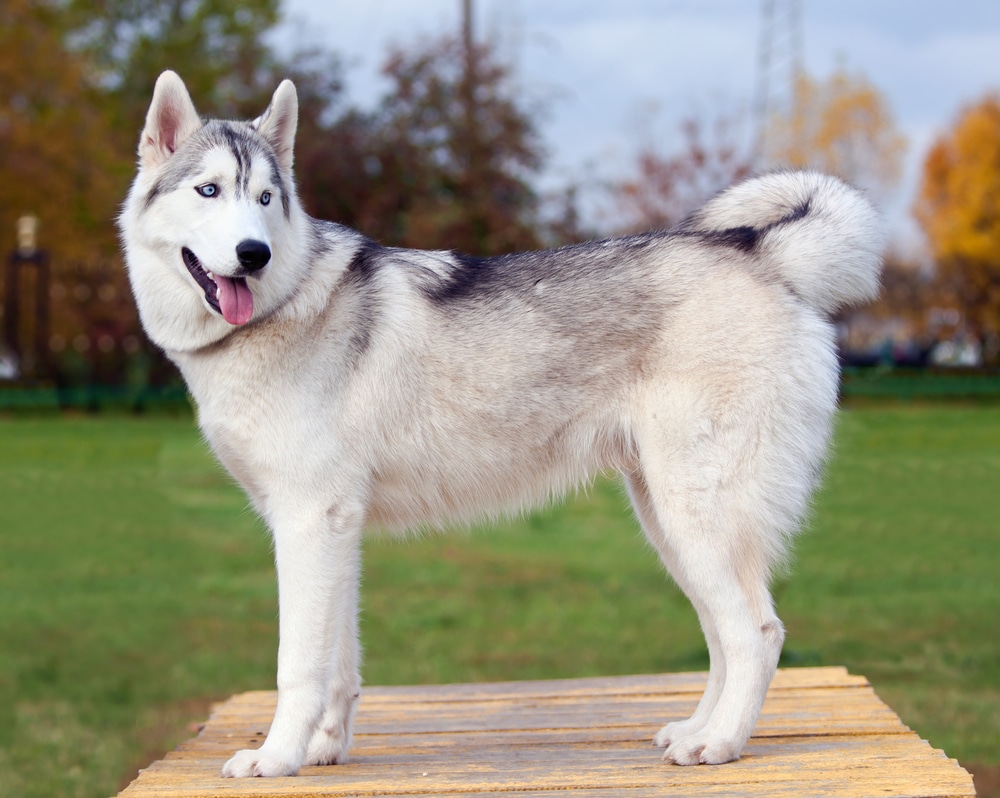
Yes — brachycephalic (flat-faced) breeds such as Pugs, Bulldogs, Shih Tzus, and Boston Terriers are significantly more prone to dog eye problems due to their prominent eyes, shallow eye sockets, and excessive skin folds. Breeds like Cocker Spaniels are prone to dry eye and glaucoma, while Huskies and Malamutes have a higher rate of hereditary cataracts. Regular eye checks are especially important for these predisposed breeds, as catching dog eye problems early greatly improves treatment outcomes.
If you want to dig deeper, check out our guide on dog ear infection treatment.
| Medical Disclaimer : This article is written for informational purposes based on the research and personal experience of the author. It is not a substitute for professional veterinary advice, diagnosis, or treatment. Always consult your veterinarian with concerns about your pet’s health. |
This article is written for informational purposes and reflects the personal experience and research of the author. It does not replace professional veterinary or dog training advice. Always consult your veterinarian or a certified trainer for individual guidance.