


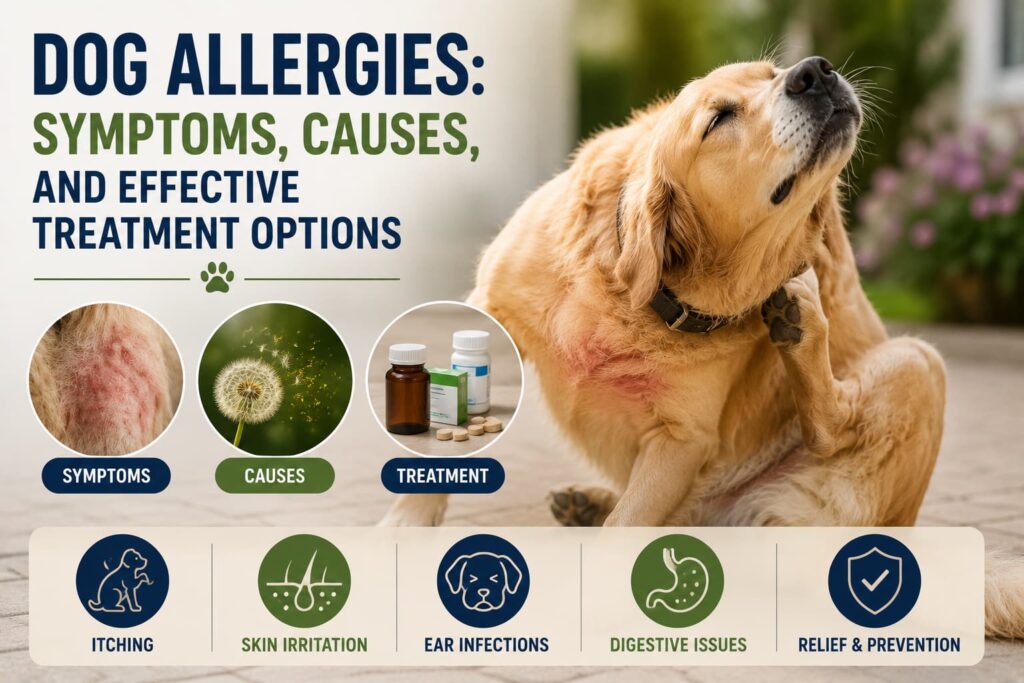
Dog allergies symptoms and treatment is a topic that trips up owners repeatedly — partly because the symptoms are frustratingly non-specific (itching could be almost anything), and partly because there are three distinct types of allergy that look similar on the surface but require completely different management approaches.
My own dog had allergies that took 18 months to properly diagnose. He scratched constantly, had recurring ear infections, and chewed his paws raw. Every treatment addressed the symptoms temporarily. The actual solution was identifying a food protein trigger through a dietary elimination trial — something I wish someone had told me to do at month one rather than month eighteen.
PetMD confirms what my experience taught me: dog allergies are an immune system overreaction to a specific trigger, and treatment of dog allergies depends on the cause. Getting the type right is not a minor detail — it is the difference between temporary relief and actual resolution.
Related: our guide on dog ear infection treatment covers this in more depth.
If you want to dig deeper, check out our guide on how to keep fleas off dogs?.
The Three Types of Dog Allergies — and Why the Type Determines Everything
This post is part of our complete pet health library — visit our pet health guide for the full collection.
| Type | Main triggers | Key symptoms | How vets diagnose |
| Environmental / atopic | Pollen, grass, mould, dust mites, dander | Itchy skin, paws, ears, armpits; recurring ear infections; seasonal pattern | Intradermal skin test or serum allergy test after ruling out other causes |
| Flea allergy dermatitis (FAD) | Flea saliva — one bite triggers reaction | Intense itching at base of tail, rump, and inner thighs; hot spots | Flea evidence plus response to strict flea control |
| Food allergy | Protein sources — most commonly beef, chicken, dairy, wheat | Year-round itching, ear infections, GI symptoms; no seasonal pattern | 8 to 12 week strict dietary elimination trial — only definitive test |
| Contact allergy | Plants, cleaning products, fabrics, plastics | Localised skin reaction where contact occurred | Identifying and removing contact trigger |
The Ear Infection Connection — The Most Overlooked Allergy Symptom
This is the gap most allergy guides miss. Recurring ear infections are one of the most reliable signs of allergies in dogs — but most owners do not make the connection because they think of ear infections as separate ear problems rather than a systemic allergic response.
PetMD is explicit about this: dogs with seasonal allergies can have recurring ear infections and skin infections. When a dog has an allergy — environmental or food — the allergic inflammation in the skin extends into the ear canal, creating a warm, inflamed environment where yeast and bacteria thrive. Treating each ear infection individually without addressing the underlying allergy is exactly why so many dogs get ear infections repeatedly throughout their lives.
If your dog has had more than two ear infections in the past year, an allergy workup is the appropriate next step, not another round of ear drops.
Recognising Allergy Symptoms in Dogs
AKC’s allergy guidance covers the full symptom picture. Skin symptoms dominate because canine allergic reactions primarily manifest through the skin rather than through respiratory symptoms as they do in humans:
- Persistent scratching, licking, or chewing — particularly at paws, ears, armpits, groin, and around the eyes
- Paw licking and redness between the toes
- Recurring ear infections — often yeast-based with a dark, waxy discharge and smell
- Red, inflamed, or thickened skin
- Hair loss from repeated scratching or chewing
- Hot spots — acute moist dermatitis from intense self-trauma
- Gastrointestinal symptoms with food allergies — vomiting, loose stools, excessive gas
How Vets Actually Diagnose Dog Allergies
Ruling out other causes first
Before any allergy testing, vets rule out other causes of itching: mange, ringworm, bacterial skin infections, and flea infestation. If a dog has a flea allergy, strict flea control for 6 to 8 weeks is both diagnostic and therapeutic — if symptoms resolve completely with flea elimination, flea allergy dermatitis (FAD) is confirmed.
Diagnosing food allergies — the elimination trial
The Wyndly allergy team explains the standard approach: identifying food allergies involves a process called elimination diet trials, where potential allergens are removed and reintroduced to observe changes. This is the only definitive diagnostic tool for food allergies in dogs.
The trial requires feeding a novel protein (one the dog has never eaten) or hydrolysed protein diet strictly for 8 to 12 weeks. No treats, no flavoured medications, nothing that could contain the suspected allergen. If symptoms resolve during the trial and return when the original food is reintroduced, food allergy is confirmed.
Blood tests for food allergies (RAST or ELISA) are available but controversial — veterinary dermatologists generally consider them unreliable for food allergy diagnosis. The elimination trial is the standard of care.
Diagnosing environmental allergies — allergy testing
Once food and flea allergies are ruled out, environmental allergy is the working diagnosis. Intradermal skin testing (injection of small amounts of allergens into the skin) performed by a veterinary dermatologist is the most accurate diagnostic tool. Serum allergy blood testing is an alternative that your regular vet can perform, though it is considered slightly less reliable than intradermal testing.
Allergy testing is most valuable when immunotherapy (allergy shots) is being considered — knowing exactly which environmental allergens the dog reacts to allows a customised immunotherapy programme to be designed.
Treatment Options — What Actually Works
Environmental allergies — the treatment ladder
- Anti-itch medications — Apoquel (oclacitinib) and Cytopoint (lokivetmab injection) are the current vet-preferred options for controlling allergic itch. PetMD also mentions Zenrelia as a once-daily oral tablet. These provide significant relief but manage symptoms rather than treating the underlying cause.
- Steroids — effective for reducing inflammation but not recommended for long-term use due to side effects including immune suppression, weight gain, and diabetes risk.
- Antihistamines — less effective in dogs than in humans but sometimes useful for mild seasonal cases. Cetirizine (Zyrtec) is commonly used. Chewy vet guidance confirms: over-the-counter antihistamines like Zyrtec can sometimes help dogs with mild allergy symptoms.
- Immunotherapy (allergy shots) — the only treatment that addresses the underlying cause. Desensitisation injections are customised to the specific allergens identified in testing. Takes 6 to 12 months to show full effect but produces long-term improvement without the side effects of ongoing medication.
- Medicated shampoos and topical therapy — control surface bacteria and yeast, soothe inflamed skin, and provide short-term relief between treatments.
Food allergies — strict diet is the treatment
Once a food allergen is identified, elimination from the diet is the treatment. There is no medication equivalent for food allergies — the allergen must be removed. This means reading ingredient labels on every food and treat carefully, as protein sources can appear under various names.
Hypoallergenic prescription diets (hydrolysed protein or novel protein) from Hill’s, Purina, or Royal Canin are the most reliably allergen-controlled options. These require veterinary prescription.
Flea allergy — flea prevention is the treatment
For FAD, strict flea prevention on all pets in the household, year-round, is both treatment and prevention. A single flea bite can trigger a week-long allergic response in a sensitive dog. There is no medication that eliminates FAD — only eliminating flea exposure manages it.
Frequently Asked Questions
| Q: Can dog allergies develop at any age?A: Yes. Environmental allergies typically develop between 6 months and 3 years of age. Food allergies can develop at any age, including in dogs that have eaten the same food without issue for years. A dog’s immune system can develop a response to a protein it has been exposed to repeatedly — prior tolerance does not guarantee continued tolerance. |
| Q: My dog is itching constantly — how do I know if it is allergies?A: The pattern matters. Seasonal itching that worsens in spring or autumn suggests environmental allergy. Year-round itching with no seasonal variation suggests food allergy. Itching focused at the base of the tail with flea evidence suggests FAD. Recurring ear infections in any of these patterns strengthens the allergy diagnosis. A vet assessment is the appropriate starting point for persistent itching. |
| Q: Are some dog breeds more prone to allergies?A: Yes. Golden Retrievers, Labrador Retrievers, French Bulldogs, German Shepherds, Bulldogs, Poodles, and Dachshunds are among the breeds with higher allergy prevalence. This does not mean other breeds are immune — allergies occur across all breeds — but these breeds warrant more proactive monitoring and earlier investigation when itching presents. |
We also have a complete guide on signs a dog is in pain.
| Medical Disclaimer :This article is written for informational purposes based on the research and personal experience of the author. It is not a substitute for professional veterinary advice, diagnosis, or treatment. Always consult your veterinarian with concerns about your pet’s health. |
This article is written for informational purposes and reflects the personal experience and research of the author. It does not replace professional veterinary or dog training advice. Always consult your veterinarian or a certified trainer for individual guidance.