


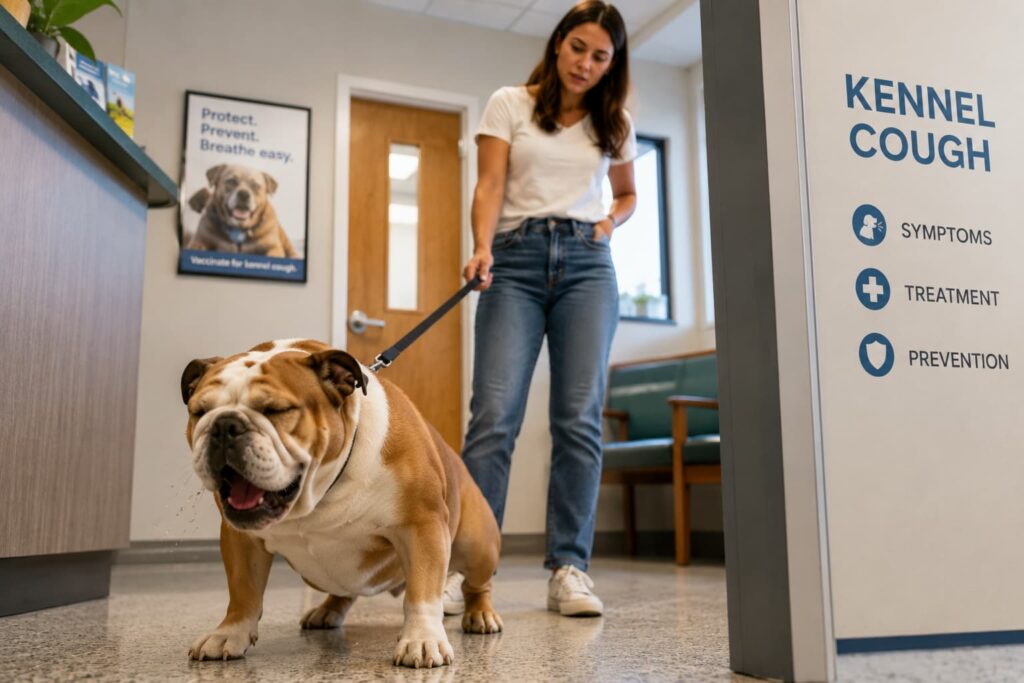
Kennel cough in dogs is the kind of thing that sounds alarming the first time you hear it. Your dog produces a loud, dry, hacking cough that sounds genuinely terrible — like something is stuck in their throat, or like a goose honking. If you have never heard it before, it is hard not to panic.
I have been through it twice with my own dogs. The first time I rushed straight to an emergency vet, convinced something was seriously wrong. The vet told me, politely but clearly, that kennel cough was essentially the doggy version of the common cold — contagious, uncomfortable, but rarely dangerous in healthy adult dogs. Most resolve on their own within 10 to 14 days.
That said, kennel cough in dogs deserves proper understanding. It can be serious in puppies, senior dogs, and immunocompromised dogs. It spreads remarkably fast through any environment where dogs gather. And there is a specific set of symptoms that means you need a vet immediately rather than a wait-and-see approach.
For more on this, see our guide on why is my dog not eating?.
What Is Kennel Cough?
Kennel cough — also called canine infectious tracheobronchitis or canine infectious respiratory disease (CIRD) — is a highly contagious respiratory infection. Chewy veterinarian Dr Molly Price describes it well: it is like the doggy version of the common cold.
It is caused not by a single pathogen but by a combination of organisms working together. The most common bacterial cause is Bordetella bronchiseptica, which is why kennel cough is also called Bordetella. This is often combined with viral agents including canine parainfluenza virus, adenovirus type 2, and sometimes canine distemper virus in unvaccinated dogs.
Wedgewood Pharmacy explains the mechanism clearly: the infection attacks cells in the respiratory system, weakening the mucus coating on the trachea, larynx, and bronchia. This inflammation produces the characteristic dry, hacking cough.
How Kennel Cough Spreads — The Incubation Period
This is the most important thing most guides do not cover adequately: dogs are contagious before they show any symptoms.
The incubation period — the time between exposure and the appearance of symptoms — is 2 to 14 days. According to Wedgewood Pharmacy, during this entire window the dog is contagious to other dogs. Some dogs can be carriers for months without showing symptoms.
This is why outbreaks spread so effectively through kennels, dog parks, training classes, and grooming facilities. A dog can appear completely healthy, socialise normally, and pass kennel cough to every dog they interact with. It spreads through direct contact, airborne droplets from coughing, and shared surfaces including water bowls, toys, and bedding.
This post is part of our complete pet health library — visit our pet health guide for the full collection.
| 💡 What this means practically : If your dog has been around other dogs in the last 2 weeks and then develops a cough, kennel cough is the first diagnosis to consider regardless of how recently they were vaccinated. The Bordetella vaccine reduces severity and risk but does not provide 100% protection against all strains. |
Kennel Cough Symptoms — What to Look For
Chewy veterinarian Dr Molly Price describes the classic presentation: a dry, hacking cough that sounds like your dog has something stuck in their throat, or a honking goose sound.
- The characteristic honking or hacking cough — the defining symptom
- Coughing triggered by excitement, exercise, or pressure on the collar
- Gagging or retching at the end of coughing episodes, sometimes producing white foam
- Runny nose — usually clear
- Sneezing
- Mild eye discharge
- Generally normal energy levels and appetite — this distinguishes uncomplicated kennel cough from more serious illness
WebMD notes that dogs with kennel cough will probably not lose their appetite or have a decreased energy level in uncomplicated cases. A dog that is eating normally and playing normally but coughing is almost certainly more comfortable than they look.
When to See a Vet — The Warning Signs
Most healthy adult dogs with kennel cough do not require emergency veterinary care. However, contact your vet promptly if:
- Symptoms persist beyond 10 to 14 days without improvement
- Your dog develops a productive cough with yellow or green discharge
- High fever — hot nose, lethargy, loss of appetite combined with the cough
- Rapid breathing or laboured breathing at rest — this can indicate pneumonia
- Complete loss of appetite or inability to keep water down
- Extreme lethargy — not just a bit quieter than normal but genuinely unresponsive
- Puppies under 6 months with kennel cough symptoms — they have less immune reserve and can deteriorate faster
- Senior dogs or dogs with existing respiratory or heart conditions
The concern in these cases is pneumonia. Most kennel cough does not progress to pneumonia, but in vulnerable dogs it can, and pneumonia is a serious and potentially fatal complication. Best Friends Animal Rescue notes that because serious ongoing kennel cough infection can lead to pneumonia, follow up with your veterinarian if your dog does not improve within the expected timeframe.
Treatment — What Vets Actually Do
For uncomplicated kennel cough in healthy adult dogs, the honest answer is that most cases resolve without medical treatment. Small Door Veterinary is direct: the cost for treating uncomplicated cases tends to be low as hospitalisation and antibiotics are typically not required.
When antibiotics are prescribed
Best Friends guidance outlines the specific circumstances that warrant antibiotics: the dog has a fever, is very lethargic, has yellow or green discharge, is not eating, or the cough is getting worse rather than better after a few days. Antibiotics are also used if a culture reveals a more aggressive bacterial strain such as streptococcus, which has a greater likelihood of making a dog very sick.
Doxycycline is the most commonly prescribed antibiotic for kennel cough. Antibiotics also shorten the contagious period, which is why they are often used in shelter environments to control spread.
Cough suppressants
If the cough is severe enough to prevent sleep, a cough suppressant may be prescribed. This is a comfort measure — it makes the dog more comfortable but actually slows the clearing of the infection since coughing is how the body expels mucus and infectious agents.
Supportive home care
For the majority of cases, home management is appropriate:
- Rest and limited exercise — walks on a harness rather than a collar (collar pressure triggers coughing)
- A humidifier in the room where your dog rests soothes the irritated respiratory tract
- A small amount of raw honey (half a teaspoon for small dogs, 1 teaspoon for large dogs) has mild soothing properties — not a treatment, but harmless and sometimes helpful for cough discomfort
- Isolation from other dogs for the duration of contagiousness
- Fresh water always available — hydration supports recovery
How Long Is Kennel Cough Contagious?
This is one of the most commonly searched questions about kennel cough in dogs, and the answer is less simple than most guides acknowledge.
Kingsdale Animal Hospital explains that in most cases, Bordetella-based kennel cough remains contagious for up to 14 days after symptoms have resolved — not just until symptoms disappear. The general guideline is that dogs are considered safe for boarding 7 days after symptoms have completely disappeared.
However, some dogs — particularly those infected with Bordetella bronchiseptica — can become carriers who continue shedding bacteria for weeks to months without showing symptoms. This is uncommon but real, and it is why some dogs seem to reinfect others repeatedly.
Treatment with antibiotics, when appropriate, shortens the contagious period. This is particularly important in shelter and boarding environments.
The Bordetella Vaccine — What It Does and Does Not Do
The Bordetella vaccine reduces the severity of kennel cough and provides protection against the most common bacterial cause. According to Chewy, the vaccine provides protection against many of the common causes of kennel cough to help lower the risk.
What it does not do: guarantee complete protection. Kennel cough is caused by multiple organisms, and the vaccine does not cover all of them. Just like human flu vaccines, even after vaccination a dog can contract different strains or experience a milder version of the illness. The vaccine is valuable — it reduces severity and risk substantially — but vaccinated dogs can still get kennel cough.
Most kennels and doggy daycares require a Bordetella vaccination within the last 6 to 12 months for entry. If your dog is regularly exposed to other dogs in any setting, keeping this vaccination current is worthwhile.
Frequently Asked Questions
| Q: Can humans catch kennel cough from their dog?A: Kennel cough is not generally contagious to humans. However, Bordetella bronchiseptica has in rare cases been transmitted from dogs to immunocompromised people — those undergoing chemotherapy, with HIV/AIDS, or with other conditions that significantly impair immunity. If you or a household member is immunocompromised and your dog has kennel cough, take basic hygiene precautions and consult your doctor if you have concerns. |
| Q: How long does kennel cough last?A: WebMD guidance states that most dogs recover completely within 1 to 3 weeks, though it can take up to 6 weeks in older dogs or those with other medical conditions. Puppies and immunocompromised dogs may take longer. Uncomplicated cases in healthy adult dogs typically resolve within 10 to 14 days with supportive care. |
| Q: My dog has kennel cough — can they still go to the dog park?A: Absolutely not, until at least 14 days after all symptoms have resolved and ideally 7 days beyond that. Kennel cough spreads extremely easily. Taking a dog with active kennel cough to any environment with other dogs is putting those dogs at risk. |
| Q: Why does my vaccinated dog keep getting kennel cough?A: This is not unusual and does not mean the vaccine is not working. Kennel cough is caused by multiple organisms and no single vaccine covers all of them. A vaccinated dog that gets kennel cough typically gets a milder version that resolves faster. Frequent recurrence in a vaccinated dog suggests high exposure risk from their social environment. |
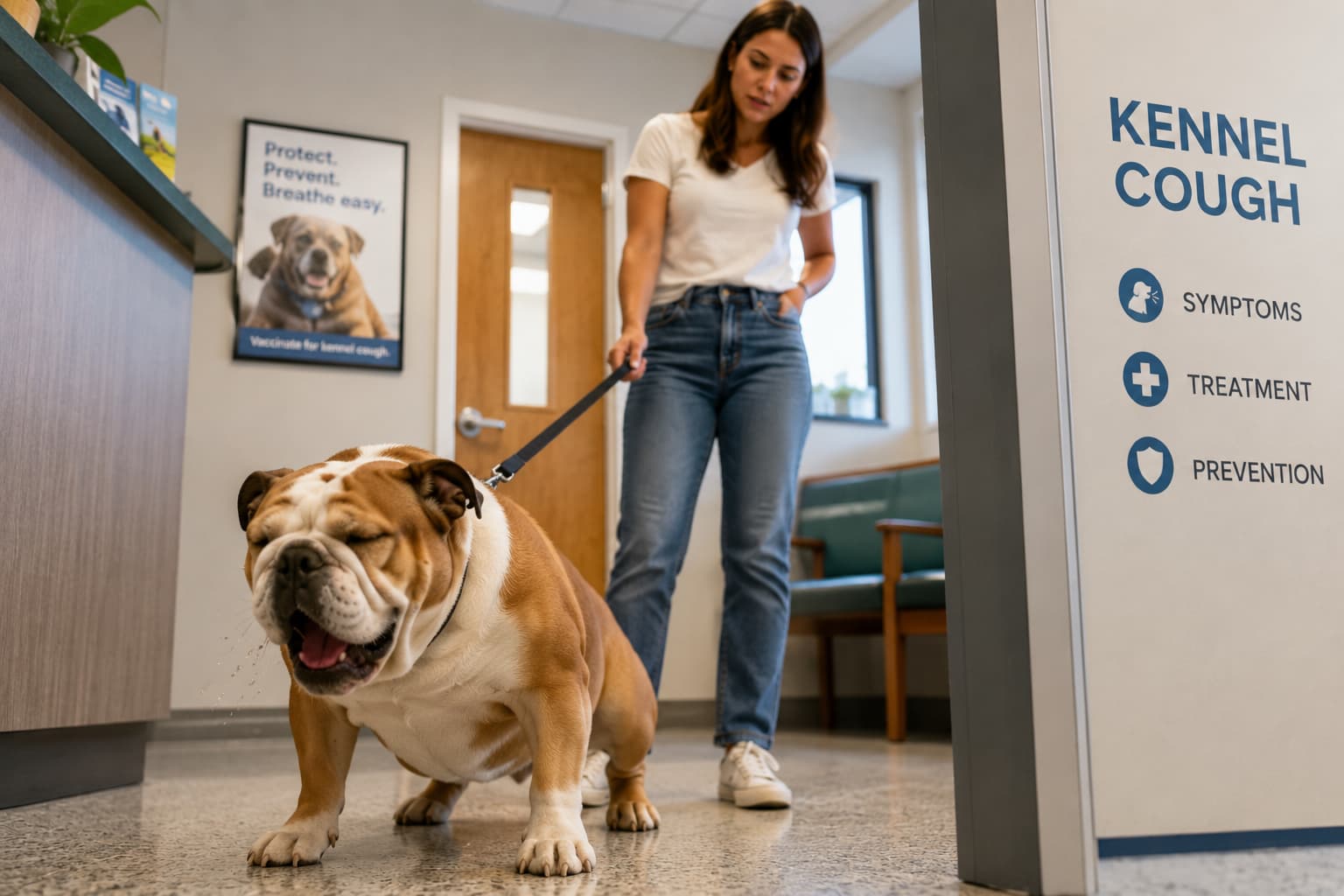


Frequently Asked Questions: Kennel Cough in Dogs
How long does kennel cough in dogs last?
Kennel cough in dogs typically runs its course within one to three weeks in otherwise healthy adult dogs. Puppies, senior dogs, and those with underlying health issues may take longer to recover and are more prone to complications like pneumonia. If your dog’s cough persists beyond three weeks or worsens rather than improving, a vet visit is strongly recommended.
Is kennel cough in dogs contagious to other pets?
Yes — kennel cough in dogs is highly contagious and spreads easily through the air and via shared water bowls, toys, or surfaces. It spreads rapidly in places where dogs congregate, such as kennels, dog parks, and grooming salons. Keep an infected dog isolated from other dogs until at least two weeks after symptoms resolve. Cats can sometimes carry Bordetella, one of the bacteria responsible, though they rarely show the same symptoms.
When does kennel cough in dogs require antibiotics?
Most mild cases of kennel cough in dogs resolve without antibiotics, as the condition is often viral. Vets typically prescribe antibiotics when a bacterial cause like Bordetella bronchiseptica is confirmed, when symptoms are severe, or when there is a risk of secondary infection. Cough suppressants and anti-inflammatory medications may also be prescribed to ease discomfort during recovery.
Can the kennel cough vaccine prevent my dog from getting it?
The Bordetella vaccine significantly reduces the risk and severity of kennel cough in dogs, but it does not guarantee complete protection since the condition can be caused by multiple pathogens. It is especially recommended before boarding, grooming, or any social event where your dog will be near other dogs. Most kennels and grooming facilities require proof of vaccination before accepting a dog.
You might also find our guide on signs a dog is in pain helpful.
| Medical Disclaimer : This article is written for informational purposes based on the personal experience and research of the author. It is not a substitute for professional veterinary advice, diagnosis, or treatment. Always consult your veterinarian before making decisions about your dog’s health. |
This article is written for informational purposes and reflects the personal experience and research of the author. It does not replace professional veterinary or dog training advice. Always consult your veterinarian or a certified trainer for individual guidance.