

Published April 2026 | 6 min read
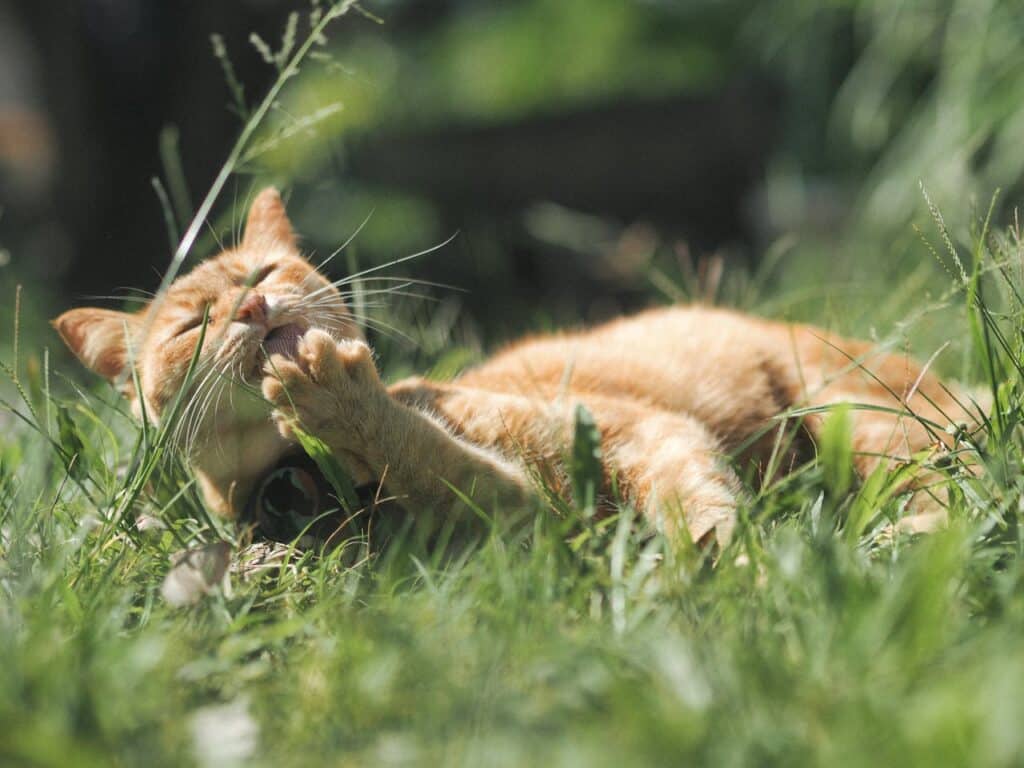
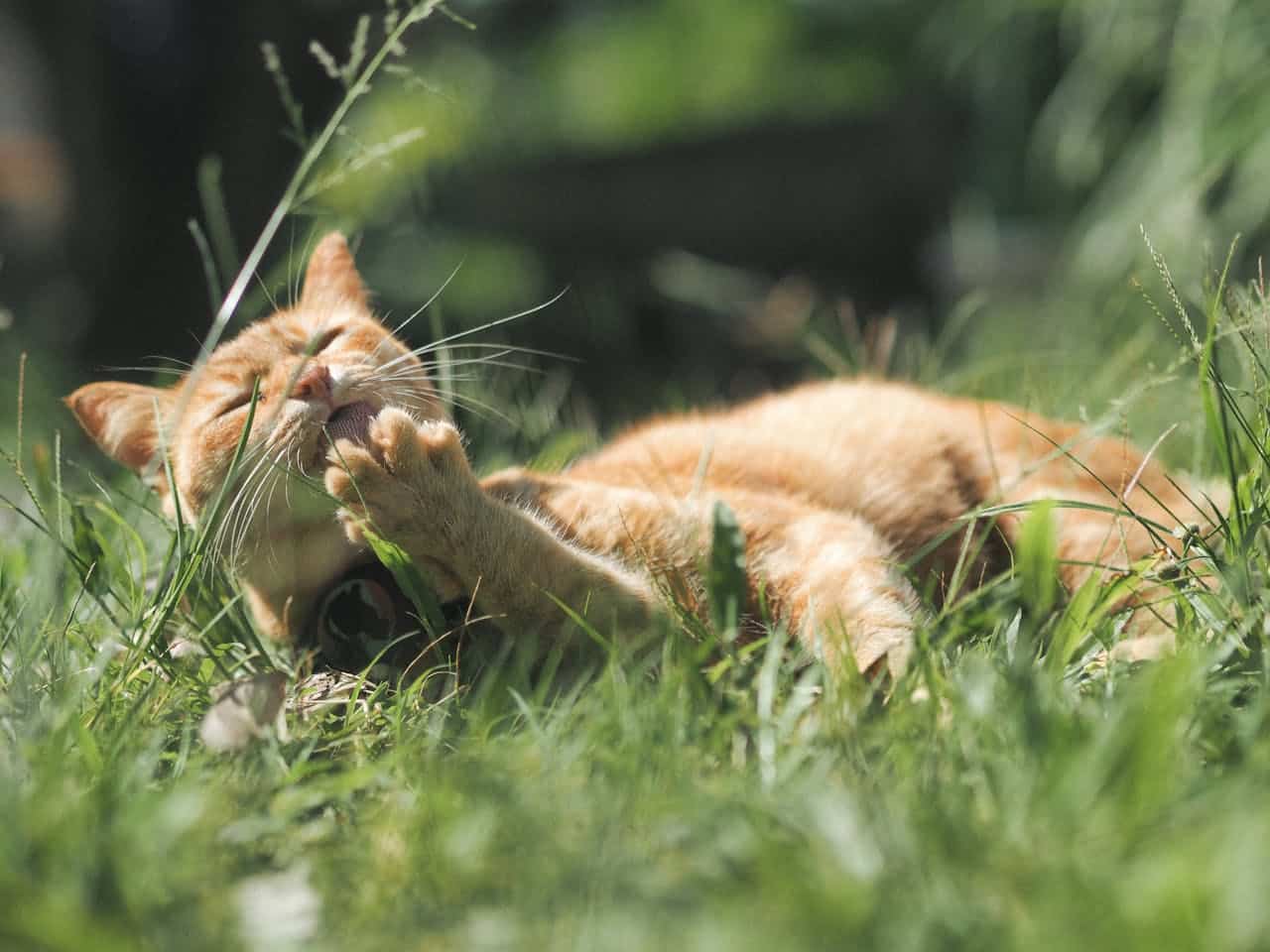
Your cat has a full bowl of premium food. They have treats. They have everything a cat could want. And yet there they are, methodically chewing on a patch of grass like a tiny, very opinionated cow. Why do cats eat grass?
Most owners assume their cat is sick when they catch them grazing. That assumption is almost always wrong. According to a landmark study surveying over 1,000 cat owners, 71% of cats eat grass or plants at least six times in their lifetime — and in 91% of those cases, the cat showed no signs of illness beforehand. Grass eating is normal feline behaviour with deep biological roots. Here’s what’s actually driving it.
We also have a complete guide on why do cats sleep so much?.
For more on this, see our guide on why do cats hate water?.
You might also find our guide on why does my cat lick me? helpful.
5 science-backed reasons cats eat grass
1. An evolutionary instinct to expel intestinal parasites
This is the most compelling theory and the one supported by the strongest cross-species evidence. Researchers at the University of California Davis studied plant-eating behaviour across dozens of wild animal species — including chimpanzees, wolves, and wild cats. They found a consistent pattern: animals eat grass specifically to increase muscle contractions in the intestinal tract.
These contractions help push intestinal parasites out of the gut before they can embed and reproduce. Grass is indigestible fibre — it moves through the system largely unchanged, but the muscular activity it triggers in the gut acts as a natural purging mechanism.
Modern domestic cats are dewormed and unlikely to have parasites. But the instinct evolved over millions of years and is still hardwired into their behaviour. According to Science Magazine, cats and other wild animals appear to use grass eating to move intestinal parasites and other indigestible material through the gut — a trait inherited from ancestors who genuinely needed it.
| 🔬 Science note A 2020 study published in the journal Behaviour found that animals who ate grass were significantly more likely to expel intestinal worms in their faeces. The grass didn’t kill the parasites — it helped move them out mechanically by increasing gut contractions. |
2. To help with hairballs and indigestible material
Every cat swallows fur when they groom — short-haired, long-haired, all of them. That fur accumulates in the stomach. Some of it passes through in stools. Some forms hairballs that need to be expelled by vomiting. Grass adds indigestible fibre to the system, which can help move this material through — or help the cat vomit it up more easily.
The vomiting you sometimes see after grass eating isn’t the goal — it’s a side effect. Cats’ stomachs don’t contain the enzymes needed to break down grass, so if they eat enough of it, vomiting is the result. That vomiting also expels whatever else was sitting in the stomach — hairballs, feathers, indigestible prey parts.
Interestingly, a 2021 study found no difference in grass-eating behaviour between long-haired and short-haired cats, which suggests hairball management may not be the primary driver — but it’s likely one of several overlapping benefits.
3. For fibre, folic acid, and trace nutrients
Grass contains folic acid — vitamin B9 — which is released when cats chew and crush grass blades. Folic acid is essential for red blood cell production and overall cellular health. While commercial cat food should provide adequate folic acid, cats may instinctively seek it out in plant material as a supplement.
Grass also provides indigestible fibre that can support gut motility — the natural muscular movement of the digestive tract. For cats that are occasionally constipated or whose digestion moves sluggishly, grass may provide gentle natural support.
According to PetMD, while commercial cat foods are nutritionally complete, some cats may seek out trace minerals or nutrients from plant material instinctively, even when their diet technically provides everything they need.
4. Simply because they enjoy it
Sometimes the answer is the simplest one. Some cats just like grass. They like the texture, the taste, the sensory experience of chewing something green and crunchy. Cats are individuals with distinct preferences, and some cats are enthusiastic plant eaters while others show no interest at all.
Boredom can also drive grass eating. An understimulated indoor cat may gravitate toward plants and grass simply as a form of environmental enrichment — something novel and interesting to interact with in an otherwise static indoor environment.
5. Natural laxative effect
In addition to the hairball and parasite theories, grass fibre can act as a gentle natural laxative. When grass is not vomited up, it passes through the digestive system and can help move stool along — particularly useful for cats prone to constipation. This may explain why some cats eat grass specifically during periods when their digestion seems to be moving slowly.
Is it safe to let your cat eat grass?
Yes — with one important caveat. Plain grass that has not been treated with pesticides, fertilisers, herbicides, or chemical treatments is safe for cats. The danger is not the grass itself but what may be on it.
If your cat has access to outdoor grass, be aware of what treatments your lawn or neighbouring lawns receive. Many common lawn chemicals are toxic to cats. If you’re not certain your outdoor grass is chemical-free, the safest option is to grow cat grass indoors — wheat grass, oat grass, or barley grass kits are inexpensive, widely available, and give your cat a safe indoor grazing option.
- Safe: untreated grass, wheat grass, oat grass, barley grass, cat grass kits
- Unsafe: grass treated with pesticides, herbicides, or fertilisers
- Unsafe: many common garden plants — always check before letting cats near them
| 🌿 Indoor cat grass tip If your cat is an enthusiastic grass eater, growing a small pot of cat grass indoors gives them a safe, pesticide-free option year-round. Most cats take to it immediately and it redirects them from houseplants that may be toxic. |
When to worry about grass eating
Occasional grass eating is completely normal. Worry if:
- Your cat is eating grass constantly — daily or multiple times a day
- Vomiting after grass eating is frequent and the cat seems distressed
- Grass eating is accompanied by other symptoms — lethargy, weight loss, changes in appetite
- Your cat is eating grass and then seems unable to pass faeces normally
These combinations can indicate gastrointestinal disease, parasites, or other conditions that need veterinary investigation.
Frequently asked questions
| Q: Why does my cat eat grass then throw up?A: Because cats lack the enzymes to digest grass, eating it often stimulates vomiting — particularly if they eat a lot of it. This vomiting also expels hairballs and other indigestible material from the stomach. The vomiting is a side effect, not the intended goal. As long as vomiting is occasional and your cat seems fine afterwards, it’s normal. |
| Q: Should I stop my cat from eating grass?A: Not unless it’s causing frequent vomiting or other digestive problems. Grass eating is a natural behaviour that likely serves several biological purposes. Rather than stopping it, provide a safe indoor grass option to ensure they’re not eating chemically treated outdoor grass. |
| Q: Why does my indoor cat eat grass?A: Indoor cats eat grass for the same instinctual reasons outdoor cats do. The instinct to seek out plant material is hardwired, regardless of whether they live indoors or outdoors. Indoor cats may eat houseplants as a substitute if no grass is available — which is why providing safe cat grass indoors is a good idea. |
| Q: Can eating grass give my cat worms?A: Grass itself does not cause worms. However, outdoor grass can harbour worm larvae or parasite eggs if contaminated by other animals’ faeces. This is another reason to provide indoor cat grass rather than letting cats graze on potentially contaminated outdoor grass. |
You may also want to read our guide on why do cats purr?.
Related: our guide on why does my cat bite me? covers this in more depth.
If you want to dig deeper, check out our guide on why does my cat follow me everywhere?.
We also have a complete guide on why does my cat stare at me?.

Frequently Asked Questions: Why Do Cats Eat Grass?
Is it safe to let my cat eat grass?
In most cases, yes. Why do cats eat grass is a question with a reassuring answer — it’s a normal, instinct-driven behaviour that doesn’t usually cause harm. The main caution is ensuring the grass hasn’t been treated with pesticides, herbicides, or fertilisers. If you’re concerned, you can grow cat-safe grass indoors, such as wheatgrass or oat grass, specifically for your cat to graze on safely.
Why do cats eat grass and then vomit?
Cats lack the digestive enzymes needed to break down plant cellulose, so grass often triggers vomiting. This is thought to be one of the reasons why do cats eat grass in the first place — as a natural mechanism to purge indigestible material, hairballs, or anything that’s causing stomach discomfort. The vomiting, while unpleasant for owners to witness, is typically harmless and self-limiting.
Should I stop my cat from eating grass?
Generally, no — unless the grass is treated with chemicals or your cat is vomiting excessively. Understanding why do cats eat grass helps explain that this is an ancient, instinctual behaviour, not a sign of nutritional deficiency or illness. If your cat is eating grass compulsively and vomiting frequently, a vet visit is wise to rule out an underlying gastrointestinal issue.
Can indoor cats eat grass too?
Absolutely. Many indoor cats crave plant material and will chew houseplants if grass isn’t available — sometimes with toxic results. Providing a pot of cat grass indoors is an excellent solution. It satisfies the instinct behind why do cats eat grass, keeps them away from harmful houseplants, and gives them a safe, enriching outlet. Pet shops and garden centres widely stock suitable seed mixes.
For more on this, see our guide on why does my cat headbutt me?.
This post is part of our complete cat behaviour library. For the full guide covering all 18 cat behaviours in one place, visit our complete cat behaviour guide.
| ⚠️ Disclaimer This article is for informational purposes only and does not constitute veterinary advice. If you are concerned about your cat’s behaviour or health, please consult your veterinarian. |
This article is written for informational purposes and reflects the personal experience and research of the author. It does not replace professional veterinary or dog training advice. Always consult your veterinarian or a certified trainer for individual guidance.