

Published April 2026 | 6 min read
Many owners search “why does my cat follows me everywhere” — the behaviour is so common it’s become a hallmark of the human-cat bond.
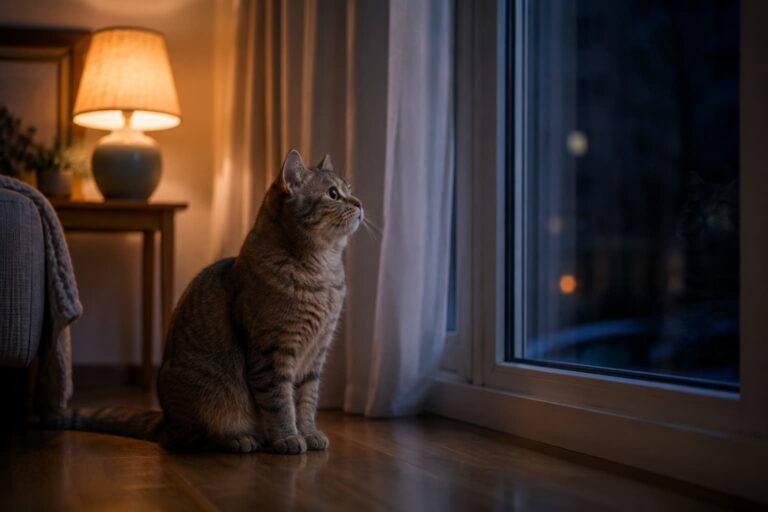
You get up from the sofa — your cat gets up. You walk to the kitchen — your cat appears. You close the bathroom door — your cat sits outside meowing or, if you forgot to close it properly, joins you uninvited and settles in to observe proceedings with supreme dignity.
If your cat follows me — or rather, follows you — around the house constantly, you’re in good company. It’s one of the most common feline behaviours owners notice, and it has several well-understood explanations rooted in instinct, attachment, and learned behaviour.
If your cat shadows your every move, you’re not alone. This is one of the most common cat behaviours owners notice and wonder about. Is it love? Boredom? Hunger? Anxiety? The answer depends on which type of following it is — and the context tells you almost everything.
You may also want to read our guide on why do cats sleep so much?.
Related: our guide on why do cats hate water? covers this in more depth.
If you want to dig deeper, check out our guide on why does my cat lick me?.
7 reasons your cat follows you everywhere
1. They’re bonded to you — the most flattering reason
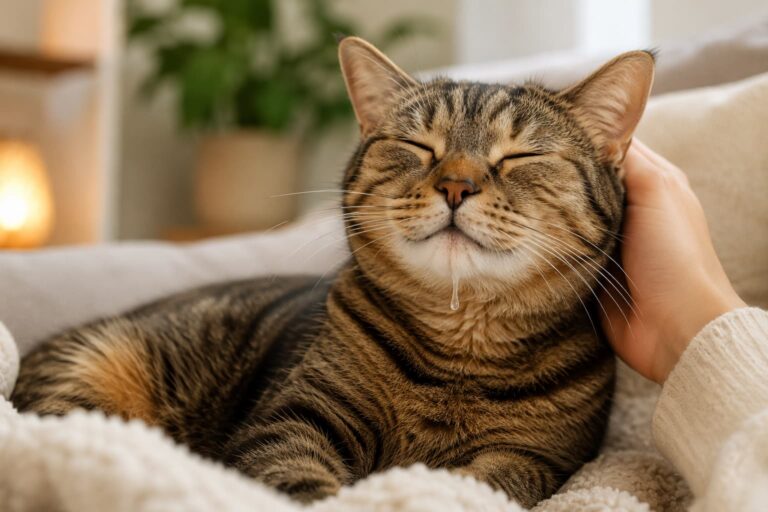
Cats are often painted as aloof and independent, but this reputation is largely unfair to genuinely social cats. Research consistently shows that many cats form strong, secure attachments to their owners — similar in structure to the bond between a dog and its owner, or an infant and its primary caregiver.
A bonded cat wants to be near their person. Not because they need something, but because your presence is intrinsically rewarding to them. You are their safe base. Following you is how they maintain proximity to the thing that makes them feel most comfortable. If your cat follows you calmly, without vocalising or demanding anything, this is almost certainly the reason.
| 💡 The attachment study Research by animal behaviorist Mieshelle Nagelschneider confirms that cats form strong attachments to their humans similar to the bond dogs and even infants form. Following you everywhere is one of the primary expressions of that attachment. |
2. They’re hungry
This one needs no romanticism — a hungry cat follows the human who feeds them. If your cat’s following intensifies at predictable times of day (especially morning and evening) and stops the moment food appears, hunger is the driving force.
Cats also learn associations rapidly. If going to the kitchen usually means their bowl gets filled, they’ll follow you to the kitchen every single time — just in case. This isn’t deep attachment; it’s efficient resource management. Cats are very good at it.
3. They’re curious about what you’re doing
Cats are driven by a powerful need to know what’s happening in their territory at all times. You moving from room to room is interesting information — what are you doing? Is it relevant to them? Should they be involved? This curiosity is deeply instinctual and doesn’t require any deeper emotional explanation.
This is also why cats so frequently appear to be underfoot exactly when you’re cooking, making the bed, folding laundry, or typing on a laptop. You’re doing something with your hands, and that’s automatically interesting to a creature wired to observe and hunt.
4. You’re part of their routine
Cats are extraordinarily attuned to routine. They know what you do and in what order. If your morning routine involves going to the bathroom, then to the kitchen, then making coffee — your cat has memorised this sequence and knows which steps involve them being fed or receiving attention. They follow the routine as much as they follow you.
This is why cats often appear to predict your movements — they’re not psychic, they’ve simply memorised your patterns better than you have yourself.
5. They’re bored or understimulated
A cat without enough enrichment or activity follows their owner because there’s nothing else interesting to do. You become the most stimulating thing in an under-stimulating environment. The following in this case is less about attachment and more about desperation for engagement.
Signs the following is boredom-driven: it’s constant and relentless, your cat seems unsettled or vocalises while following, they don’t settle even when you stop moving. The solution is enrichment — a cat tree, window perch, rotating toys, and dedicated daily play sessions.
6. They’re anxious or stressed
A stressed cat clings to their safe person. If your cat has started following you more than usual following a change in the household — new pet, new person, house move, changes to your schedule — anxiety may be driving the increased proximity-seeking.
An anxious follower often vocalises more, may seem unsettled even when close to you, and may show other signs of stress like over-grooming, changes in appetite, or hiding when you’re not present. If you suspect stress is the cause, speak to your vet about management options.
7. They might be unwell
A cat that suddenly becomes much clingier than their baseline — especially if paired with other behavioural changes — may be feeling unwell. Sick cats sometimes seek more contact with their owners, particularly in the early stages of illness before symptoms become obvious.
If the following is new and intense, and your cat seems ‘not quite right’ in other ways — eating less, sleeping more, grooming less, or seeming quieter than usual — trust your gut and schedule a vet visit.
Why does my cat follow me to the bathroom specifically?
This deserves its own section because it baffles so many owners. Several things make the bathroom uniquely appealing to cats:
- Closed doors represent unknown territory — your cat cannot patrol their full territory with the door shut, which creates urgency
- You’re a captive audience — you’re sitting still and cannot leave, which is a rare opportunity for uninterrupted attention
- The bathroom is full of interesting scents — your personal care products, running water, your concentrated scent
- Cats are protective during vulnerable moments — according to PetMD, cats may follow you to the bathroom because urinating and defecating are vulnerable times, and their instinct is to stay near their person during vulnerability
- Running water is fascinating — many cats are drawn to taps and showers
Following versus separation anxiety — knowing the difference
Normal following is calm, follows you at a comfortable distance, and doesn’t involve distress when you leave the room. True separation anxiety is rarer but does occur. Signs that suggest anxiety rather than normal attachment:
- Your cat becomes distressed (vocalising, destructive behaviour) when you leave
- They follow you literally room to room without ever settling
- They show signs of stress when not in direct contact with you
- They’ve had a difficult history — orphaned early, rehomed multiple times, or experienced trauma
True separation anxiety is best addressed with veterinary support and possibly a behaviourist. Most following, however, is completely normal and is simply your cat doing what bonded cats do.
Frequently asked questions
| Q: Why does my cat follow me but not my husband or partner?A: Cats choose a primary person — usually the one who feeds them most consistently, spends the most time with them, or whose interaction style they prefer. Cats tend to prefer people who approach them on their terms, speak quietly, and don’t force contact. Your cat has simply decided you’re their person. It’s not a reflection on your partner — it’s just cat logic. |
| Q: Is it normal for cats to follow you into every room?A: Yes, for many cats this is completely normal. Cats in the wild live in a defined territory and monitor it constantly. In a home, you are both a key part of that territory and its most interesting inhabitant. Following you from room to room is your cat fulfilling their territorial monitoring instinct while staying close to their favourite person. |
| Q: Should I be worried if my cat never follows me?A: Not at all. Cats express attachment in many different ways. Some are clingy followers. Others show affection through proximity without constant following — sitting in the same room, sleeping near you, slow blinking at you from a distance. Neither is more loving than the other; they’re just different personalities. |
| Q: Why does my cat follow me at night?A: Cats are crepuscular — most active at dawn and dusk. Night restlessness and following can simply be their natural active time. It can also indicate hunger if their last meal was too early, or anxiety if something in the environment is unsettling them. In older cats, cognitive dysfunction can cause nighttime disorientation and increased vocalisation and following. |
We also have a complete guide on why do cats purr?.
For more on this, see our guide on why do cats knead?.
This post is part of our complete cat behaviour library. For the full guide covering all 18 cat behaviours in one place, visit our complete cat behaviour guide.


Frequently Asked Questions: Why Your Cat Follows Me Everywhere
Is it normal if my cat follows me from room to room?
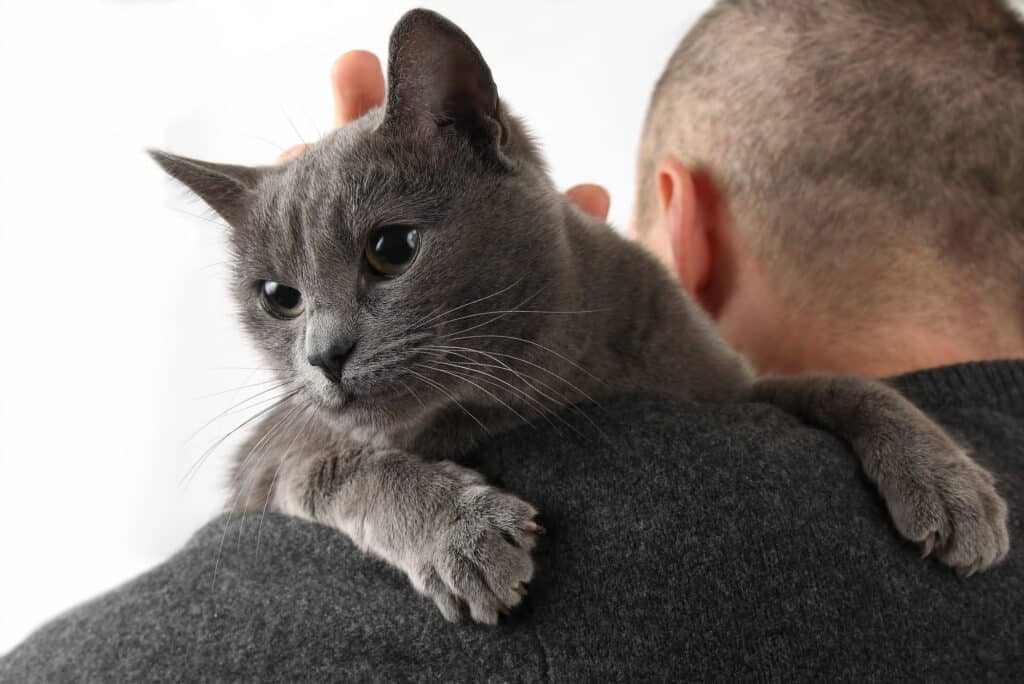
Completely normal. When your cat follows me — or you — throughout the house, it’s usually a sign of social bonding. Cats form strong attachments to their owners and want to be near them. It’s particularly common in single-cat households where you are your cat’s primary social companion. Unless accompanied by signs of anxiety like excessive vocalising or destructiveness when left alone, it’s a healthy behaviour.
Why does my cat follow me to the bathroom specifically?
The bathroom is the one place you reliably close the door — which makes it immediately interesting to a curious cat. When your cat follows me into the bathroom, it’s partly about not wanting to be excluded and partly feline curiosity about why this particular territory is suddenly off-limits. Cats are also drawn to the warmth and moisture of bathrooms. It’s one of the quirkier expressions of their attachment to you.
Could it mean my cat is anxious or has separation anxiety?
Sometimes. If a cat follows me constantly and shows distress when I leave — vocalising, refusing to eat, or being destructive — that can indicate separation anxiety rather than simple affection. True feline separation anxiety is less common than in dogs but does occur, especially in cats adopted as single pets. If the shadowing behaviour seems compulsive or stressed, a vet or behaviourist assessment is worthwhile.
How can I encourage independence in a cat that follows me everywhere?
Create appealing independent spaces — window perches, puzzle feeders, comfortable resting areas — so your cat has reasons to stay put when you move around. Interactive toys help burn mental and physical energy. If your cat follows me persistently, gradually reinforcing calm, independent behaviour with rewards helps build confidence. The goal isn’t to discourage affection but to ensure your cat is comfortable and settled even without constant proximity to you.
PetMD → https://www.petmd.com/cat/behavior/why-does-my-cat-follow-me
Chewy → https://www.chewy.com/education/cat/training-and-behavior/why-does-my-cat-follow-me-to-the-bathroom
| ⚠️ Disclaimer This article is for informational purposes only and does not constitute veterinary advice. If you are concerned about changes in your cat’s behaviour, please consult your veterinarian. |
This article is written for informational purposes and reflects the personal experience and research of the author. It does not replace professional veterinary or dog training advice. Always consult your veterinarian or a certified trainer for individual guidance.