

Published April 2026 | 7 min read
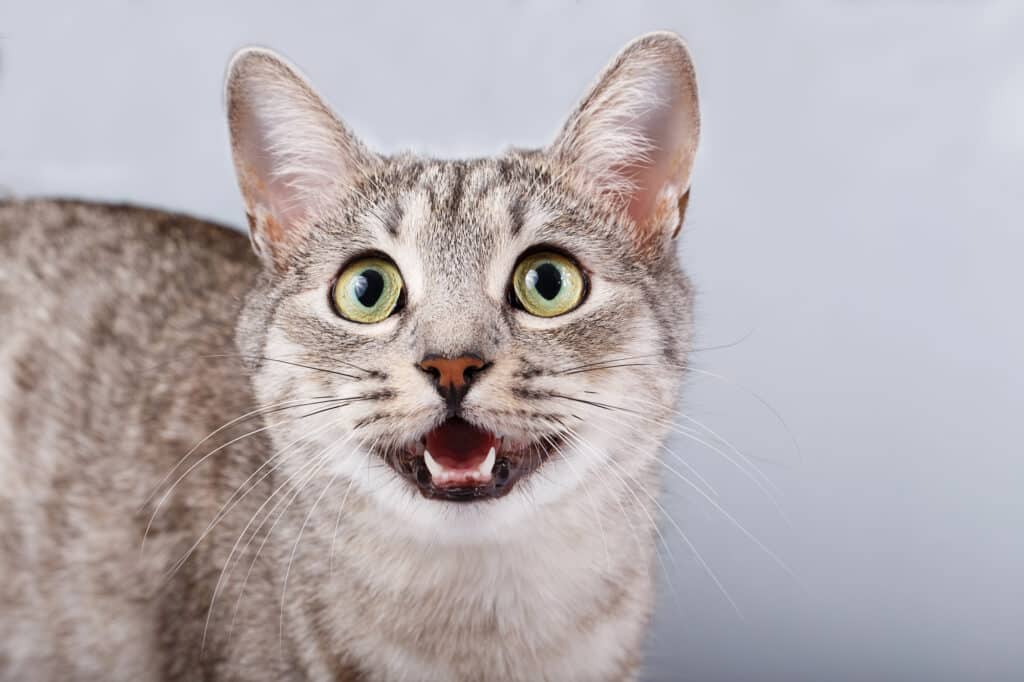
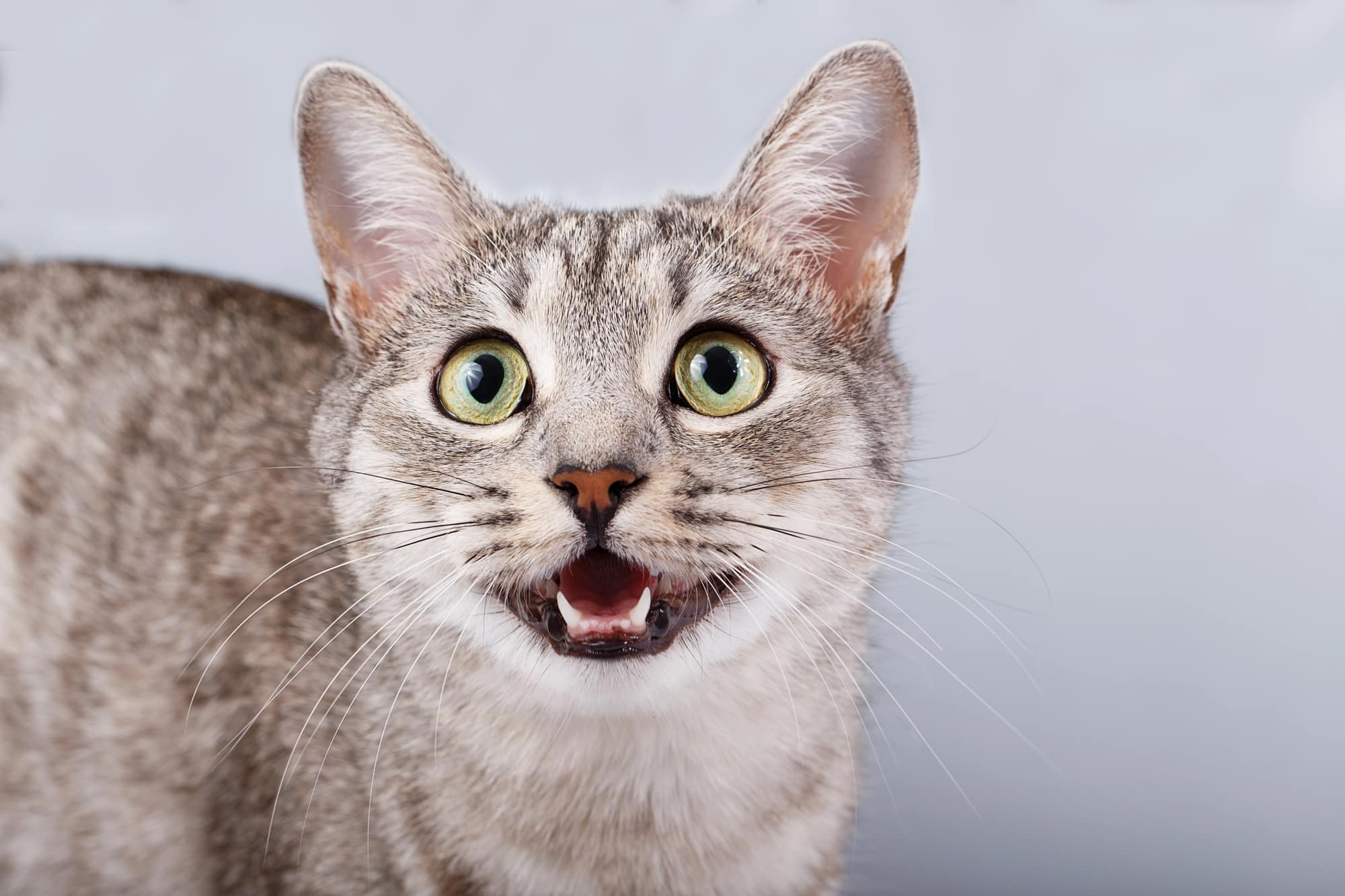
Your cat is talking. A lot. And while you love them dearly, the constant meowing — especially at 3am — is testing your patience. The question ‘why does my cat meow so much’ is one every cat owner eventually asks, and the answer is almost never simple.
Here’s what most people don’t realise: meowing is almost exclusively directed at humans. Adult cats rarely meow at each other — they use body language, scent, and vocalisations like chirps and yowls for inter-cat communication. Meowing, as we know it, is something cats developed specifically to communicate with people. Your cat isn’t meowing into the void. They’re talking to you.
So what are they saying? Here are the 9 most common reasons — and crucially, how to tell them apart.
Related: our guide on why do cats sleep so much? covers this in more depth.
If you want to dig deeper, check out our guide on why do cats hate water?.
We also have a complete guide on why does my cat lick me?.
9 reasons your cat meows so much
1. They’re hungry — the most obvious reason
The dinner meow is unmistakable once you know it. It tends to get louder as mealtime approaches, is often accompanied by weaving around your legs or leading you toward the food bowl, and stops the moment food appears.
If your cat meows excessively around the same time every day — especially morning and evening — hunger is almost certainly the cause. The solution isn’t to ignore them (the meowing will escalate), but to make feeding less reactive. An automatic feeder on a timer removes you from the equation entirely — the feeder delivers the food, not you, and the meowing reduces significantly within days.
2. They want your attention
Cats are not as independent as their reputation suggests. Many cats form deep attachments to their owners and seek regular interaction. If your cat meows when you’re busy, when you’re on your phone, or whenever you stop paying attention to them, they’re asking for engagement.
The key is not to reward meowing with attention — this teaches them that meowing works and they’ll do it more. Instead, proactively schedule play and attention time so they’re not driven to demand it. A 15-minute wand toy session before you settle down for the evening significantly reduces attention-seeking meowing.
| 💡 Important Never respond to meowing with punishment — yelling, spraying water, or making loud sounds. Your cat will simply meow louder or become anxious. Ignore the meowing calmly, then give attention when they’re quiet. You’re teaching them that quiet gets results, not noise. |
3. Greeting and communication
Many cats meow as a greeting — when you come home, when you walk into a room, or simply when you make eye contact with them. This is social communication, developed specifically for human interaction. Short, chirpy meows in these contexts are your cat saying hello.
This type of meowing rarely needs addressing. Some cats are simply more vocal than others. Oriental breeds like Siamese, Burmese, and Tonkinese are famous for being extremely talkative — if you have one of these breeds and they meow constantly, it’s simply who they are.
4. They’re bored or understimulated
A bored cat meows. A lot. Indoor cats without enough enrichment — toys, climbing space, window access, play — will vocalise to fill the void or to try to engage you in doing something.
If your cat meows mainly when you’re home and ignores them, boredom is likely. The fix is environmental enrichment: a cat tree near a window, rotating toys, puzzle feeders, and at least two dedicated play sessions a day. A more stimulated cat is a quieter cat.
5. They want to go outside or access a closed area
If your cat scratches at or meows at a specific door or area, they want access to what’s on the other side. This includes outside, another room, a cupboard they’ve identified as interesting, or wherever you’ve retreated to without them.
Closed doors are anathema to cats — they need to know what’s happening in every corner of their territory. If you’re working behind a closed door and your cat is meowing on the other side, this is almost always the cause. The simplest fix is to let them in.
6. Stress, anxiety, or environmental change
Cats are creatures of routine and their home territory is their entire world. Changes that seem minor to humans can be significantly destabilising to a cat: new furniture, a house move, a new pet or person, changes to your work schedule, building work nearby, or even rearranging rooms.
A cat under stress will often vocalise more. If meowing has increased alongside a change in your home or routine, stress is the most likely cause. Feliway diffusers, extra predictable routine, and more one-on-one time usually help. If stress meowing is severe or prolonged, speak to your vet.
7. They’re in heat (if not spayed)
An unspayed female cat in heat is one of the most vocal sounds in nature. The yowling, howling, and insistent calling during the reproductive cycle can be constant and extremely loud — lasting days to weeks. If your cat is unspayed and suddenly becomes dramatically louder and more insistent, heat is almost certainly the cause.
Spaying eliminates heat cycles and the associated vocalisation entirely. It also significantly reduces the risk of certain cancers and infections. If your cat is not yet spayed, speak to your vet about timing.
8. Pain or illness — the most important reason to check
A cat that begins meowing excessively and suddenly, with no clear environmental trigger, may be in pain or unwell. Cats instinctively hide illness but vocalisation is one of the ways pain manifests. Conditions that can cause increased vocalisation include hyperthyroidism, cognitive dysfunction (particularly in older cats), urinary tract infections, kidney disease, hypertension, and dental pain.
Pay particular attention to sudden increases in meowing in older cats. Cognitive decline in senior cats can cause confusion and disorientation, particularly at night, leading to distressed and repetitive vocalisation. This is different from attention-seeking — the cat seems genuinely distressed rather than purposefully communicative.
| ⚠️ When to call the vet See your vet promptly if meowing is new, sudden, and intense; if it’s accompanied by changes in appetite, litter box habits, or mobility; or if your cat seems confused or distressed rather than communicative. In older cats especially, a sudden increase in vocalisation warrants investigation. |
9. Cognitive dysfunction in senior cats
Cats aged 10 and over can develop feline cognitive dysfunction syndrome — essentially a form of dementia. One of the primary symptoms is repetitive, often distressed vocalisation, particularly at night. The cat may seem disoriented, wander the house, and cry without apparent cause.
This is heartbreaking for owners but manageable with veterinary support. Medications, dietary supplements, and environmental adjustments can significantly improve quality of life. If your older cat has started meowing at night in a way that seems confused or distressed, a vet assessment is essential.
Why is my cat meowing so much at night?
Night meowing has several possible causes: they’re hungry and their last meal was too early, they’re bored and crepuscularly active, they’re in heat, or in older cats, cognitive dysfunction is causing nighttime confusion.
The most effective solution for most cats is feeding the largest meal of the day immediately before your bedtime, followed by an energetic play session. A full, tired cat almost always sleeps through the night. If night vocalisation persists despite this — particularly in an older cat — a vet visit is warranted.
Frequently asked questions
| Q: Why has my cat suddenly started meowing so much?A: A sudden increase in meowing always deserves investigation. Check for environmental changes first — new people, pets, furniture, or routine disruptions. If nothing has changed, a vet visit to rule out medical causes is the right move, particularly for older cats where pain and cognitive decline are common drivers of sudden vocal changes. |
| Q: Why does my cat meow when I’m in the bathroom?A: Cats dislike closed doors — they represent unknown territory and separation from their chosen person. Your cat is outside the door saying ‘I know you’re in there, let me in.’ The bathroom is also interesting (water, smells, your scent) and you’re a captive audience. It’s attention-seeking combined with territorial instinct. |
| Q: Is it normal for cats to meow constantly?A: Some cats are naturally more vocal than others, and certain breeds (Siamese, Burmese, Oriental Shorthair) are famous for being highly talkative. Constant meowing in an usually quiet cat is not normal and should be investigated. Constant meowing in a naturally vocal cat is often just their personality. |
| Q: Why does my cat meow before using the litter box?A: Some cats vocalise before or during litter box use as a matter of habit or routine. Others do it because the litter box needs cleaning, is in an uncomfortable location, or they’re experiencing discomfort when toileting. If meowing before the litter box is new, check that the box is clean and large enough, and consult a vet if it’s accompanied by straining or blood. |
For more on this, see our guide on why do cats purr?.
You might also find our guide on why do cats knead? helpful.
This post is part of our complete cat behaviour library. For the full guide covering all 18 cat behaviours in one place, visit our complete cat behaviour guide.

Frequently Asked Questions: Why Does My Cat Meow So Much?
Why does my cat meow so much at night?
Night-time vocalisation is one of the most common reasons owners ask why does my cat meow so much. Cats are naturally crepuscular — most active at dawn and dusk — and may vocalise when they’re bored, hungry, or seeking attention. Older cats can also develop cognitive dysfunction that causes nighttime disorientation and increased crying. Establishing a consistent evening play and feeding routine often reduces this significantly.
Why does my cat meow so much when I come home?
This is usually a greeting — your cat is communicating excitement at your return and potentially signalling hunger or a desire for interaction. It’s a learned behaviour: cats quickly discover that meowing when their owner arrives produces attention or food. While this is endearing, if you wonder why does my cat meow so much specifically at homecoming, it’s most likely social bonding behaviour rather than anything concerning.
Can excessive meowing be a sign of illness?
Yes — a sudden increase in vocalisation warrants attention. Hyperthyroidism, high blood pressure, pain, and cognitive decline in senior cats can all trigger excessive meowing. If you’re asking why does my cat meow so much and nothing in their environment has changed, book a vet check. Cats who were previously quiet but become suddenly vocal are telling you something has shifted internally.
Does breed affect how much a cat meows?
Absolutely. Siamese and Oriental breeds are famously vocal and will meow extensively as a normal part of their communication. If you own one of these breeds and ask why does my cat meow so much, the answer is largely genetic — it’s simply how they’re wired. In contrast, breeds like British Shorthairs tend to be much quieter. Understanding your breed’s baseline vocalisation helps you spot when something is genuinely out of the ordinary.
PetMD → https://www.petmd.com/cat/behavior/why-does-my-cat-meow
Cornell Feline Health Center→ https://www.vet.cornell.edu/departments-centers-and-institutes/cornell-feline-health-center
| ⚠️ Disclaimer This article is for informational purposes only and does not constitute veterinary advice. If you are concerned about changes in your cat’s behaviour, please consult your veterinarian. |
This article is written for informational purposes and reflects the personal experience and research of the author. It does not replace professional veterinary or dog training advice. Always consult your veterinarian or a certified trainer for individual guidance.