


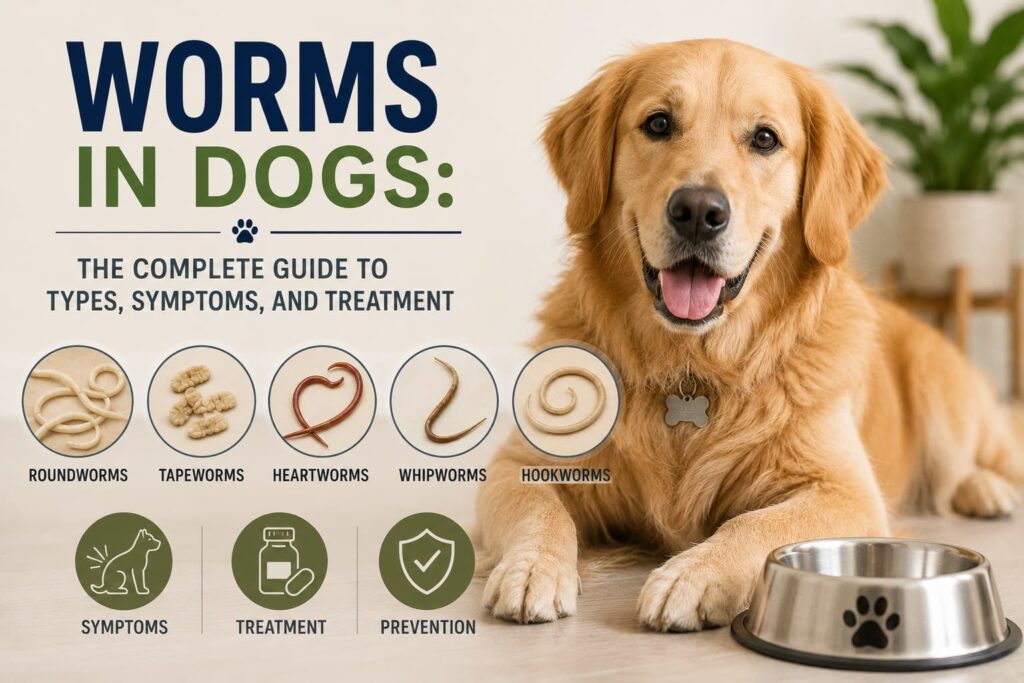
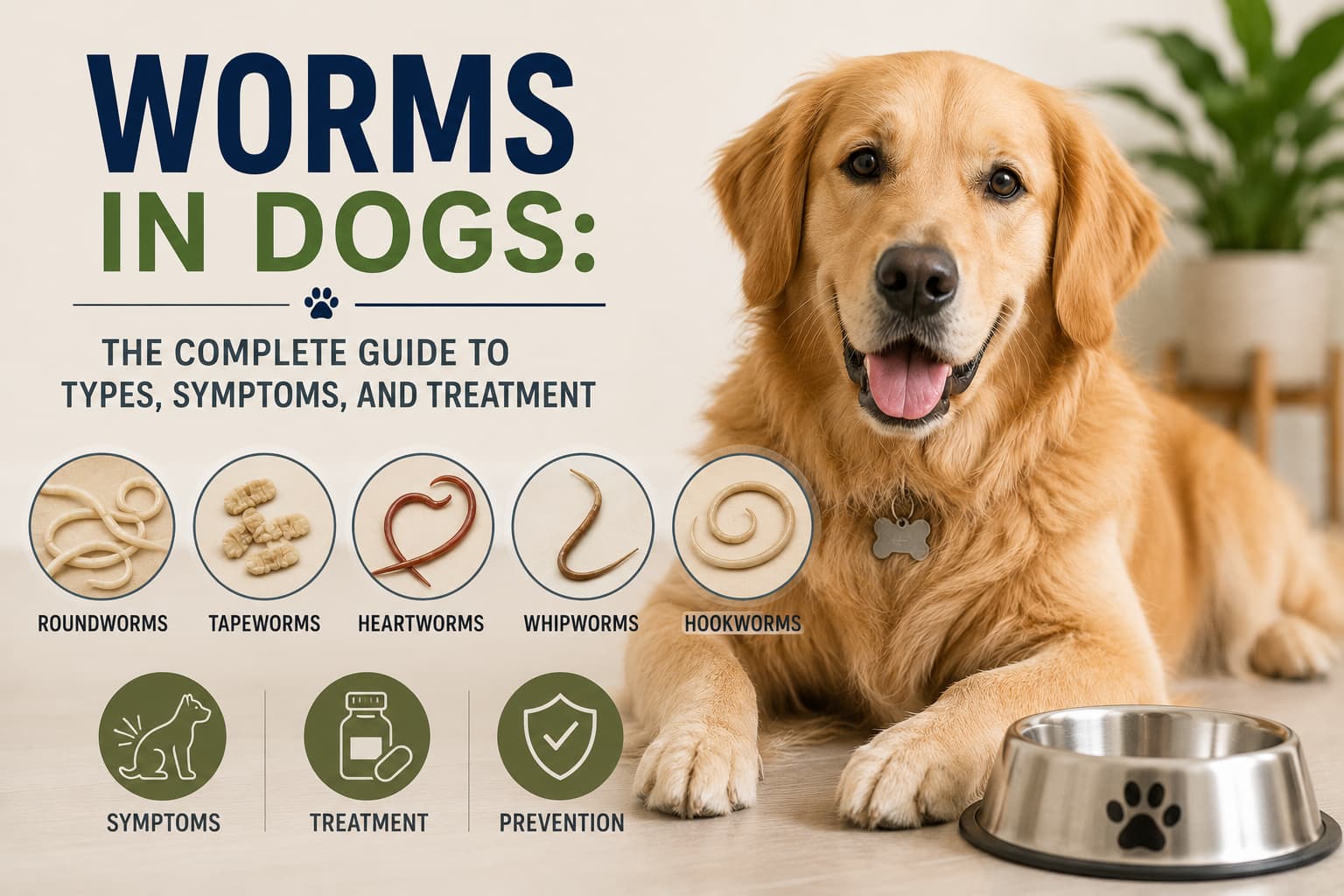
Worms in dogs are among the most common health problems in dogs worldwide — and one of the most commonly underestimated. Many owners think of worms as something obviously visible in stool, something that only affects poorly cared-for dogs, or something resolved with a single over-the-counter treatment. None of these assumptions are accurate, and each one can result in a dog staying infested longer than necessary.
PetMD veterinarian Dr Barri Morrison puts it plainly: you may see worms in your dog’s poop, but it is likely you would not even know they have worms since many types are not visible with the naked eye. My own dog tested positive for hookworms at a routine check-up — no visible symptoms, no visible worms. The diagnosis came from a stool sample analysis. Without routine testing, that infection would have continued undetected.
There is also a public health dimension to worms in dogs that most guides underemphasise. Several worm species that infect dogs can also infect humans — particularly children who play in soil contaminated with infected dog faeces. Understanding worms is not just about your dog’s health.
If you want to dig deeper, check out our guide on flea treatment for dogs.
We also have a complete guide on bland diet for dogs with diarrhea.
The Five Types of Worms in Dogs — Quick Reference
This post is part of our complete pet health library — visit our pet health guide for the full collection.
| Worm type | How dogs get it | Main symptoms | Visible in stool? | Zoonotic? |
| Roundworms | Mother to puppy; contaminated soil or prey | Pot belly (pups), vomiting, diarrhea, poor coat | Yes — spaghetti-like | Yes — soil contamination risk to children |
| Hookworms | Skin contact with contaminated soil; mother to puppy | Anaemia, dark tarry diarrhoea, pale gums, weakness | Rarely visible — microscopic | Yes — can penetrate human skin |
| Tapeworms | Swallowing infected fleas or rodents | Scooting, rice-grain segments near anus or in stool | Yes — rice/sesame segments | Limited — requires ingesting infected flea |
| Whipworms | Contaminated environment | Bloody diarrhoea, weight loss, anaemia | Rarely visible | Low |
| Heartworms | Mosquito bite only | Cough, exercise intolerance, weight loss (late stage) | No — blood test needed | No |
Each Worm Type in Detail
Roundworms — the most common
PetMD describes roundworms as common intestinal parasites that live in the dog’s digestive tract. The name comes from their cylindrical shape — they look like spaghetti and can sometimes be seen in vomit or stool. Roundworms are especially common in puppies, who can acquire them before birth or through nursing from an infected mother.
Symptoms include a pot-bellied appearance (particularly in puppies), vomiting, diarrhoea, coughing (from larvae migrating through the lungs), poor coat condition, and weight loss despite eating normally. PetMD notes that roundworm larvae may migrate to the lungs, causing a dog to cough.
The zoonotic risk is significant: roundworm eggs (Toxocara canis) contaminate soil and can survive for months or years. Children playing in contaminated soil can accidentally ingest eggs, leading to visceral larva migrans — larvae migrating through human tissues, potentially including the eye, causing vision damage. This is a genuine public health concern. Regular deworming and prompt removal of dog faeces are the primary prevention measures.
Hookworms — the blood-sucking parasite
PetMD hookworm guidance is explicit about the mechanism: hookworms attach to the lining of the small intestine and feed on blood. They are so small that they are typically not visible in stool. In puppies and small dogs, severe hookworm infection can cause life-threatening anaemia.
Signs include dark, tarry diarrhoea from blood loss, pale gums (anaemia), weakness, and weight loss. Hookworm larvae can also penetrate human skin — walking barefoot on contaminated soil is a genuine transmission route. Cutaneous larva migrans — larvae migrating under human skin — produces an intensely itchy rash.
Tapeworms — the flea connection
The key to tapeworms is understanding their lifecycle: dogs get tapeworms by swallowing infected fleas or infected rodents, not from contaminated ground. AKC is clear: because you need to control fleas to control tapeworms, flea prevention is essential.
Tapeworms are typically visible as rice-grain or sesame-seed sized segments near the anus or in fresh stool. Mild infections may show no symptoms. Heavier infections cause scooting, anal irritation, weight loss despite normal eating, and occasional vomiting.
Treatment requires a specific praziquantel-based dewormer — standard broad-spectrum dewormers do not reliably treat tapeworms. Combined flea and tapeworm prevention is the most effective approach for dogs at risk.
Whipworms — the persistent parasite
Whipworms are harder to diagnose than roundworms or tapeworms because they shed eggs intermittently rather than continuously, meaning routine stool tests can miss them. They cause chronic diarrhoea (often with blood), weight loss, and anaemia. Whipworm eggs are extremely hardy — they can survive in contaminated soil for years. Treatment requires specific medications and often repeated treatment courses.
Heartworms — in a category of their own
Heartworms are fundamentally different from intestinal worms. They are transmitted exclusively by mosquitoes and migrate to the dog’s heart and pulmonary arteries, where adult worms can grow up to 30 centimetres long. AKC describes heartworm disease as potentially fatal, causing severe complications including lung disease and heart failure.
Early stages of heartworm infection may show no symptoms at all. As the disease progresses: a persistent cough, exercise intolerance, fatigue, weight loss, and eventually swollen abdomen from heart failure. Diagnosis requires a blood test.
The cost distinction that motivates prevention: heartworm prevention costs approximately $5 to $15 per month. Heartworm treatment costs $1,000 to $3,000+, involves a multi-month protocol of injections, strict exercise restriction, and significant risk to the dog. Prevention is not merely preferable — it is the responsible standard of care.
Diagnosis and Treatment
PetMD’s approach to diagnosing worms: finding microscopic intestinal worm eggs in stool is the most common method. Heartworms require a blood test, chest X-ray, or heart ultrasound. Most worms require prescription deworming medication — over-the-counter products vary significantly in efficacy and often do not cover the full range of worm types.
Cornell University’s guidance on treatment deserves emphasis: only dogs with signs and symptoms of infection should be treated — this avoids accidental overuse of antibiotics and dewormers, which can lead to resistant and harder-to-treat strains. Treatment should be based on veterinary diagnosis, not assumption.
Prevention — the Practical Approach
AKC identifies several core prevention strategies:
- Monthly year-round parasite prevention — products like Heartgard Plus, Interceptor Plus, or NexGard PLUS prevent heartworm and control common intestinal worms simultaneously. This is the most comprehensive approach.
- Annual stool testing— annual faecal analysis by your vet identifies intestinal worms not covered by monthly preventatives
- Strict flea control — essential for tapeworm prevention
- Prompt removal of faeces from the yard — reduces environmental contamination and reinfection risk
- Prevent hunting and raw meat feeding — reduces tapeworm and other parasite risk from ingested prey
- Wash hands after handling dog faeces — basic hygiene prevents zoonotic transmission
Frequently Asked Questions
| Q: Can I deworm my dog at home without a vet?A: Over-the-counter dewormers treat some worm types but not others — they typically cover roundworms and hookworms but not tapeworms or whipworms. Heartworms require specific prescription treatment that is different from deworming. Without knowing which type of worm is present, selecting the right treatment is guesswork. A stool sample analysis from your vet identifies the specific worm type and guides targeted treatment. |
| Q: Can my family catch worms from my dog?A: Yes — roundworms and hookworms pose genuine zoonotic risk, primarily from contaminated soil rather than direct contact with the dog. Children are most vulnerable. Regular deworming, annual stool testing, prompt removal of dog faeces, and basic hand hygiene (particularly for children after outdoor play) are the primary protections. |
| Q: My dog is on monthly prevention — do they still need annual stool testing?A: Yes. Monthly prevention products prevent heartworm and control common intestinal worms but do not prevent all worm types. Whipworms in particular are not covered by all monthly preventatives. Annual stool analysis is the net that catches what monthly prevention misses. |

Frequently Asked Questions: Worms in Dogs
How do dogs get worms in the first place?
Dogs can pick up worms in dogs through several routes depending on the worm type. Roundworms and hookworms are commonly transmitted through contaminated soil, faeces, or from mother to puppy via the placenta or milk. Tapeworms in dogs are typically contracted by swallowing infected fleas while grooming. Heartworms are spread by mosquito bites. Whipworms come from ingesting contaminated ground. Understanding the transmission routes helps owners take targeted preventive steps to reduce the risk of worms in dogs.
What are the signs of worms in dogs?
The signs of worms in dogs vary by worm type and severity but commonly include: a bloated or pot-bellied appearance, scooting along the ground, visible worm segments around the tail or in faeces, vomiting or diarrhoea, weight loss despite a normal appetite, dull coat, and general lethargy. In some cases, worms in dogs produce no obvious symptoms at all — which is why routine faecal testing and regular deworming treatments are the most reliable way to keep your dog parasite-free.
How often should I deworm my dog?
The appropriate deworming frequency for worms in dogs depends on your dog’s lifestyle, age, and local parasite risk. Puppies typically need deworming every two weeks until 12 weeks of age, then monthly until six months. Adult dogs are generally dewormed every three to six months as routine prevention. Dogs that hunt, eat raw meat, or spend significant time outdoors may need more frequent treatment. Always consult your vet about the most suitable deworming schedule and product for your individual dog.
Can worms in dogs spread to humans?
Yes — several types of worms in dogs are zoonotic, meaning they can be transmitted to humans. Roundworms (Toxocara canis) pose a particular risk to young children who may ingest contaminated soil. Hookworms can penetrate skin, causing cutaneous larva migrans. Tapeworms can be transmitted if a person accidentally swallows an infected flea. Practising good hygiene — washing hands after handling dogs or soil, picking up faeces promptly, and keeping your dog regularly dewormed — significantly reduces the risk of worms in dogs spreading to your family.
For more on this, see our guide on dog diarrhea.
You might also find our guide on signs a dog is in pain helpful.
| Medical Disclaimer :This article is written for informational purposes based on the research and personal experience of the author. It is not a substitute for professional veterinary advice, diagnosis, or treatment. Always consult your veterinarian with concerns about your pet’s health. |
This article is written for informational purposes and reflects the personal experience and research of the author. It does not replace professional veterinary or dog training advice. Always consult your veterinarian or a certified trainer for individual guidance.
This article is written for informational purposes and reflects the personal experience and research of the author. It does not replace professional veterinary or dog training advice. Always consult your veterinarian or a certified trainer for individual guidance.