

Published April 2026 | 6 min read
When cats get the zoomies — those sudden bursts of frantic energy — it can seem random and baffling. But there are clear explanations rooted in feline biology and behaviour.
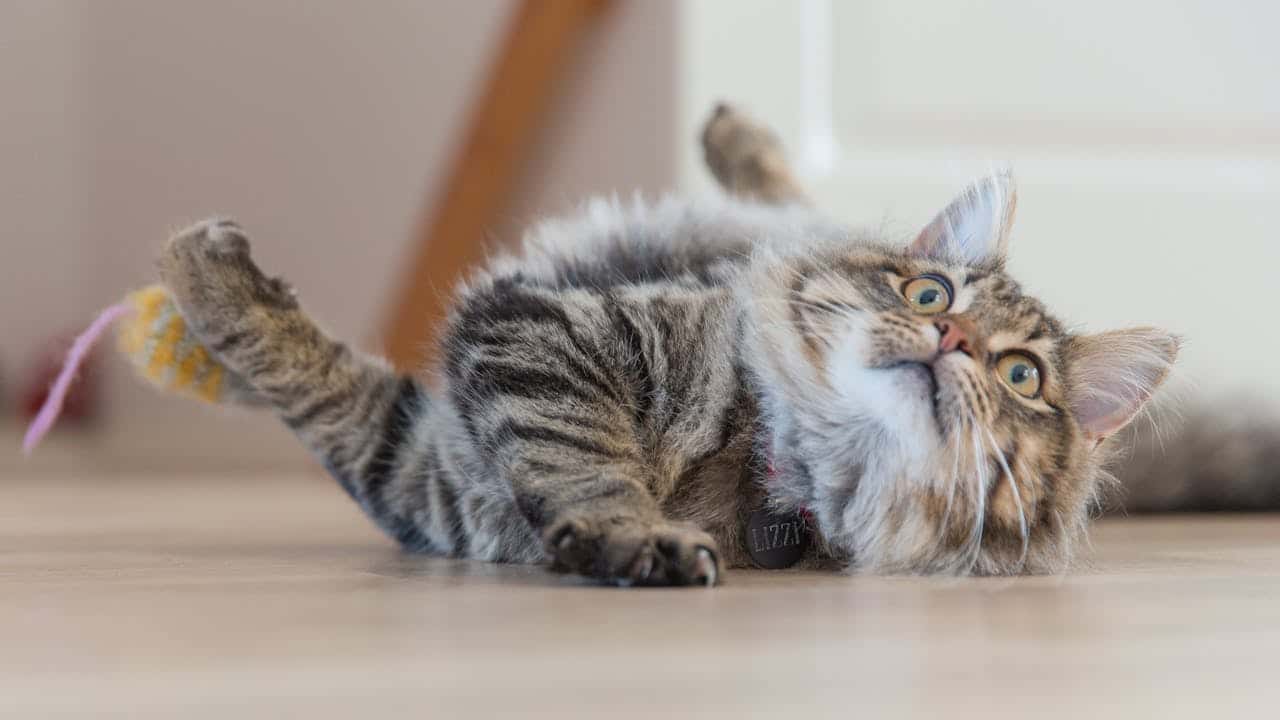
It’s 11pm. The house is quiet. Your cat has been asleep for four hours. Then: a sound like a small horse galloping down the hallway, a blur of fur ricocheting off the sofa, skidding across the kitchen floor, and disappearing upstairs. The zoomies have arrived.
If you’ve ever watched your cat suddenly explode into a sprint that defies all physics and logic, you’ve witnessed what scientists call Frenetic Random Activity Periods — FRAPs. And despite the very scientific name, the zoomies remain somewhat mysterious. Here’s what we know.
Related: our guide on why do cats sleep so much? covers this in more depth.
If you want to dig deeper, check out our guide on why do cats hate water?.
We also have a complete guide on why does my cat lick me?.
What are the zoomies? The science
Cat zoomies are officially called Frenetic Random Activity Periods (FRAPs) — sudden, intense bursts of high-energy movement that appear random and last anywhere from a few seconds to several minutes. According to PetMD, FRAPs are a normal way for cats to release energy and express instinctive behaviours.
Zoomies are not unique to cats. Dogs, rabbits, horses, ferrets, elephants, and even big cats in zoos experience FRAPs. This cross-species commonality suggests they serve a fundamental biological function — though exactly what that function is remains an active area of research with no definitive consensus.
What we do know: FRAPs are generally a sign of a happy, healthy animal. A cat who gets the zoomies is a cat with energy to spend, which in itself tells you something positive about their wellbeing.
5 reasons cats get the zoomies
1. Releasing pent-up energy — the primary reason
Cats sleep 12–16 hours a day. That’s a lot of energy conservation. When they wake, that stored energy needs somewhere to go. For a cat who hasn’t had adequate play and activity during their waking hours, the zoomies are how that backlog of energy gets released — in one spectacular burst.
This is especially common in indoor cats who don’t have access to the natural hunting and exploring activities that would normally expend energy throughout the day. The indoor environment is static and unstimulating, and energy accumulates. Eventually it explodes as a FRAP.
| 💡 The fixTwo dedicated 10–15 minute wand toy play sessions per day — one in the morning and one in the evening — dramatically reduces the frequency and intensity of zoomies by giving energy a constructive outlet before it builds up to FRAP levels. |
2. Crepuscular timing — the midnight zoomies explained
Cats are crepuscular — biologically most active at dawn and dusk. This is when their prey is most active, so evolution wired them to be alert, energetic, and ready to hunt at these times. The midnight zoomies that drive so many owners crazy are simply your cat’s internal clock going off at its natural active time.
Your cat isn’t choosing to be inconvenient. Their nervous system is telling them it’s hunting time. A play session with a wand toy in the early evening — mimicking the hunt-catch-eat sequence — helps exhaust the hunting instinct before bedtime and can significantly reduce early-morning zoomies.
3. Hunting instinct discharge
Certified cat behaviour consultant Pam Johnson-Bennett describes zoomies as a sudden switch-flipping burst of energy. This switch is often triggered by the predatory sequence kicking in — the cat enters hunting mode and their body floods with adrenaline and cortisol ready for the chase. When there’s no actual prey to chase, that physiological state discharges as a FRAP.
You’ll often notice zoomies happen after your cat spots something out of a window, after interacting with a toy, or apparently for no reason — but the trigger is usually something sensory that activated the hunting circuitry.
4. The post-poop zoomies — a genuinely fascinating phenomenon
The post-litter-box sprint is perhaps the most reliably amusing cat behaviour of all, and it actually has a scientific explanation. According to PetMD, defecating stimulates the vagus nerve — a major nerve that runs from the brain directly into the colon. When a large bowel movement presses against the lower intestines, it physically stimulates this nerve.
Vagus nerve stimulation produces a sudden drop in heart rate and blood pressure, along with a feeling of relief and release — sometimes described in humans as a mild euphoria (hence the term ‘poophoria’). For cats, depending on their personality, this physiological release of tension translates into an immediate sprint. They’re not running away from their poop — they’re expressing relief.
A secondary theory from wild cat behaviour: in the wild, the smell of faeces attracts predators. Sprinting away from the elimination site immediately after going is an evolutionary survival strategy. Your indoor cat’s nervous system may still be running this ancient programme.
| 🐾 Post-poop zoomies and constipationIf your cat seems to struggle before zoomie-ing, or zoomies after litter box visits are a new behaviour, check for constipation. A cat straining to defecate and then zoomie-ing may be experiencing discomfort, not relief. |
5. Joy and playfulness
Sometimes the simplest explanation is the right one. Cats have a playful, joyful side that comes out in FRAPs. A cat who zooms around after being petted, after eating a favourite treat, or seemingly for no reason may simply be expressing happiness and the pleasure of being alive in a body that can move very fast.
According to the American Veterinary Medical Association, FRAPs are often simply pets having fun. The most straightforward interpretation — your cat is in a good mood and expressing it physically — is frequently the correct one.
When are zoomies a problem?
Most zoomies are completely normal and nothing to worry about. Take note if:
- Zoomies are new in an older cat who previously didn’t have them — hyperthyroidism can cause increased hyperactivity in senior cats
- Your cat appears distressed, disoriented, or frightened during the episode rather than excited
- Zoomies involve repetitive circular running or head pressing — these are neurological warning signs that need immediate vet attention
- FRAPs become so frequent and intense that your cat injures themselves or cannot settle
A healthy FRAP looks like excitement and joy. If your cat’s episodes look more like distress or confusion, that’s the signal to call your vet.
How to manage nighttime zoomies
- Play session with wand toy 30–60 minutes before bedtime — exhausts the hunting instinct
- Feed the largest meal immediately after play — the hunt-catch-eat-sleep sequence resets their body clock
- Provide environmental enrichment during the day so energy doesn’t accumulate to FRAP levels overnight
- Cat tree near a window gives daytime stimulation that reduces pent-up energy by evening
Frequently asked questions
| Q: Why does my cat get the zoomies at 3am?A: Cats are crepuscular — most naturally active at dawn and dusk. Your cat’s internal clock fires at these times regardless of your sleep schedule. Consistent energetic play before bedtime followed by a meal is the most effective way to shift their active window earlier. |
| Q: Are the zoomies a sign my cat is happy?A: Generally yes. FRAPs in a cat who is otherwise healthy and behaving normally are a positive sign — your cat has energy, is comfortable enough to express it, and is engaging their natural instincts. A cat who never gets the zoomies is not necessarily unhappy, but a cat who does is usually a healthy, energetic cat. |
| Q: My kitten gets the zoomies constantly. Is this normal?A: Completely normal. Kittens have enormous energy reserves and much less impulse control than adult cats. Multiple short play sessions throughout the day help channel this energy constructively. Most cats naturally settle as they mature — though some breeds remain high-energy into adulthood. |
| Q: Why does my cat zoom around and then suddenly stop?A: The FRAP ends as quickly as it begins because it’s a discharge of accumulated energy or adrenaline. Once that energy is released, the nervous system returns to baseline and your cat goes back to looking as though nothing happened — possibly sitting perfectly still and staring at you with quiet dignity. |
For more on this, see our guide on why do cats purr?.
You might also find our guide on why does my cat bite me? helpful.
You may also want to read our guide on why does my cat follow me everywhere?.
Related: our guide on why does my cat stare at me? covers this in more depth.
If you want to dig deeper, check out our guide on why does my cat headbutt me?.
Frequently Asked Questions: Why Cats Get the Zoomies
Why do cats get the zoomies at night?
Cats get the zoomies at night because they’re naturally crepuscular — most active at dawn and dusk. If your cat has been napping all day, they’ll have a reservoir of pent-up energy that needs releasing, often right when you’re trying to sleep. Scheduling an energetic play session before bed helps discharge that energy and reduces the likelihood of midnight zoomie sprints through your bedroom.
Is it normal for older cats to get the zoomies?
Yes, though it becomes less frequent with age. Senior cats get the zoomies too, just usually with less intensity and duration than kittens or young adults. If an older cat suddenly starts having frequent, intense zoomie episodes after a long quiet period, it’s worth a vet check — hyperthyroidism and other conditions can cause unusual surges of restless energy in senior cats.
Should I be worried if my cat gets the zoomies after using the litter box?
This is entirely normal. Post-litter-box zoomies are a well-documented phenomenon — some researchers believe it relates to the vagal nerve stimulation triggered by defecation, which creates a brief rush of stimulation. When cats get the zoomies after the litter box, it’s not a sign of discomfort or illness in most cases. However, if your cat seems distressed before or during litter box use, that warrants further attention.
How can I reduce my cat’s zoomies?
The most effective approach is increasing structured daily play. Cats get the zoomies partly because they have nowhere to direct predatory energy — two or three focused play sessions with a wand toy each day can significantly reduce the frequency of spontaneous zoomie bursts. Puzzle feeders, cat trees, and window perches also provide enrichment that keeps energy levels more evenly distributed throughout the day.
This post is part of our complete cat behaviour library. For the full guide covering all 18 cat behaviours in one place, visit our complete cat behaviour guide.
Live Science: https://www.livescience.com/animals/domestic-cats
| ⚠️ Disclaimer This article is for informational purposes only and does not constitute veterinary advice. If you are concerned about your cat’s behaviour or health, please consult your veterinarian. |
This article is written for informational purposes and reflects the personal experience and research of the author. It does not replace professional veterinary or dog training advice. Always consult your veterinarian or a certified trainer for individual guidance.