


Published April 2026 | 7 min read
Understanding why cats spray — and what triggers this territorial marking behaviour — is the first step to solving the problem for good.
You’ve found the evidence — a small, intensely pungent patch of urine on the wall, the door frame, or the side of the sofa. Your cat has been spraying. And you need to understand why, because unlike regular litter box accidents, spraying is a deliberate act of communication that requires a different solution entirely.
The good news is that most spraying has a clear cause and a clear fix. Here’s what you need to know.
You might also find our guide on why do cats sleep so much? helpful.
You may also want to read our guide on why do cats hate water?.
Related: our guide on why does my cat lick me? covers this in more depth.
Spraying vs. urinating outside the litter box — how to tell the difference
Before addressing the why, it helps to confirm what you’re dealing with. Spraying and inappropriate urination look similar but are caused by different things and need different responses.
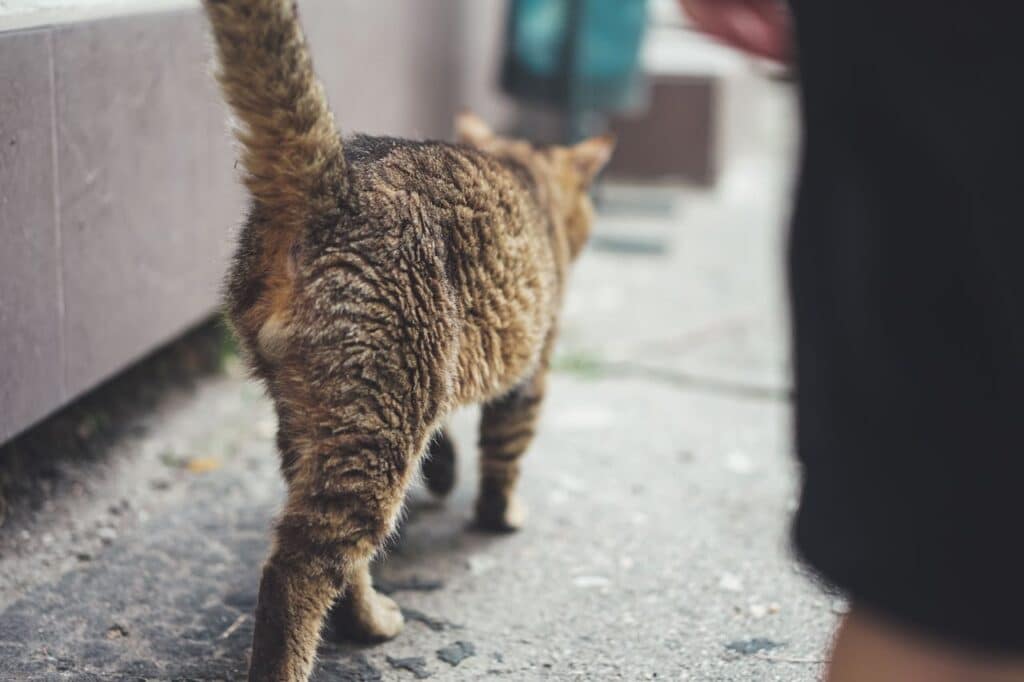
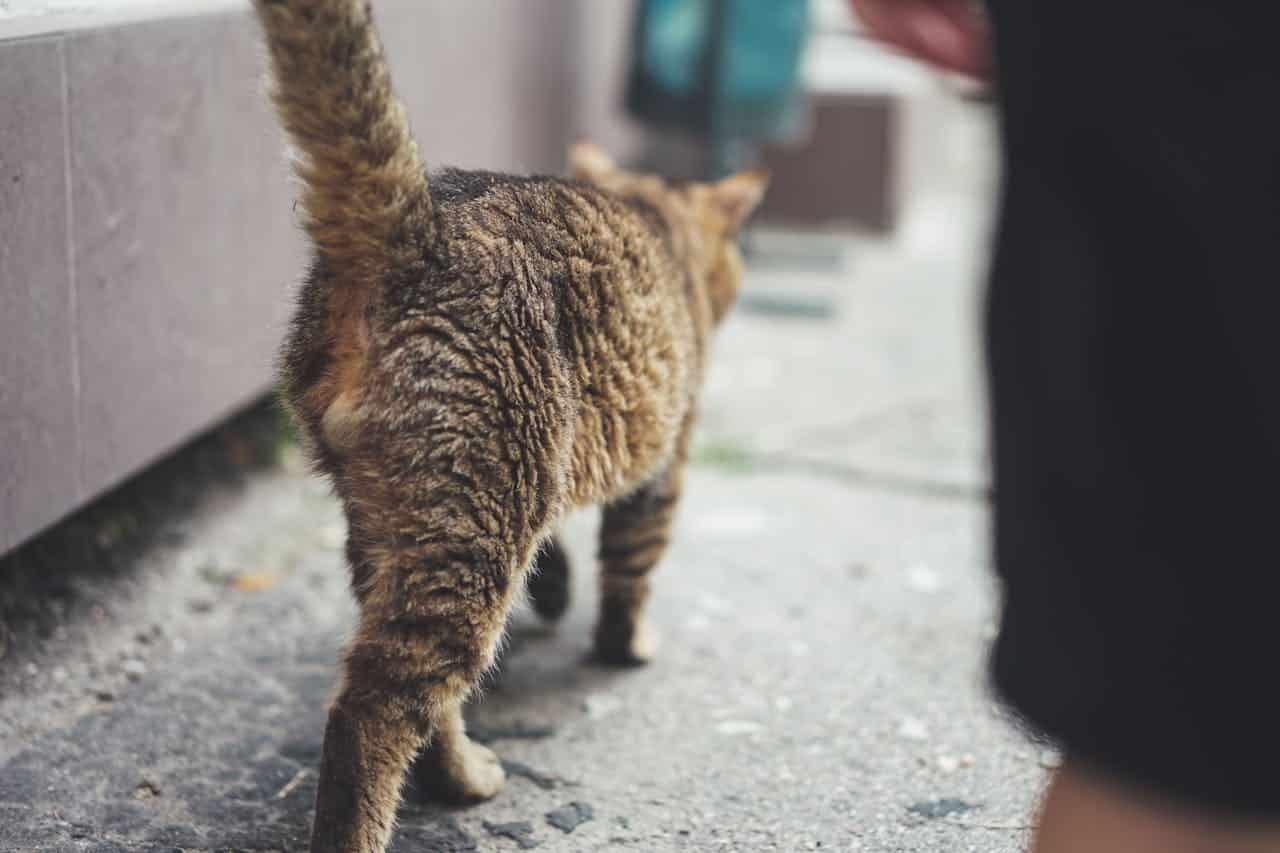
Spraying: your cat stands upright, backs up to a vertical surface (wall, door, furniture), raises their tail, and releases a small amount of urine. The tail often quivers. The amount of urine is small and strongly scented. It’s almost always on a vertical surface.
Inappropriate urination: your cat squats on a horizontal surface (floor, carpet, bed) and produces a normal volume of urine. This is a litter box avoidance issue — different cause, different solution.
This distinction matters because spraying is almost always a communication and emotional behaviour, while inappropriate urination is more often a litter box preference or medical issue.
6 reasons cats spray
1. Territory marking — the most fundamental reason
Cats are territorial animals. In the wild, they mark their territory with urine, leaving chemical messages that tell other cats: ‘This space is occupied. I was here recently. Stay away.’ According to VCA Animal Hospitals, territorial marks signal ownership and advertise reproductive availability.
Indoor cats retain this instinct completely. When a cat feels their territory is under threat — from an outdoor cat visible through the window, from a new cat in the house, or from any perceived intrusion — they respond by marking their territory more intensively.
This is why spraying often happens near doors, windows, and entry points — the places where outside territory meets inside territory, where the threat feels most present.
2. Stress and anxiety
According to the ASPCA, urine marking often occurs because cats are distressed about something. Stress is one of the most common triggers for indoor spraying, and the list of potential stressors is surprisingly long: a new pet or person in the household, a house move, a change in routine, building work nearby, rearranged furniture, a new baby, even a different brand of cat litter.
Cats are highly sensitive to their environment. What seems like a trivial change to a human can be genuinely destabilising to a cat who relies on the predictability and familiarity of their territory for emotional security. Spraying is their response to that insecurity — creating more familiar scent around them to feel safer.
3. Multi-cat conflict
The ASPCA notes that cat-to-cat conflict is one of the most common reasons for urine marking. In homes with multiple cats, competition for resources — food, sleeping spots, litter boxes, your attention — can create ongoing low-level tension. Cats deal with this tension not by confrontation (they prefer to avoid direct conflict) but by marking their areas of the territory.
The more cats in a household, the more likely spraying is. Cats who live in households with more than five cats almost always have some level of urine marking. Even two cats who seem to get along may spray if one feels their resources are being encroached upon.
4. Reproductive behaviour in intact cats
Unneutered male cats are by far the most likely to spray. Spraying is a fundamental part of male cat reproductive behaviour — leaving scent signals for females that advertise their presence, health, and availability. This spraying can be intense, frequent, and almost impossible to manage behaviourally while the hormonal drive remains.
Unspayed females also spray, particularly when in heat, to signal their reproductive availability to males. Spaying and neutering eliminates the hormonal component of spraying and is the single most effective intervention — reducing spraying in 90% of male cats and the majority of females.
5. Reaction to outdoor cats
Even a completely indoor cat who has never met another cat in their life can be driven to spray by the sight of an outdoor cat through a window. The outdoor cat represents a territorial threat — an unknown cat in what the indoor cat considers their territory — and the indoor cat responds by intensively marking their space near the point of threat.
If your cat tends to spray near windows or doors, an outdoor cat is almost certainly the trigger. Solutions include blocking your cat’s view of that area, using a motion-activated sprinkler to deter the outdoor cat, and using Feliway diffusers near the affected areas.
6. Medical causes
Occasionally spraying or increased urination outside the litter box can have a medical cause: urinary tract infections, hyperthyroidism, diabetes, kidney disease, or feline idiopathic cystitis can all affect bladder control and toileting behaviour. A vet examination is always the right first step when spraying is new, sudden, or accompanied by other symptoms.
How to stop cat spraying — what actually works
Step 1 — Vet check first
Rule out medical causes before anything else. A urine sample and basic bloodwork takes 20 minutes and gives you certainty that you’re dealing with a behavioural issue, not a health problem.
Step 2 — Spay or neuter if not already done
If your cat is intact, this is by far the most effective single intervention. Spraying reduces by 90% or more in most cats after neutering.
Step 3 — Use Feliway diffusers
Feliway is a synthetic version of the feline facial pheromone — the comfortable, safe-feeling scent cats deposit when they rub their faces on things. Placing Feliway diffusers in areas where spraying occurs tells your cat’s nervous system ‘this is safe territory,’ which reduces the anxiety driving the spraying. It works for a majority of cats and is completely safe.
Step 4 — Clean marked areas with enzymatic cleaner
Regular cleaning products do not eliminate cat urine odour — they mask it. Only enzymatic cleaners break down the urine molecules that your cat can smell and return to re-mark. Products like Nature’s Miracle or Simple Solution use bacteria and enzymes to completely neutralise the odour. This removes the chemical trigger that draws your cat back to re-mark the same spot.
Step 5 — Identify and reduce the stressor
If the spraying follows a household change, addressing that change is essential. For multi-cat conflict: ensure there are enough resources (one litter box per cat plus one extra, multiple feeding stations, multiple sleeping areas). For outdoor cat triggers: block the view or deter the outdoor cat. For anxiety: increase routine predictability, add enrichment, and give more positive one-on-one time.
Frequently asked questions
| Q: Why is my neutered cat still spraying?A: Neutering eliminates the hormonal drive to spray but doesn’t eliminate spraying entirely if there’s a behavioural or stress-based cause. A neutered cat who sprays is almost certainly responding to a stressor — another cat, a change in the household, or anxiety. Feliway and addressing the underlying stressor are the solutions. |
| Q: Why does my female cat spray?A: Both male and female cats spray, though it’s more common in males. Female cats spray for the same reasons: territory, stress, multi-cat conflict, or reproductive behaviour if unspayed. Spaying significantly reduces spraying in females. |
| Q: Is my cat peeing or spraying?A: Check the posture and location. Spraying: standing upright, small amount, vertical surface, strongly scented. Urinating inappropriately: squatting, normal volume, horizontal surface. If you’re unsure, set up a camera in the area where you’re finding the urine. |
| Q: How long does it take to stop cat spraying?A: With the right approach — neutering if intact, Feliway, enzymatic cleaning, and addressing the stressor — most cats significantly reduce or stop spraying within 4–8 weeks. Some cases resolve faster, particularly if the trigger was temporary (like a visiting cat that has now left). |
If you want to dig deeper, check out our guide on why do cats purr?.
We also have a complete guide on why does my cat bite me?.
For more on this, see our guide on why does my cat follow me everywhere?.
You might also find our guide on why does my cat stare at me? helpful.
Frequently Asked Questions: Why Cats Spray
Do neutered cats spray?
Neutered cats spray far less than intact cats, but it can still happen. Around 10% of neutered males and 5% of spayed females continue to exhibit this behaviour. When neutered cats spray, the cause is usually stress, anxiety, or multi-cat household tension rather than hormonal marking. Addressing the environmental trigger is more effective than any physical intervention at that point.
How do I clean cat spray effectively?
Standard household cleaners aren’t effective because they don’t neutralise the uric acid in cat spray. Use an enzymatic cleaner specifically designed for pet urine — these break down the odour compounds completely. If the scent lingers, cats spray the same spot again, reinforcing the habit. Cleaning thoroughly and immediately is one of the most important steps in breaking the cycle.
Is cats spray the same as urinating outside the litter box?
No — they’re distinct behaviours. When cats spray, they typically back up to a vertical surface and release a small amount of urine at nose height. Regular inappropriate urination usually happens on horizontal surfaces in larger amounts and typically indicates a litter box problem or medical issue. Distinguishing between the two helps identify the correct solution quickly.
What’s the fastest way to stop my cat spraying?
If your cat is intact, neutering is by far the most effective intervention — most cats spray significantly less within weeks. For neutered cats that spray, identify and reduce the stressor: new pets, changes in routine, or conflict with another cat are common causes. Feliway plug-ins, increased resources (litter trays, perches, feeding stations), and veterinary assessment for anxiety are all useful tools in persistent cases.
You may also want to read our guide on why does my cat headbutt me?.
This post is part of our complete cat behaviour library. For the full guide covering all 18 cat behaviours in one place, visit our complete cat behaviour guide.
| ⚠️ Disclaimer This article is for informational purposes only and does not constitute veterinary advice. If you are concerned about your cat’s behaviour or health, please consult your veterinarian. |
This article is written for informational purposes and reflects the personal experience and research of the author. It does not replace professional veterinary or dog training advice. Always consult your veterinarian or a certified trainer for individual guidance.